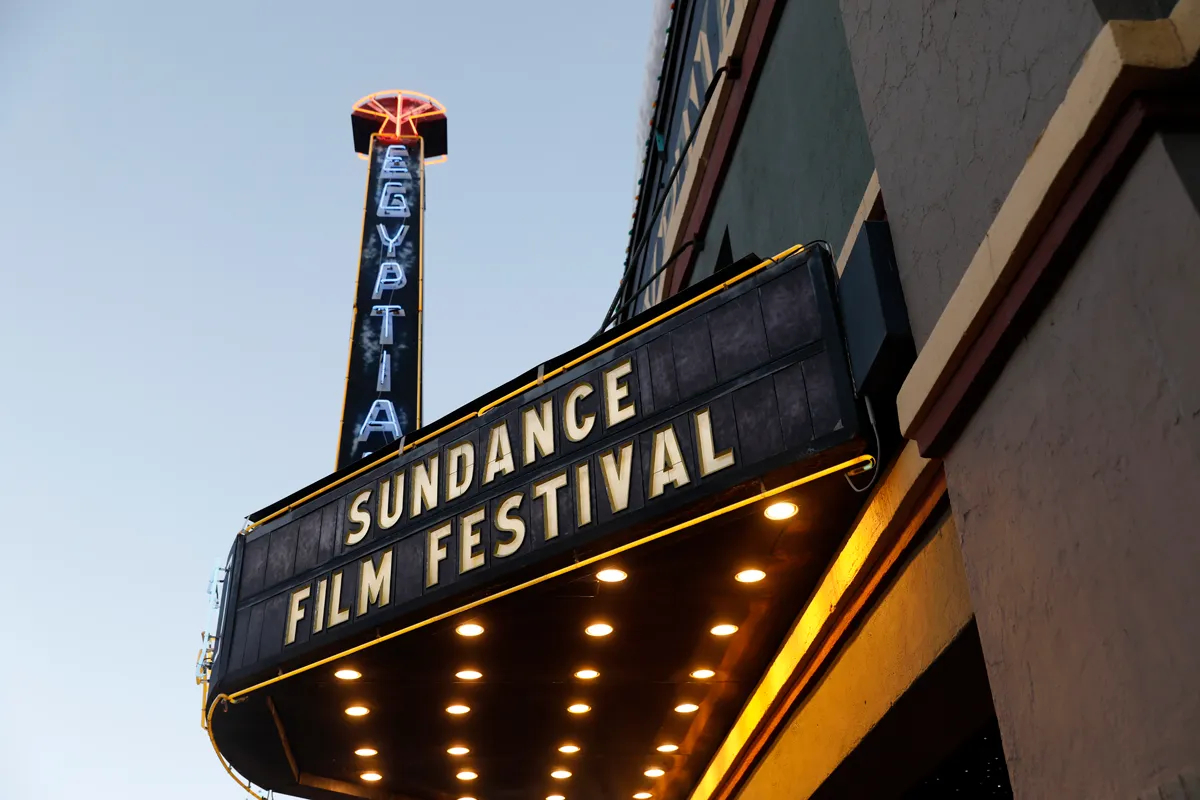
The 2025 Sundance Film Festival has ended, and while this year faced a few hiccups regarding virtual access for a couple of unfortunate reasons, I was still able to see a handful of films. This time, the Roku app was functioning properly more frequently, even if it still had limits. More importantly, my efforts to find films that left any impression – the ultimate goal – led to this reporting on the movies I saw and which features are worth praising. As usual, it’s a collection of independent features, international films, and debut projects from new voices, including a few documentaries. So, here we go.
See Also: Newport Beach Film Festival 2024 Review Round-Up: Hard Truths, The Piano Lesson, Stealing Pulp Fiction & More!

I started things off with Twinless, which was initially treated as a festival favorite, winning both critical praise and the Audience Award for United States Dramatic Feature, but then became embroiled in controversy. This comes down to some remote festival viewers leaking clips from the film onto TikTok, which led to the film being pulled from the online viewing portal altogether. Shame on those viewers, but I was fortunate to catch the movie beforehand. In it, Dylan O’Brien stars with director/writer James Sweeney as two men who form a friendship after meeting in a support group for twinless twins.
As a comedy-drama, the idea is to watch Sweeny navigate feelings of grief and guilt due to how the story shapes around these characters. The film is quite funny, with Sweeney showing plenty of promise as a filmmaker. That said, O’Brien shows plenty of range here, enough to have earned him an acting award from the festival. Given all he has to encompass as both one of the primary characters and his own twin, there was enough working in his favor, let alone the movies, to make things interesting throughout.

Keeping the theme of quirky comedies in mind, Bubbles & Squeak from writer/director Evan Twohy looked like one of the higher profile films as far as online availability was concerned, given some of the star power involved. The film focuses on a young married couple (Himesh Patel and Sarah Goldberg) who made an “economical” choice for their honeymoon by heading to Eastern Europe. However, they are now on the run from authorities for allegedly trying to smuggle cabbages. Various supporting players pop up, including Steven Yeun, Dave Franco wearing a bear costume, and Matt Berry doing a hilarious Werner Herzog impression as the chief border agent.
This sounds like the recipe for success, except the film isn’t that good. Whether it’s a matter of nailing the rhythm or contending with a repetitive screenplay, the quirkiness on display eventually became overtaken by my frustrations with the film not escalating enough, despite some memorable sight gags. Performed with a sort of ineffectual delivery of lines like what Yorgos Lanthimos has accomplished in a superior way, the heightened stylization is appreciated but not enough to have won me over.

Fairing better, however, as another directorial debut is Sunfish (& Other Stories on Green Lake), from writer/director Sierra Falconer. Not doing too much going in to better understand the premise of some of these films, I was happy to discover that this movie plays as a coming-of-age anthology film. Four different stories are presented, mainly featuring small-time character actors and unknowns, focusing on their activities during a summer on Green Lake in Traverse City, Michigan. Each story plays like the sketch of a subplot from a larger film, but they are all affecting nonetheless. The first is about a young teen discovering how to sail and nursing a baby bird. Another focuses on a violin prodigy at summer camp.
These are nice stories, and what Falconer gets right is where to place the emphasis, whether it comes to the ways scenes are written or how the camera functions to capture these moments. Given the semi-autobiographical nature of the production, it makes a level of sense to see a film feel so accomplished in its intent. Whatever the case, the results are pretty good.

Also blending fact and fiction, we have East of Wall, a film that can’t help but be compared to the work of Chloé Zhao (specifically The Rider), but that hardly puts this film in rough territory. In East of Wall, director/writer Kate Beecroft focuses on a horse trainer named Tabatha Zimiga (starring as herself). She’s a tough woman with one side of her head shaved, and a bunch of tattoos and piercings, which is all a way of saying this woman has a story. Tabby is sitting on tough times, as she’s a young widow who takes care of her kids, the local kids who have nowhere else to go, and the horses she manages to sell over TikTok (the horse action footage is fantastic).
Roy Waters (Scoot McNairy) enters the scene, wanting to buy all of Tabby’s land while still allowing her and her family to live and work on the property, which adds new complications to her life. Between the strong performances from Tabby and her teenage daughter (Porshia Zimiga), as well as McNairy and a terrific Jennifer Ehle as Tabby’s mother, this film really knows how to nail a level of authenticity that steers it away from standard indie melodrama. On top of that, Beecroft shows plenty of strength in her abilities as a filmmaker to watch, given numerous key sequences, both intimate and sweeping, as we are presented these characters at their most vulnerable, along with the badlands of South Dakota. I didn’t have a clear-cut favorite from Sundance, but this may be the one that sits highest for me.

Another film focused on Southern struggles was Omaha. In it, John Magaro stars as a dad who takes his children on a cross-country road trip to Omaha after their home is foreclosed on. While Omaha may be the destination, this film is focused mainly on the journey, which allows director Cole Webley to depict things as a sort of slice-of-life look at what it is to be a single parent going through hard times. That means watching the good and bad times with Dad struggling to pay for certain items with his food stamps, and making tough choices. Meanwhile, the kids are getting restless yet also trying to embrace what’s going on from their perspective and make the most of it.
While assembled well enough, my frustration with the film’s purposefully vague storytelling got in the way of me embracing it more. Knowing the film was deliberately holding back information to clue me in on certain circumstances is a gamble on the filmmaker’s part. While I can appreciate what Omaha was ultimately aiming for in terms of its messaging, I also felt like this boxed the film in more than it should, taking away any chance of me wanting to revisit it down the road.

Similarly frustrating was Ricky, a drama about a young man, Ricky (Stephan James), who was imprisoned as a teenager for a decade and a half, and is now pushed into living an adult life in the free world for the first time. This has the makings for a much better movie. While director/co-writer Rashad Frett brings together a lot of elements and supporting players to make the most out of some key sequences, I couldn’t help but feel the film was only working in fits and starts. Sheryl Lee Ralph is doing good work as a sympathetic immigrant parole officer. Titus Welliver is solid in a subplot that seemingly comes from another movie as a man willing to sell Ricky a car for a reasonable price and help him out if he can.
That said, the relationship drama and attempts to place the film in a larger conversation about civilian unrest regarding Black neighborhoods and the officers looking into them lead to plot contrivances throttling the audience. It’s not that life isn’t this messy or that these issues are not worth delving into, but Ricky only needs to do so much to stress the difficulties our lead is facing. Instead, stacking too much trouble on certain situations makes it all too overwhelming.

Another film that felt like it was aiming to do a bit too much, despite being a stronger and more ambitious entry in the lineup, was Atropia, the Grand Jury Prize winner of the festival. Alia Shawkat stars as an actress working as one of the many background players in a city constructed in the U.S. to represent an Iraqi village for the sake of War Games and training for service members that will eventually be deployed. The movie is set during the early 2000s, and writer/director Hailey Gates attempts to balance a satire focused on attitudes surrounding war in the Middle East with the strains of attempting to find fame.
Callum Turner, Jane Levy, Tim Heidecker, and Channing Tatum are among the co-stars, and all of this should add up to more. The issue comes down to feeling non-committal about what it wants to accomplish. Without much of a goal in mind, beyond finding commentary about the times and having Shawkat seek out an end to this acting purgatory she’s found herself in, Atropia winds up meandering too much for its own good. Still, it’s generally well-acted, and unlike many things I’ve seen before, giving it a bit of a leg up in that respect.
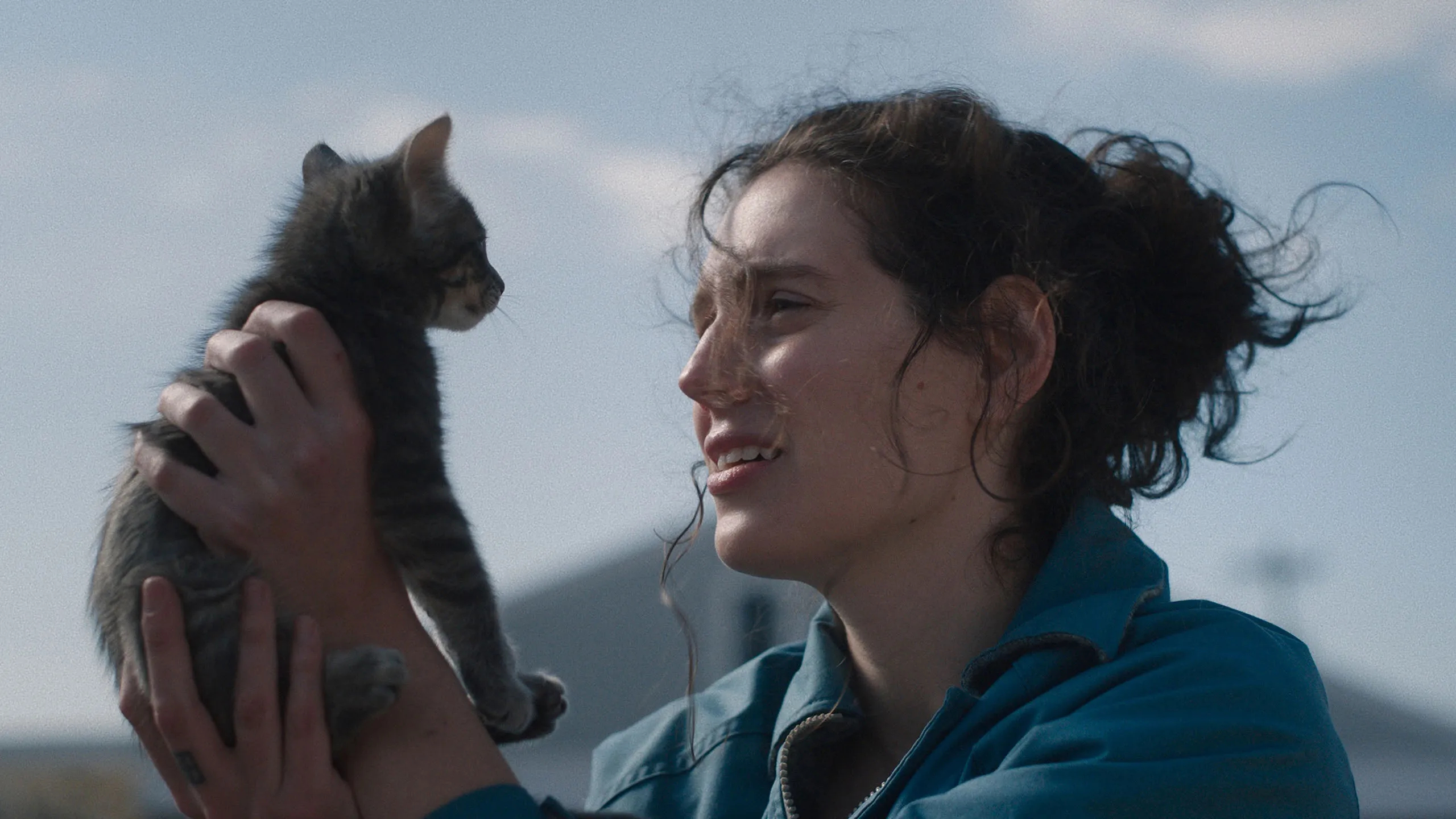
A film I felt should have received more award recognition but can at least accept having been picked up by A24 as a fitting consolation is Sorry, Baby. Written and directed by star Eva Victor, this film wants to detail a horrific situation in a way that Victor only sees fit – a tragicomedy. Without delving too far into what occurs, Victor’s Agnes begins the film as a grad student looking to become a college professor. Situations involving a teacher reorientate things for her, leaving us with Agnes experiencing her years in a manner unique to herself. That may sound a bit obvious, but there’s a tone and sense of humor added to scenes throughout, which allows the film to unburden itself from the drama that’s occurred.
This also means getting time spent with Naomi Ackie as Agnes’ best friend, Lucas Hedges as Agnes’ neighbor whom she enjoys having casual sex with, and John Carroll Lynch in a small role as a man who knows how to help at the right time. Not so much a film with big showy moments, the story is limited to character work, a few locations, some awkward comedy, and a lot of life experience coming through in the writing. It’s terrifically done.

If Sorry, Baby and East of Wall are among my favorites from the festival, then Love, Brooklyn rounds out my top three. This film, from director Rachael Abigail Holder, focuses on three Black Brooklynnites caught in an unbalanced love triangle. André Holland’s Roger is an easy-going journalist who is still friends with his ex-girlfriend Casey (Nicole Beharie). Roger is currently dating Nicole (DeWanda Wise), an artist with a young daughter. This is a lovely film that does not feature any real villains or significant obstacles. Instead, it’s about people, the uncertainty they face, and what it is to understand what one wants in life.
Being set in Brooklyn, there’s also a focus on how rapidly gentrification is occurring, changing what used to be special about this location, and putting the characters more in touch with what’s still there. In a way, this speaks to the nature of a film like this. Back in the ’90s and 2000s, we were getting Black stories from major studios on a somewhat regular basis, without the need to turn them into gangster dramas or a look at severe Black pain based around police brutality or prison life. Now, a film like Love, Brooklyn barely comes together and will be opening as an indie. Beyond having audiences spend more time seeking films like this, the solutions are not readily apparent. In the meantime, enjoy this well-meaning romantic story featuring some outstanding performances.

There are other films I was able to see and enjoy. Cactus Pears is an interesting queer Indian romantic drama about two childhood friends reconnecting. It won the World Cinema Grand Jury Prize. DJ Ahmet is a nice coming-of-age story about a kid living in rural North Macedonia who wants to be a DJ. It balances the unique nature of Ahmet’s surroundings with crowd-pleasing elements. There’s also the documentary Middletown, which focuses on a teacher and his students investigating toxic landfills and other issues in their suburban New York town. It’s a bit long but quite compelling, and coming from the minds behind the terrific Girls State and Boys State.
I have only managed to see so many films online each year since Sundance began opening up the festival to many more worldwide. That said, there are always some nice gems to look into, and films I especially hope get picked up by studios willing to back the dreams of independent filmmakers who put together quality work. I’m just happy to have the chance to watch some of them.
***