What does it mean to build something? I suppose there’s an obvious metaphor at play with The Brutalist, an epic historical drama focused on an architect given the opportunity to both make a new life in post-WWII America and continue his work as a builder. However, the film goes deeper than that. Fitted with a three-and-a-half-hour runtime, director Brady Corbet has put in enough effort to deliver one of the most engrossing films of the year. It does so by way of old-fashioned techniques, such as shooting on VistaVision, as well as subverting cinematic form on occasion to better emphasize what’s going on with these performances, let alone so many other elements found in this film. The results are magnificent. While it may seem daunting, this cinematic experience glides by when considering the grand canvas upon which this film has been placed to tell a powerful immigrant story.
Adrien Brody stars as László Tóth, a Hungarian-Jewish architect who has survived the Holocaust and has managed to emigrate to America, leaving behind his wife (Felicity Jones) and niece (Raffey Cassidy) in the process. László travels to Philadelphia to stay with a cousin, Attila (Alessandro Nivola), while looking for work. During a job where László is able to show off his considerable skills, he meets a wealthy industrialist, Harrison Lee Van Buren (Guy Pearce), who eventually decides László would be the perfect fit for a project honoring Harrison’s late mother.
See Also: ‘Nosferatu’ Review: A Modernist Symphony of Bloody Horror
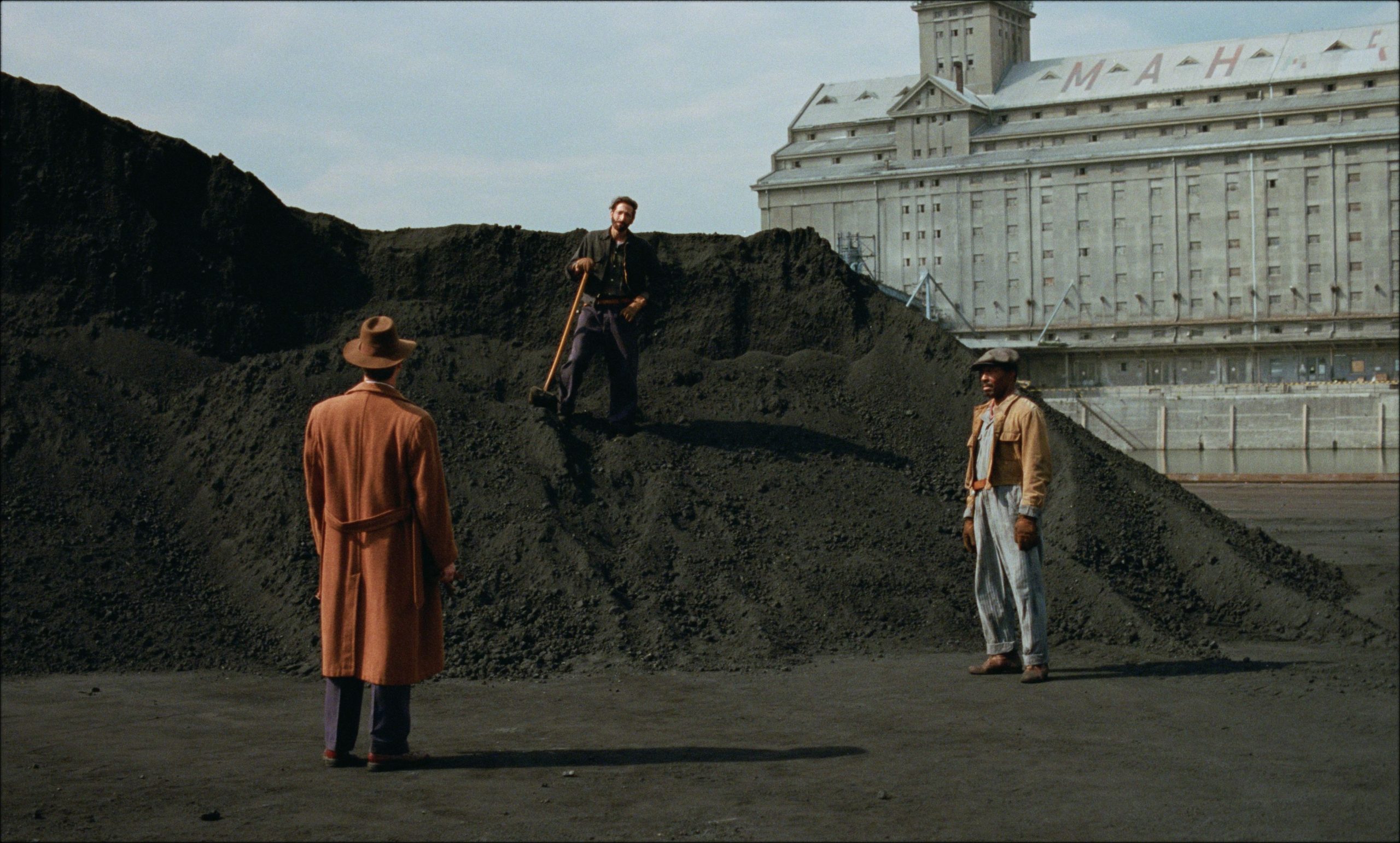
The film is divided into two parts and an epilogue. Built into the 70mm prints of this film is a fifteen-minute intermission that comes at the most perfect time possible in this film. It’s a notable quality of the film as it speaks to the expert level of craft on display. Regardless of budget, subject matter, or genre, a good movie is as long as it needs to be, and while undoubtedly ambitious in scope, the structuring of this feature is masterful. While not designed to have the deepest of plots, the way The Brutalist builds to points that allow for a release is well-considered for a movie with distinct divides.
Editor Dávid Jancsó has the film appropriately settle the audience regarding how time moves throughout this story and whatever mounting tension there may be, which means receiving a movie that never feels stuck in what it is trying to accomplish. Having seen shorter, much high-budgeted features that feel endless in their effort to justify themselves, this sort of clear-minded filmmaking shows just how efficient one can be when it comes to pacing, rhythm, and perspective that runtime becomes a non-factor.
Not to be outdone by the movement of this film, the look of The Brutalist is incredible. Lol Crawley has the not-to-simple task of taking a low-budget production and doing what’s necessary to recreate 1940s/50s America, layering on top the thematic understanding of how a brutalist architect sees the world. The choice of VistaVision (which basically amounts to shooting horizontally on 35 mm) allows for terrific visualization of the architecture that we see. At the same time, as this is not the sort of epic that throws characters into battle, out to sweeping deserts, or onto larger-than-life vessels, the audience is instead meant to observe the lives of but a few characters on a very intimate level. We never lose track of László, and yet it is always important to see the America he has found himself in, whether on the cold streets, the warm interiors of the rich, or the lowly levels of various places he resides.
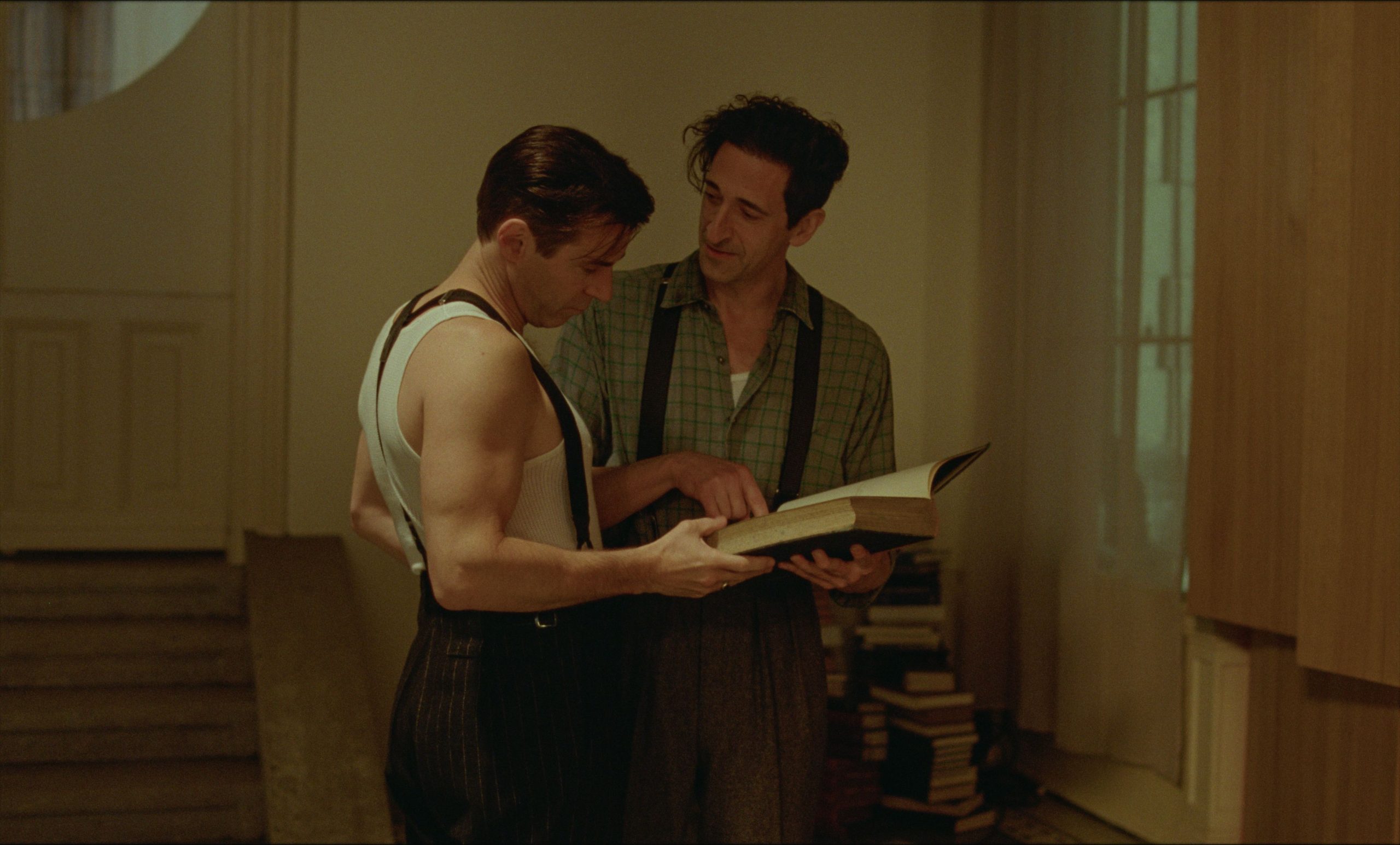
However, The Brutalist doesn’t hold off on realizing László’s work. Through spectacular production design choices, minimal visual effects, and other choices to create a level of authenticity regarding what these characters become transfixed by, it’s a great joy to see an early preview of what this man is capable of, let alone the potential for the main throughline of the film. By letting us have an idea of László’s designs, there’s an anticipation for what’s to come, but watching the movie tie the emotions of what’s happening to these characters with the various stages of construction really speaks to how elaborate a production this has turned out to be.
Personifying those emotions is this terrific cast headed by a never-better Adrien Brody. An Oscar-winner at a young age and having ventured out in many different directions throughout his career, the concentration Brody puts forward here as László is quite stunning. We watch a man go through cycles that speak to someone who has survived immense pain but is nowhere near ready to explore the psychological toll it has taken. Instead, he embraces a chance to reconnect to his passion, allowing for his genius and flaws to come through. Some embrace him for his accomplishments, others are put off by his ideas. Brody’s work aids all of these responses, and he shines.
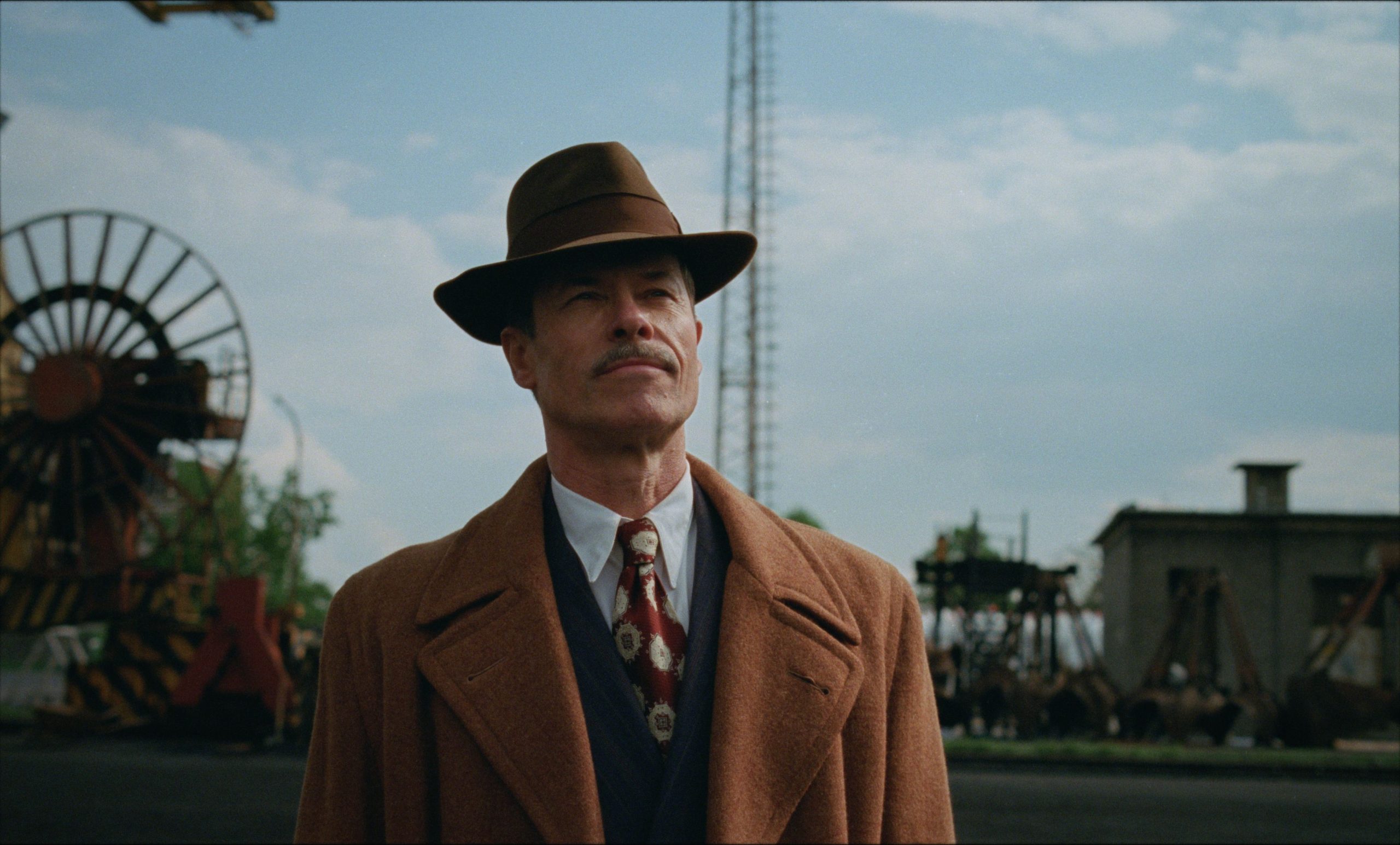
Pearce is a showier character by nature of the kind of person Harrison is. This man is a blowhard but a successful one with a clear eye for talent, whether or not it will make him any money in the process. Harrison is very direct, expressing how he feels loudly and often, rarely backing down, but not beyond humbling to some degree. It’s fascinating, as there’s an understanding that he will absolutely become the person we root against if we’re positioned to feel that way. Yet, you are hoping he sees the greater good in his actions, up to a point, and want this bond between him and László to ideally flourish for the best.
Other supporting actors shine as well, including one of my favorite Jim Jarmusch regulars, Isaach de Bankolé, as László’s best friend, Raffey Cassidy as László’s initially mute niece, and Joe Alwyn and Stacy Martin as Harrison’s twin children (with fittingly opposite personalities). However, it may not be a surprise, but I was pretty impressed by Felicity Jones’s work as Erzsébet, László’s wife, who arrives in the film’s second half. Given the sort of weight we already have from the scope of László’s work and what this relationship he has with Harrison is, finally having Erzsébet come into play requires a certain amount of gravitas for an audience to feel tracks with what has been set up. Jones delivers.
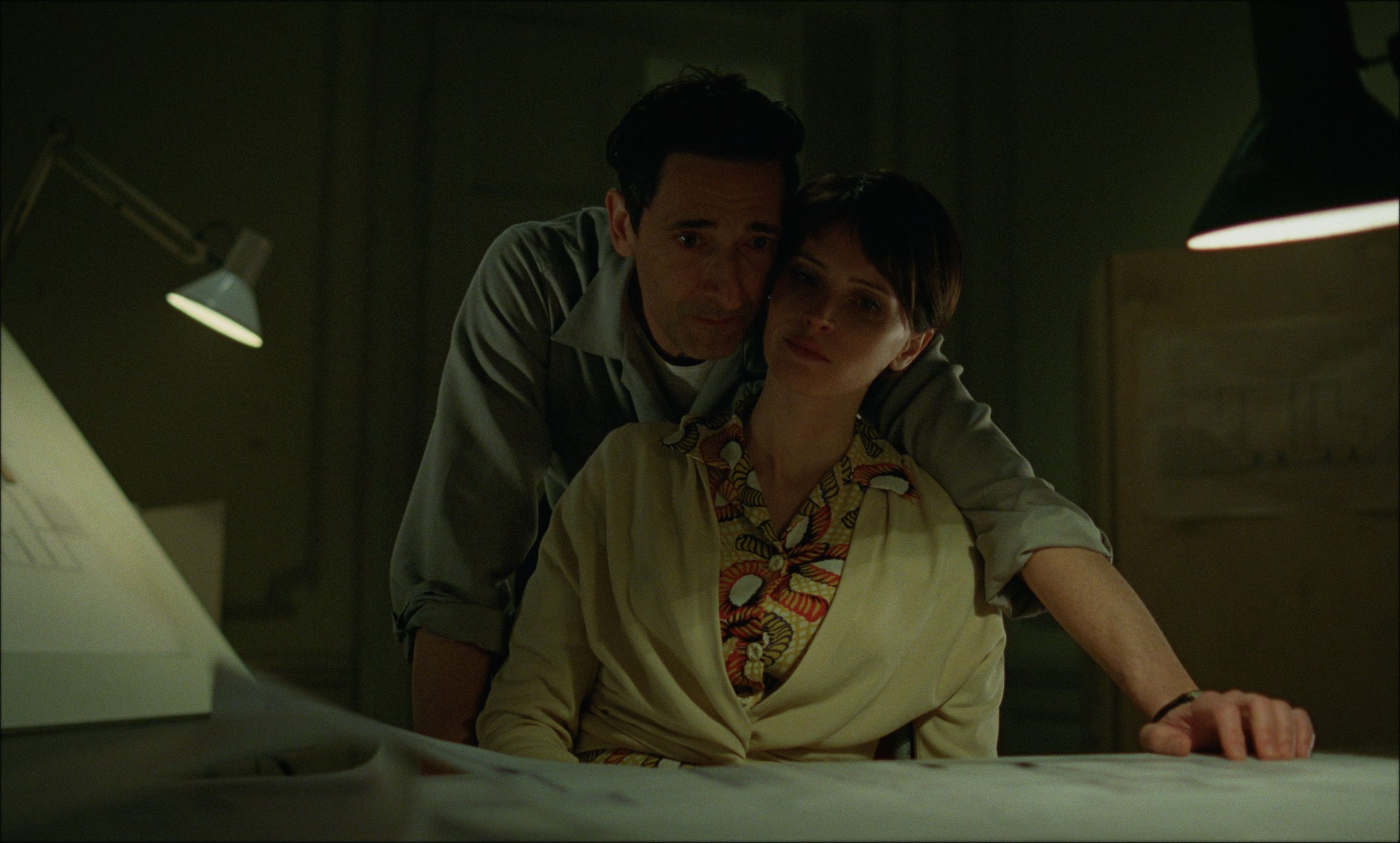
Having also survived near-impossible-to-imagine hardships, the fact that Jones is also able to convey a figure that feels absolutely a part of László’s life, and yet we also know Erzsébet is entirely her own person shows the strength in how these characters are developed. Watching the two of them evolve over the course of the years their storyline together covers also means seeing how the two adapt to being in America and seeing versions of that dream coming into play in intriguing, successful, and distressing manners. And not for nothing, but for a film that has its share of argumentative characters, the way Jones holds her own against certain people, given the condition her character is in, makes for an even more terrific understanding of how editing, blocking, and camera work can do a whole lot for scenes in a drama as intimate as this presented on such a large display.
Everything else I could say about The Brutalist just shows how well the film has come together as a whole. This includes aspects such as how the role of László’s Judaism informs every character in some way. There’s also the movie’s tremendous score by Daniel Blumberg, who creates running themes to call back to throughout. The costume design drives in the differences seen between these characters. And plenty of other filmmaking choices play into what director/co-writer Corbet and co-writer Mona Fastvold have aimed to accomplish in a film that presents such vastness. Taking it all in, you really see the sense of grandeur that factors into other epic works that have come along in various decades. That also may mean it never aims for too much narrative complexity, but that is more than countered with a genuine look at humanity, explored to its fullest in one of the truly bold and stunning visions of 2024.
The Brutalist opens in select theaters on December 20, expanding wider on January 24, 2025.