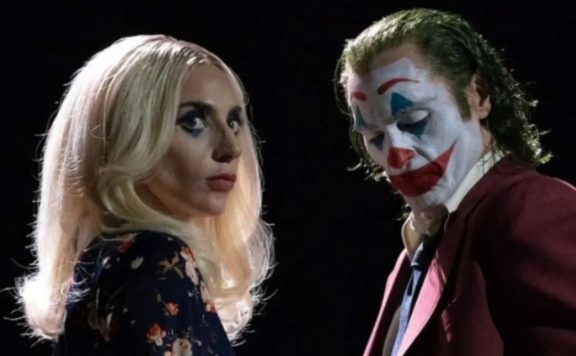
What can a stand-up comedian do when they run out of material while on stage? Well, a good one can figure it out or have some fun with the audience. A less experienced performer may panic, run off the stage, or remain awkwardly silent. From a filmmaker’s perspective, when it comes to Joker: Folie á Deux, director Todd Phillips somehow combines all these possibilities into one movie. This is a baffling film with even less to say than the first, but it is also bent on denying fans what they presumably want. On top of that, it’s just not exciting, replacing ambition with familiar, dull, and mean notions. 2019’s Joker was a standalone feature that rode a wave of hype to over a billion dollars at the box office, a couple of Oscar wins, and absolutely zero riots in the streets, no matter what irresponsible trades claimed could happen. This sequel is drafting off the first and comes up empty quickly. Despite all the flashy new additions (Lady Gaga, musical numbers, etc.), this is just one sad clown show.
Following an animated prologue handled by Sylvain Chomet (The Triplets of Belleville) that gave me my one true bit of excitement, the film picks up with Arthur Fleck (Joaquin Phoenix) staying in custody at Arkham Asylum while awaiting trial for the murders he committed two years prior. Arthur’s current acquaintances include Brendan Gleeson as an abusive guard, Catherine Keener as his lawyer, and Lady Gaga as Lee Quinzel, a patient in a lower security ward at Arkham who is clearly very interested in this Joker character. As the two grow closer, we also witness the “trial of the century,” with all of Gotham City looking to see how this will play out. Many are still shocked by Arthur’s actions, although he still has many supporters. Perhaps they all just need a little more music in their lives to sort this all out.

See Also: ‘Beetlejuice Beetlejuice’ Review: More Ghosts, Less The Most
Adding splashes of color (beyond red) certainly seems to have been what Phillips believed was needed this time around, as the attempts to evolve this series amount to a deeper embrace of Arthur’s subconscious. I’m not opposed to this, and with a $200 million budget (more than three times the first film), one can see the effort to bring these sequences to life with elaborate costumes, production efforts, and more. Having Gaga within this musical realm only adds to what’s being delivered, making these sections at least feel like something one can point to when noting where some intrigue comes from.
I suppose I can agree with this. Despite my differences with the films Phillips has made that I don’t much care for, he has an eye for good visuals and enlists talented filmmakers to work with him. Shot entirely with IMAX digital cameras and featuring numerous full IMAX frame sequences, cinematographer Lawrence Sher had plenty of room to explore and deliver what was desired for this feature. It’s a shame that all this beautiful imagery doesn’t add up to anything meaningful (which is pretty fitting for a sequel to a film that existed during the previous iteration of the DC Universe, despite its standalone status).

Sure, I could look at this film and say the style is strong and, along with another oppressive, moody score by Oscar-winner Hildur Guðnadóttir, it holds onto whatever it was going for the first time, but that’s just it. It’s not that Joker: Folie á Deux is less impressive for maintaining an atmosphere, even with the musical bits. The issue is a lack of any real purpose in it.
The main criticism surrounding the first film focused on how little it was willing to explore. Being a riff on Martin Scorsese features such as Taxi Driver and The King of Comedy is not inherently wrong, but those are also films looking at the times they existed and commenting on them. Joker is a period film that doesn’t do any work to find any interesting parallels to modern times, so it just exists as a pastiche, a good-looking and decently acted one, but a pastiche all the same. Now we have Joker: Folie á Deux, which is even worse because it can’t rely on feeling different by way of its references anymore and instead chooses to spend its laborious runtime (nearly 140 minutes) pushing the audience through a self-loathing look back at what happened last time and once again asking us to care.
This brings us to a genuine question – what are we actually supposed to care about? That’s my entire problem with Arthur Fleck. We can throw source fidelity out the window, as the Joker character has existed in various forms in comics, TV, and movies for over 80 years. What I’m thrown off by is what I’m supposed to take away from Phoenix. I know he’s putting in the work to deliver this take on the character (regardless of how similar I find it to some of his other performances). Still, it once again feels like this screenplay by Phillips and Scott Silver has too many ideas of what Arthur should be. Now, if the Joker is an agent of chaos, that makes a level of sense, but that’s not what I’m seeing in this movie. It feels like a confusing amount of ideas are being thrown at Phoenix, who is just running with what’s given to him.

Expand that further – why is Gotham obsessed with this guy? He did us all a favor in the previous film and permanently stopped Robert De Niro’s terrible talk show. Okay, in all seriousness, he murdered De Niro’s Murray Franklin (and a few other people), and somehow this sowed discord in the streets. Not enough work was done to establish why, and these films remain purposely vague on having anything real to say. That results in the press doing the job for the film, with speculations concerning everything from mental illness to violence in movies as symptoms of some greater issue. That’s not me saying Phillips is irresponsible, but I do feel like whatever rhetoric he shares regarding his agenda surrounding what’s taking place falls flat in the way this movie tries to handle it.
But what about Gaga? She’s one of a few talented supporting cast members who supply what is asked of them, but I can’t say that this take on Harley Quinn leaves much of a lasting impression (but don’t be surprised to see that predetermined Golden Globe nomination come her way). Along with seeing fairly easily the arc of this performance, it’s just not all that electrifying to see. There’s something to be gained from seeing disturbed personalities in emotionally complex dramas, but this is a blockbuster DC movie unwilling to do anything challenging (odd for being a sequel with Phillips seemingly having carte blanche to do what he wants). The writing is, frankly, just not strong enough to provide more support for Gaga, Keener, Gleeson, or any of the other performers who know how to deliver nuance when given the chance.
Even in terms of pure fun, these musical numbers are half-hearted. Yes, we see a few fancy scenes, and I enjoy the gang playing dress-up, but they are never really driven by much reason to exist. Plus, in these personas, Phoenix and Gaga are not exciting enough to make the theatrical angle work compared to the fun we imagined when early rumors about being a musical first started. I like the half-dozen classic song choices, but they aren’t informed by anything beyond Phillips seemingly feeling like, “Wouldn’t that be neat,” was his reasoning for everything.

As one who is always game for dynamic courtroom scenes, even these are lackluster. Again, the film spends so much time retracing the steps of the first, so there’s no real mystery or intrigue about what’s being discussed. On top of that, Pheonix seems to just be shot out into the room to do whatever he sees fit rather than the film providing him with any sense of recognizable direction. He likes the attention, I guess. Is he also running a con on the court dealing with a possible split personality disorder? No idea. Does he feel bad about what he’s done? No idea. How is all of this affecting Gotham? No idea. Do we have to relive seeing Thomas and Martha Wayne getting killed in front of young Bruce again? Fortunately, no, and at least that’s a step in the right direction. The wrong step is realizing that an action that occurs late in Joker: Folie á Deux would have been the exact place I would have started this movie and explored the fallout of those events. Instead, whatever occurs, it ultimately means very little when considering how much this movie lacks despite all its efforts to suggest that more is to come.
It’s hard to tolerate a film like this. It’s one thing to see expensive movies attempting to coast off the charm of movie stars, but this is different. Joker: Folie á Deux is watching Todd Phillips taking a victory lap, given the first film’s success, but he’s doing so in the laziest ways. Sure, it looks expensive, but with all the talent he has to work with, this script not only does little favor for the actors on screen but also feels hellbent on alienating as many people as possible. Is that something the Joker would do? Is it subversive filmmaking that some audiences will indeed latch onto? One can make their own arguments, but I wasn’t impressed. Send these clowns out.
Joker: Folie á Deux opens in theaters and IMAX on October 4, 2024.