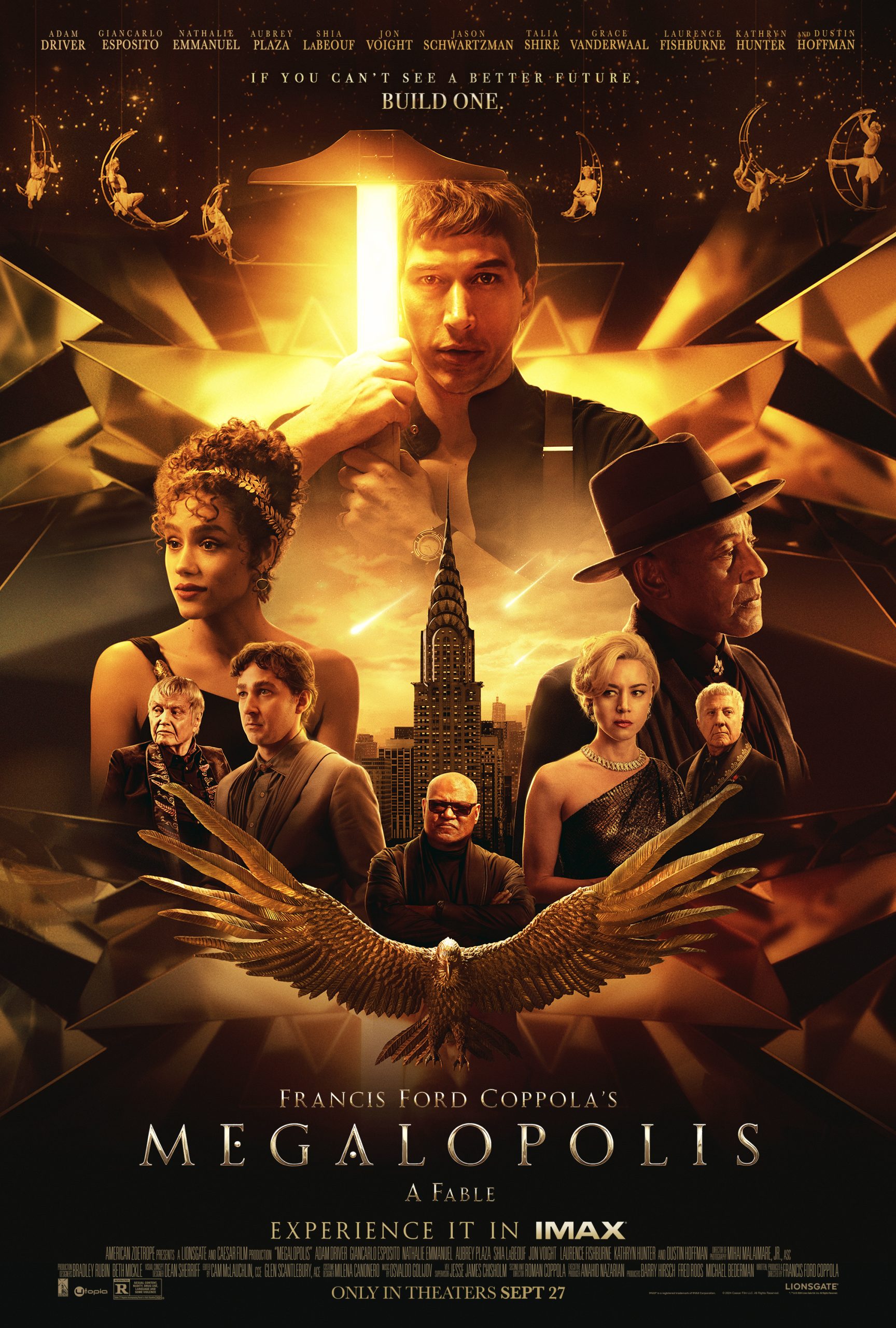
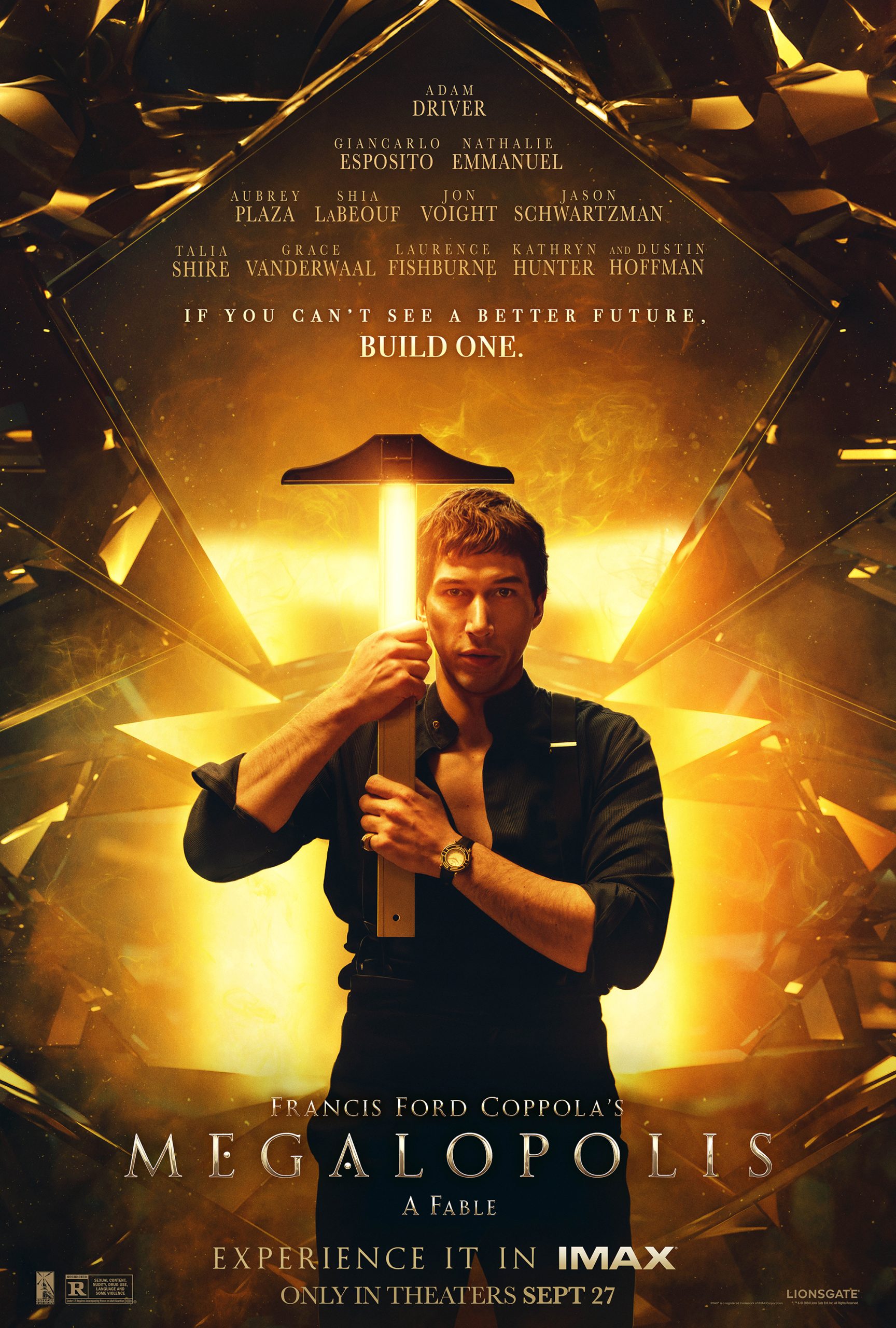
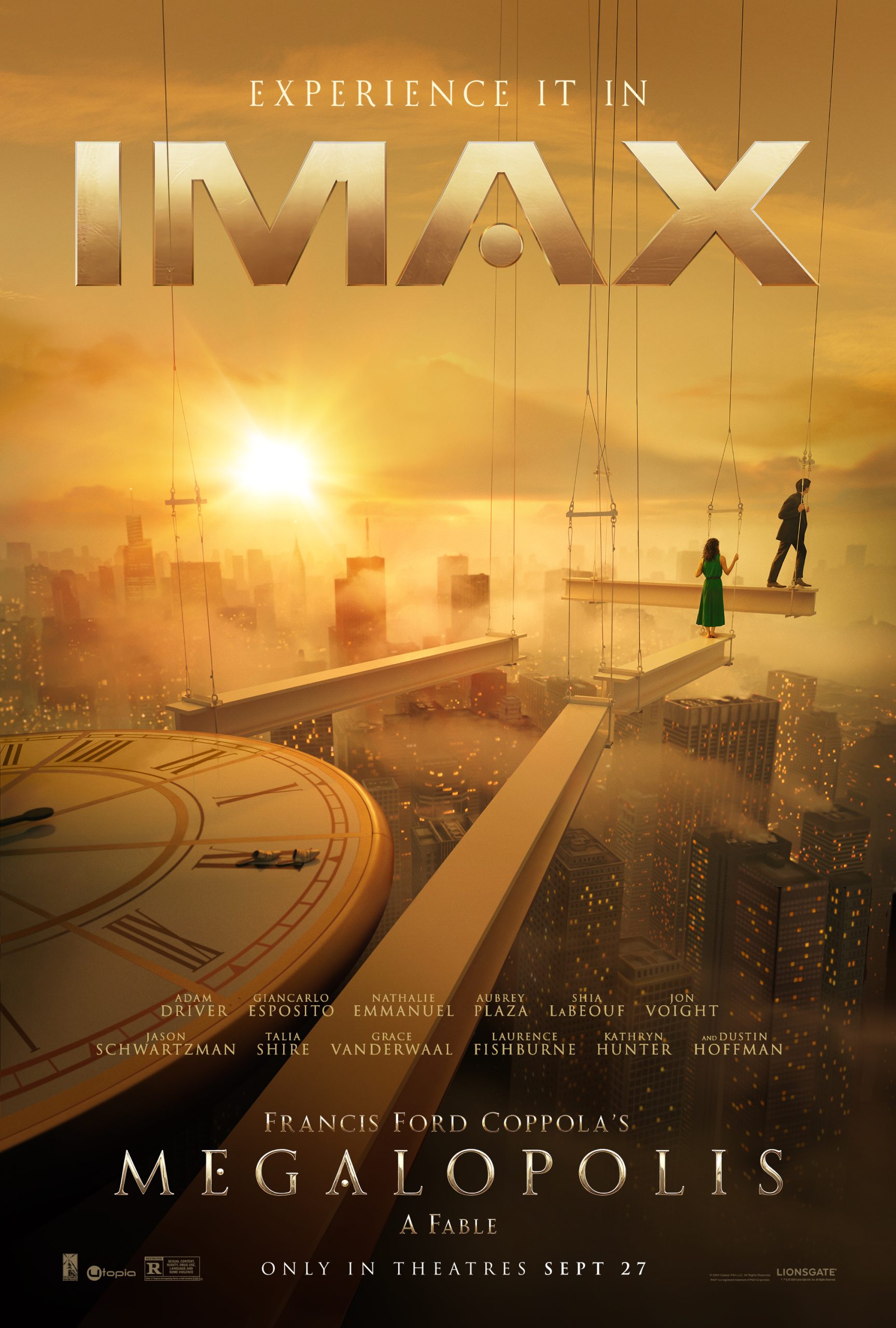
Passion projects and gambling on one’s self is not new for Oscar-winning filmmaker Francis Ford Coppola. Megalopolis is his largest directorial effort in over two decades, and it’s been made thanks to a sizable investment on his own part. The results? Well, an ambitious, epic sci-fi drama coming from a director who has always been willing to push boundaries and stray from easy choices, there’s little doubt the film won’t prove to be divisive. Challenging, sure, but easily accepted by audiences? Not so much. However, looking at not only the scale and talent involved but also the themes and ideas Coppola is after, while I have some mild reservations, I found Megalopolis to be mostly excellent. Bold in approach, not afraid to embrace some of its inherent silliness, and not misplacing showmanship with overt showiness, there’s real value to seeing this sort of art on display at a grand level, regardless of how much of a tough sell it may be.
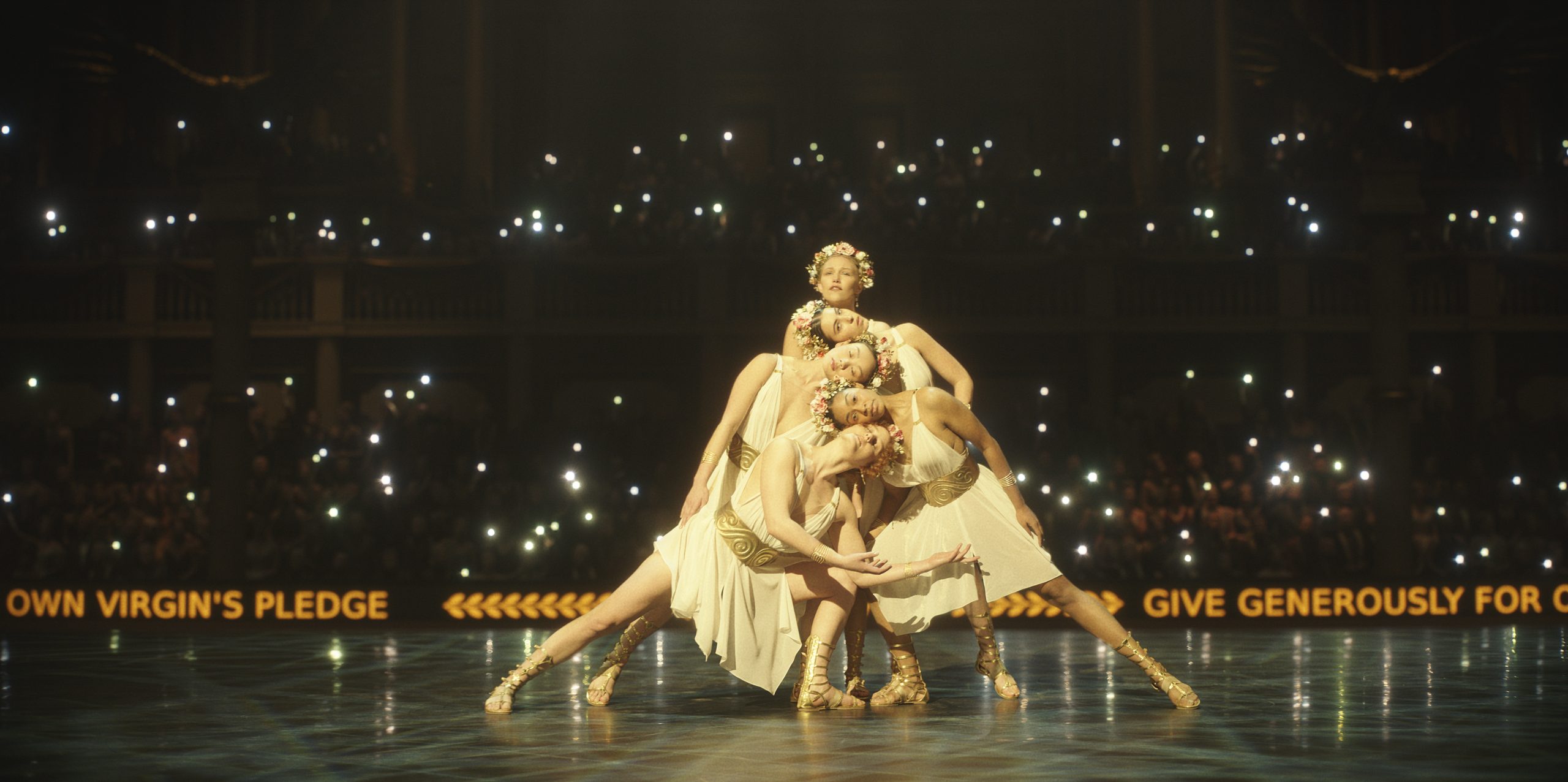
Intriguingly, the film’s premise is built around the idea of inserting Ancient Rome into an America seen in the not-to-distant future. More specifically, it loosely follows the events of the Catilinarian conspiracy, in which a coup was staged against notable elected officials of the Roman Republic (and let’s assume we’re all caught up on our Roman history, so I don’t need to expand any further). With the application of these parameters, it provides Coppola with several areas to explore. Stylistically, it means embracing extravagant costumes and presenting a New York City that doubles for Rome through equivalents, such as seeing Madison Square Garden as the Colosseum (complete with chariot races). Thematically, it means embracing the metaphor and presenting a story that’s very concerned with the dangers of the present, the possibilities of the future, and how things will be shaped by those vying for control.
See Also: ‘Horizon: An America Saga – Chapter 1’ Review: For The Love Of The Plains

The plot focuses on a progressive futurist, Cesar Catilina (Adam Driver), who intends to rebuild the decaying metropolis he currently lives in as a utopian city known as Megalopolis. To do this, Cesar will use a material known as Megalon (not the Godzilla kaiju villain, sadly), which allows him to control space and time. However, this is not a movie that everyone is in favor of. Giancarlo Esposito’s Mayor Franklyn Cicero is no progressive champion and wishes things to remain as they are. That said, the Mayor’s socialite daughter, Julia Cicero (Nathalie Emmanuel), is fascinated by the potential she sees in Cesar’s work, bringing the two of them closer together.
For his efforts, Driver does about as well as he can here. Being the film’s spine often means playing one of the less interesting characters to support the rest. With that in mind, Driver is too interesting an actor to let things sit straightforwardly, so he brings certain idiosyncrasies to allow Cesar more to stand out with. Whether that be his use of the abilities Megalon enables him to have or his regard for the other characters I’ll mention in a bit, serving as the one hoping to have the clearest eye on a hopeful future, he communicates what’s needed, given the mild complexities the role ultimately offers.
Similarly, Esposito and Emmanuel fit into the world well enough but are not the sort of expressive characters that really leap off the same page. Even with Esposito, who is somewhat of an antagonist for Cesar, he’s not leaning into the cold menace found in his other recent roles (which is honestly refreshing). Still, aside from knowing how to wear these elaborate costumes, they handle the drive of their parts without being pushed to aim even higher.

The other portion of this story concerns the larger-than-life characters. Jon Voight is Hamilton Crassus III, the wine-addled, massively wealthy CEO of a large bank and Cesar’s uncle. Crassus spends most of the time observing what’s taking place, having his own dalliances as one of high privilege. Shia LaBeouf is Crassus’ son, Clodio Pulcher, who operates as a spoiled son usually does in these types of stories. Plus, his jealousy of Cesar comes out in ways that turn him into a rival from various standpoints, including politics.
To make a point, Coppola has notably cast two actors in high-profile roles, aware that they are not the most popular based on their more recent views and actions. Whether or not seeing the world of filmmaking bringing people together makes much of a difference. I can at least say Voight has various scenes that allow him to remind audiences how compelling an actor can be. LeBeouf, meanwhile, plays his role as big as instructed, though his efforts (and outfits..and hair) can be distracting.
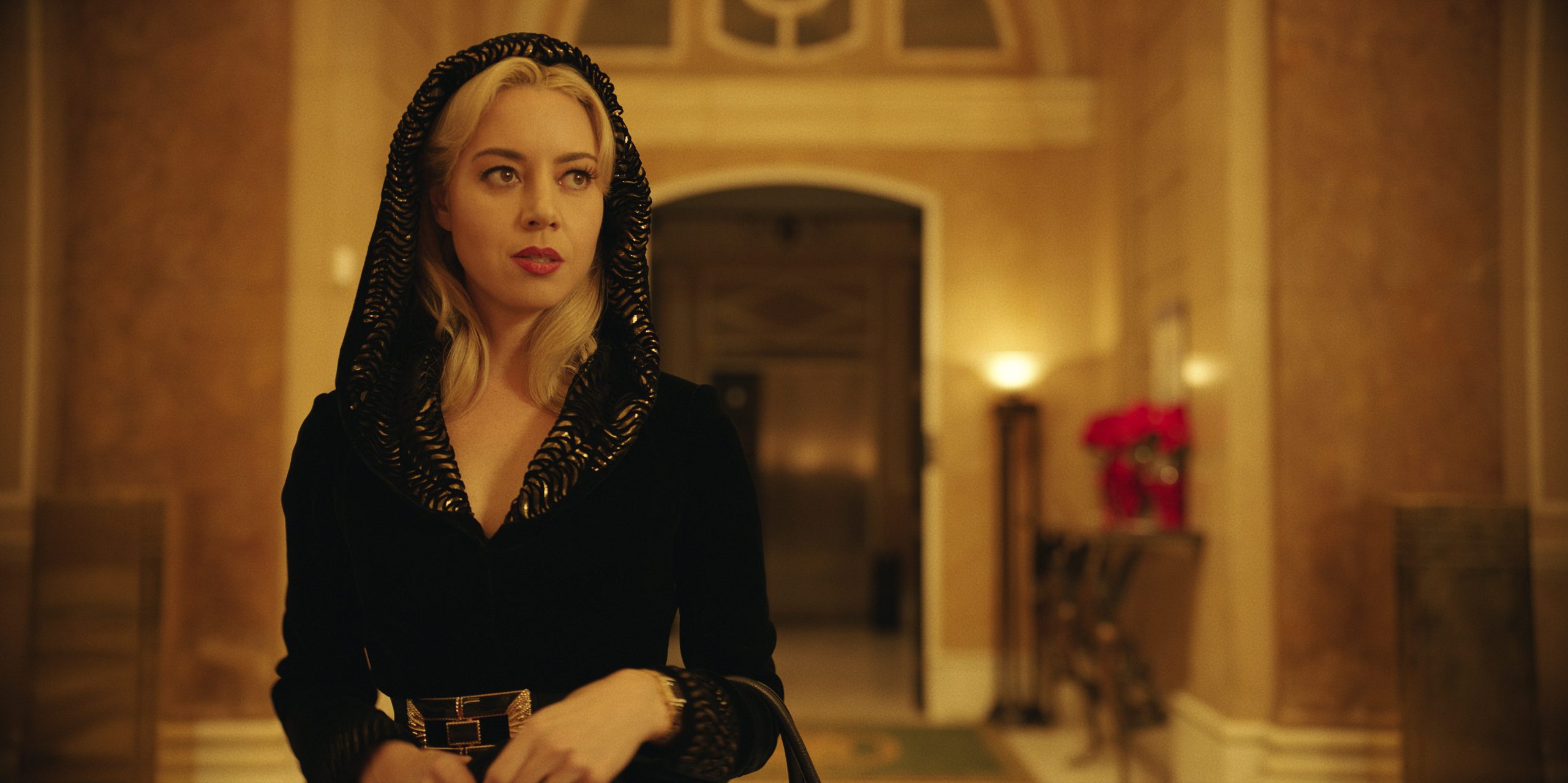
Aubrey Plaza is the final major role here, and she certainly steals as many scenes as possible as Wow Platinum, a TV presenter who is in love with Cesar but happy to settle with anyone who can grant her money and power. There may be debates over which cast members truly “get” what Megalopolis needed to work best. However, I don’t see that as a concern with Plaza. She goes all out with the role yet never lets the character’s human side get away from her. I believe the type of person she represents, all while watching her, among others, lean into the sense of humor this movie very much has.
Much of my appreciation for the film stems from pure fascination with what’s on display. I think it’s too simple to call Megalopolis a mess, as it doesn’t feel like it got away from Coppola. While the director obviously has notable films on his resume (The Godfather trilogy, Apocalypse Now, etc.), it’s not as though those films, and the many others he’s made, don’t take risks or lean into experimentation. Whether it’s the use of sound in The Conversation, the expressionism in Rumble Fish, or the absurd level of scale used for One from the Heart, these sorts of challenges reveal his passion for creating something unique and enlightening.
That’s not to say audiences will agree with these methods. At just under two and a half hours, and moving along without spoon-feeding exposition through its characters (much as co-star Laurence Fishburne’s booming voice adds some color through narration), there’s a lot of effort put towards building up multiple characters and ideas with only so much clear follow-through. I don’t know if shrinking the film down or inflating it even more would serve the story any better, as it does feel, for better or worse, that Coppola has taken aim at something very specific and is self-aware enough to know what various kinds of reaction it will receive, regardless of his own satisfaction of completing one of his dream projects.
One thing is clear – having put so much expense into making this film, it looks and sounds terrific. Thinking of all the production and costume design, the art direction, and other qualities, Megalopolis has a visual distinction that matches the unique approach to film exhibited by the Wachowskis, among few others, who have delivered impressive sci-fi worlds that feel unlike any other in recent years. Shot by Coppola’s recent frequent collaborator, Mihai Mălaimare Jr., between the soundstages, locations, and other means of capturing images, there’s enough of a sense of place to deliver on being the “fable” this film promotes itself as, along with a compelling take on Rome through the lens of America.
One of the more interesting concerns I have deals with what this film ultimately amounts to. Regardless of how the history of Rome plays out (and this film is far more literal about that choice than I expected), Coppola so clearly wants to show how much of an optimist he is. Even with this film playing into the idea that a New York City equivalent is actually going through a state of decay, the intentions of Megalopolis speak to how the future has the chance to be better for future generations. And yet, while there are satisfying aspects of the finale, I’m not sure the final minutes are fully earned.
That could come from how bizarre a film like this can feel, and perhaps that will fade in subsequent rewatches (there’s too much exciting stuff going on here for me to want to see it once). Still, as it stands, among the film’s many highs, I don’t quite feel the finale is one of them. All of that being said, there’s a nearly indescribable feeling going on within that finale that speaks to Coppola’s personal goals being met despite all obstacles surrounding this film’s completion and upcoming release.

Much of my thought process concerning how to expand on Megalopolis concerns a word that practically has no meaning in the world of film criticism these days – pretentious. Making movies can be seen as one of the most egotistical things an artist can do, as it means recruiting hundreds of people to help deliver on one person’s vision and then asking a population to spend money on looking at their work for two hours. Is Megalopolis pretentious? Of course it is, much like movies in general. It’s hardly a way of looking at what one attempts to accomplish, let alone places mass amounts of effort into, and the risks incurred in the process. No, it’s not a requirement to sit down to watch Coppola’s often ridiculous epic and like it no matter what, but there is real vision on display here to admire. For me, I did more than admire the work, as I found it quite compelling, matched with mostly the right kind of energy from its expansive cast, and full of reasons for continued discussion, evaluation, and appreciation. Megalopolis is certainly a lot of things and will be seen in many ways, but it’s an act of cinema choosing to take a prescient look at the future, and undoubtedly another one from Coppola’s heart.
[Note: The IMAX presentation of the film features a moment involving live audience participation from a performer arranged to appear. It’s an interesting gambit that speaks to Coppola’s efforts to break boundaries. I’m not sure if it will be presented this way in all IMAX showings, but I was amused by the effort.]
Megalopolis opens in theaters and IMAX on September 27, 2024.