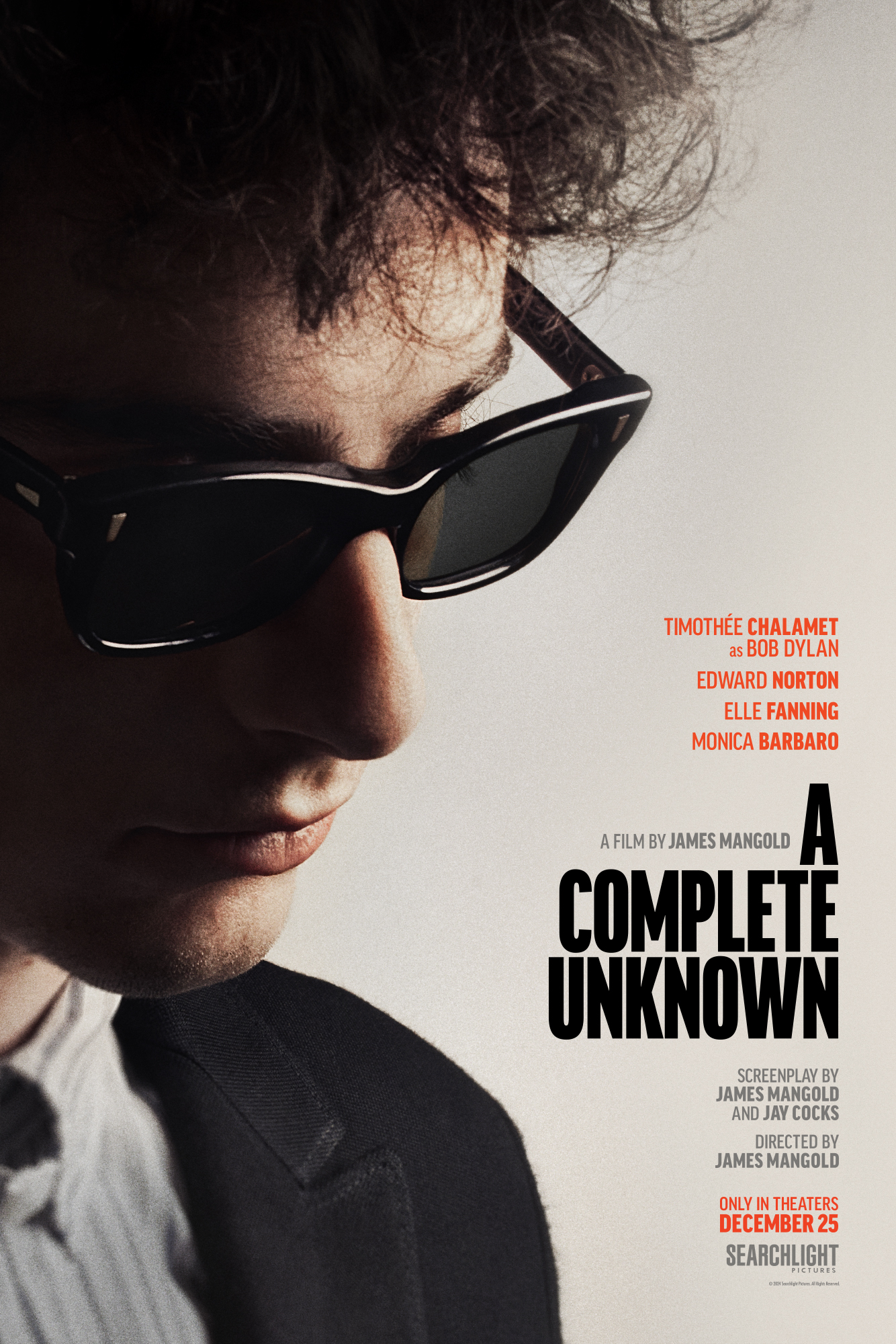
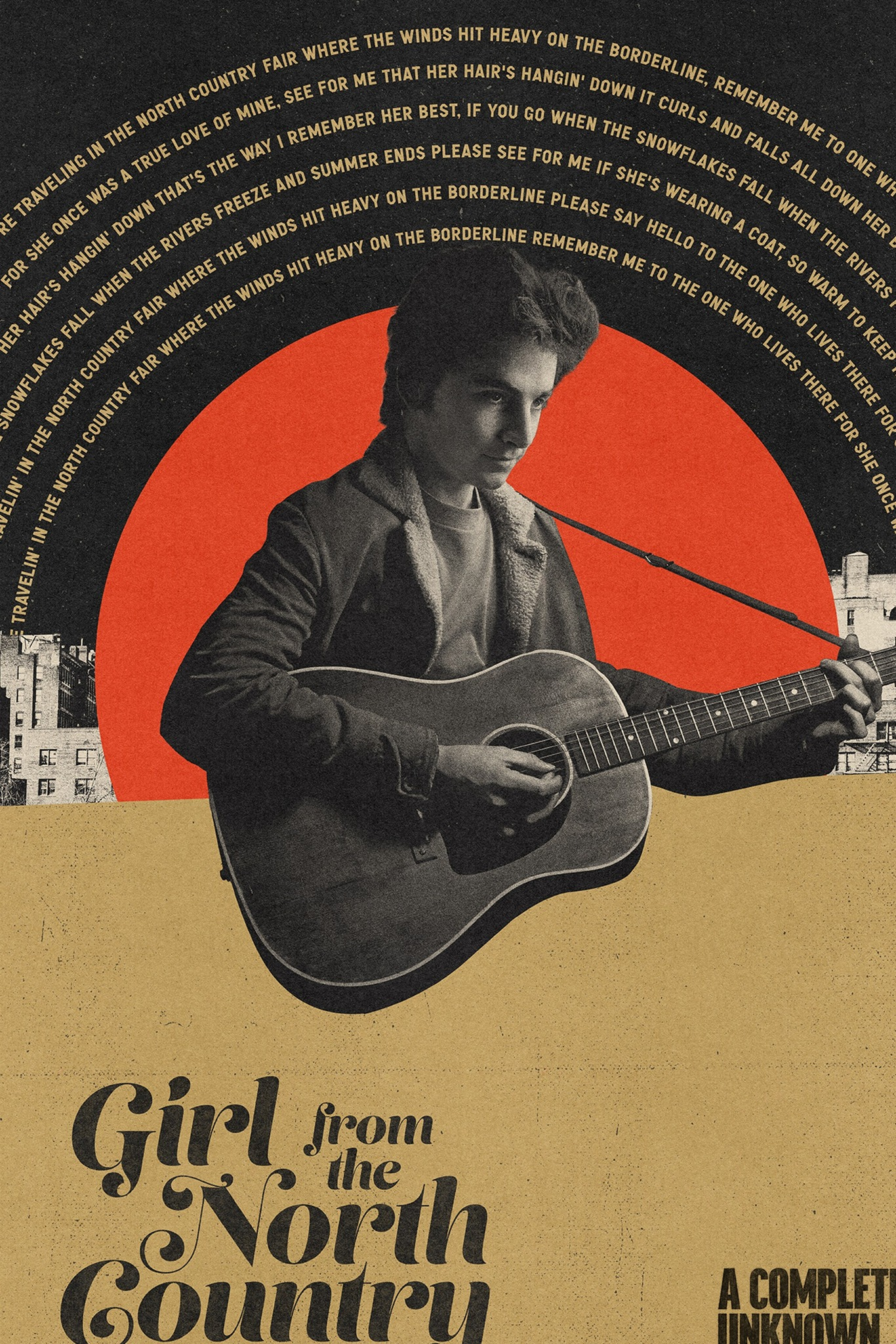
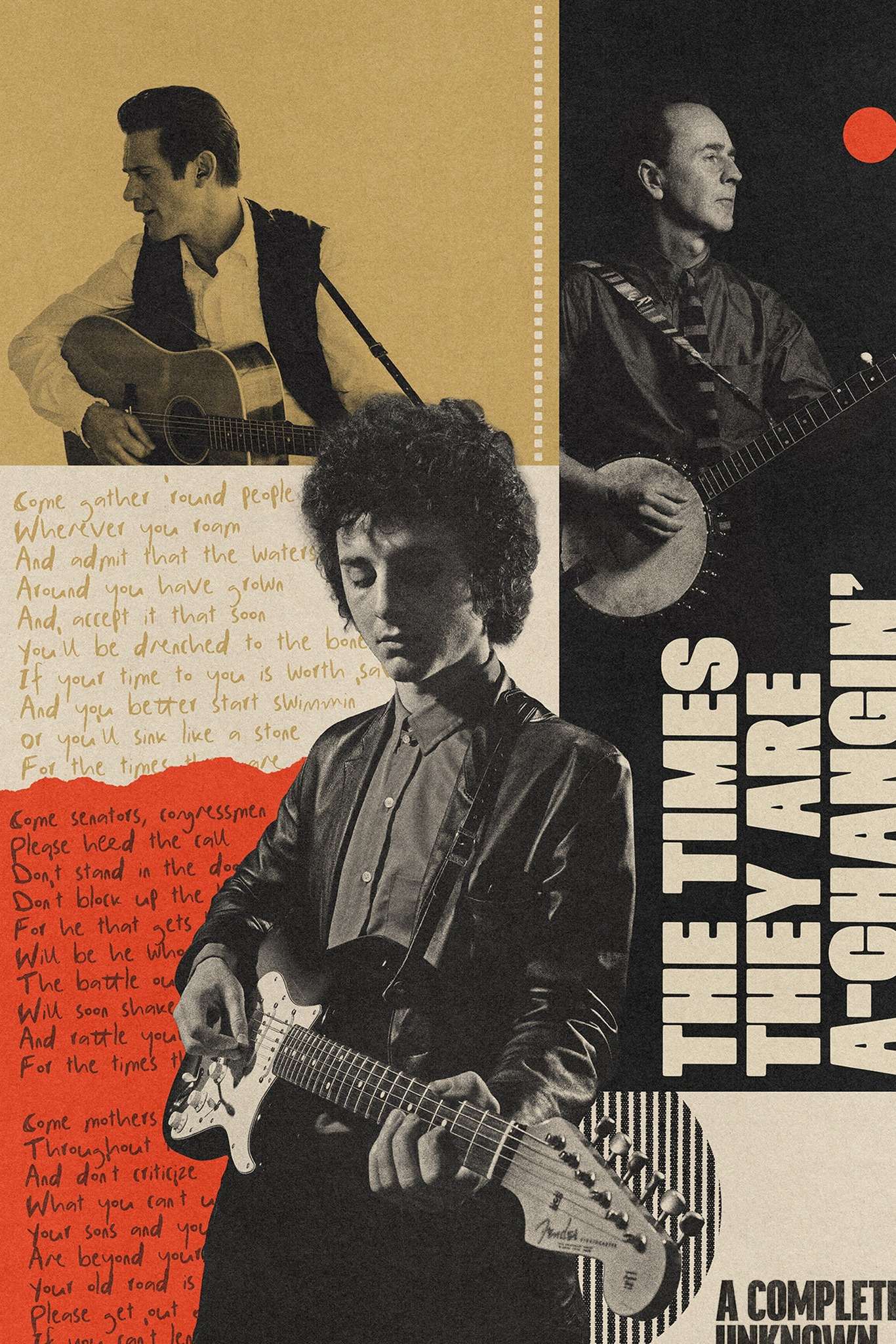
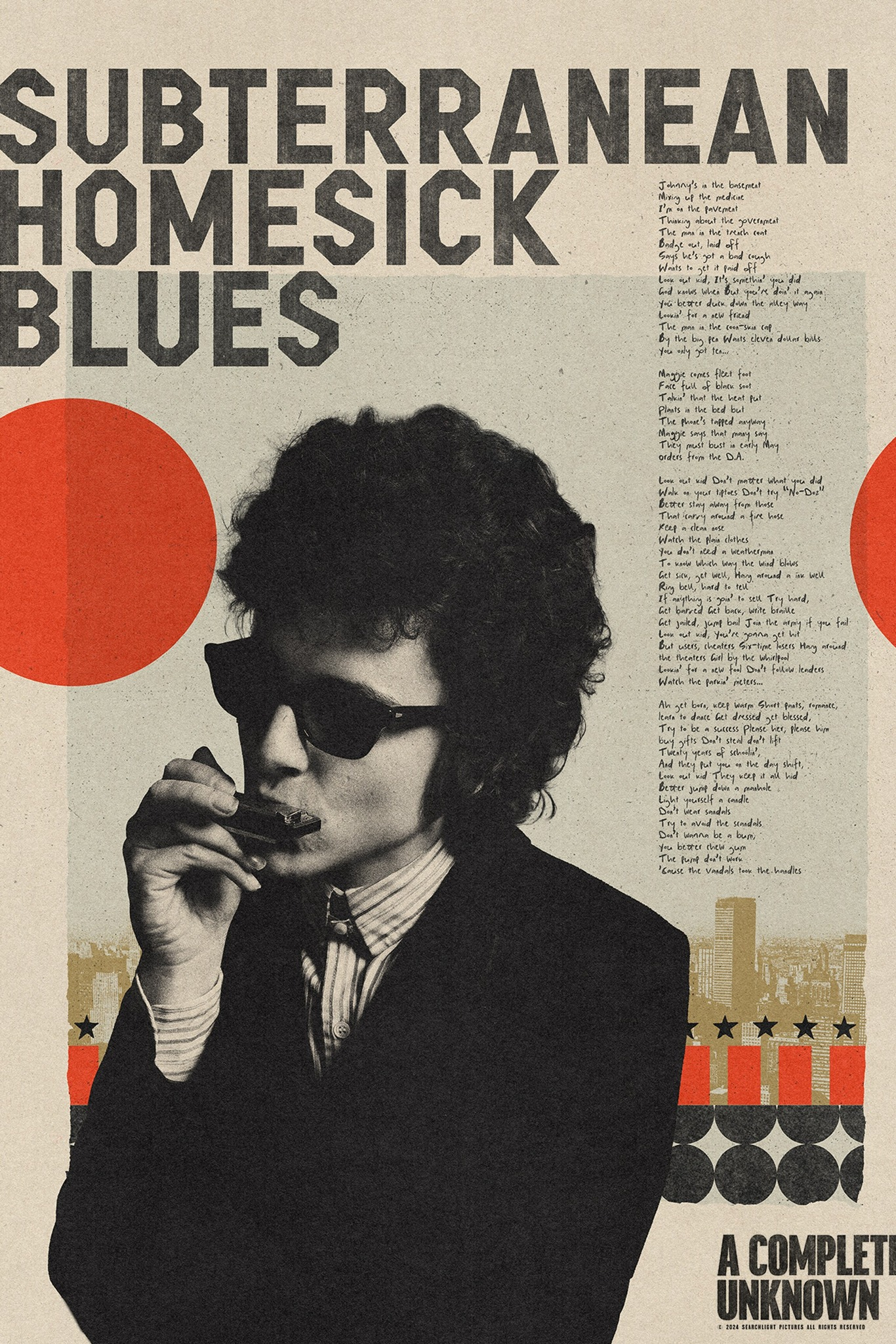
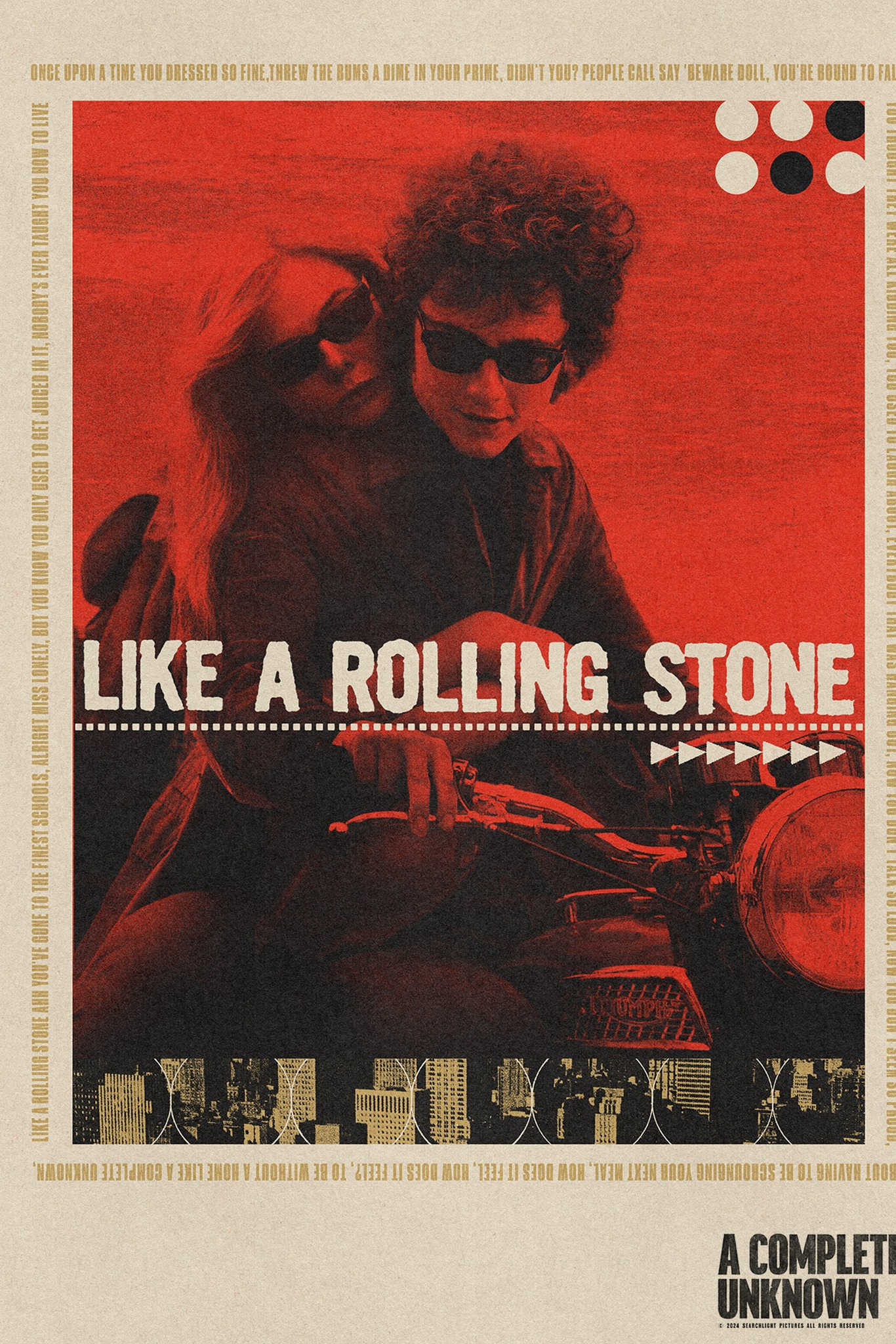
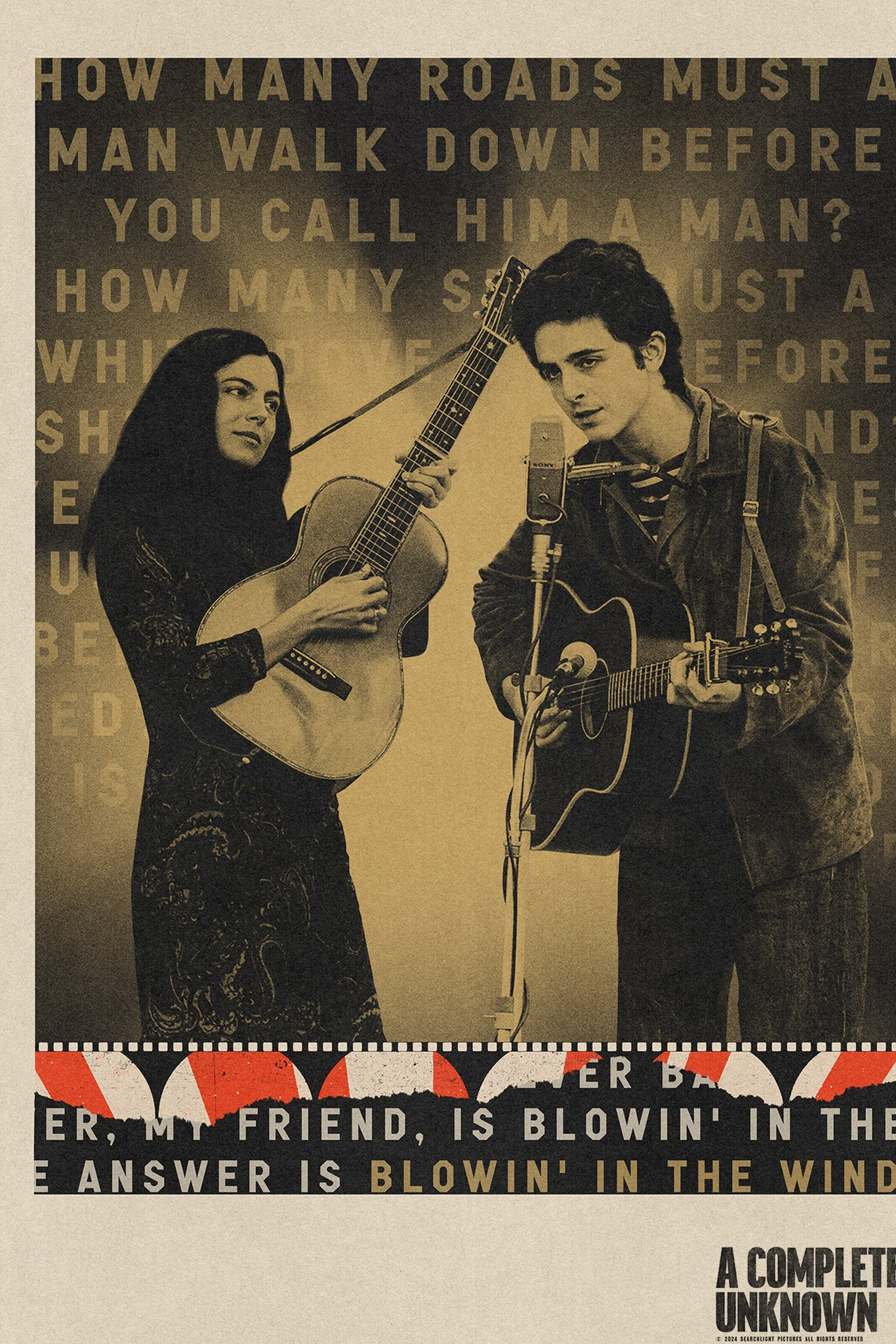
I suppose there was an inevitability to seeing a music biopic concerning the life of Bob Dylan. At the same time, I couldn’t help but feel the initial announcement was somewhat redundant. Not that I wanted to flat-out reject the notion of a more traditional biopic, but between Martin Scorsese’s 2005 documentary No Direction Home and Todd Haynes’ 2007 experimental biography I’m Not There, which both detail so much about Dylan’s personas and evolutions as a musician, I had concern for how the latest entry in a hit-or-miss sub-genre could tackle something in a manner just as engaging. Well, A Complete Unknown is not entirely divorced from the trappings of these sorts of films. However, director James Mangold, who previously helmed Walk the Line, among other historical and blockbuster movies alike, does bring a focus to his film’s depiction of Dylan. Relying on his well-cast performers and a heavy amount of music, this biopic speaks well to Dylan’s rough and rowdy ways.
Connecting with the title right away, the film opens in 1961, with a non-famous, 19-year-old Bob Dylan (Timothée Chalamet) arriving in New York City out of nowhere. He had heard his hero, Woody Guthrie (Scoot McNairy), had a stroke, and Bob wanted to go visit and play a song for him. He accomplishes this task, meeting folk music mainstay and activist Pete Seeger (Edward Norton) in the process, who immediately takes a liking to Bob. Soon enough, Bob is performing on stage, and meeting the likes of singer Joan Baez (Monica Barbaro), among others. He then develops a career as a folk singer with his own manner, eventually forming a relationship with Elle Fanning’s Sylvie Russo (changed from Suze Rotolo in reality), an artist who can’t quite get a handle on Bob’s inscrutable nature. This mystery has broader effects as Bob finds himself interested in how the times are changing, and his musical stylings along with it, generating controversy among those he is closest to.
See Also: ‘Piece By Piece’ Review: One Happy Brickumentary
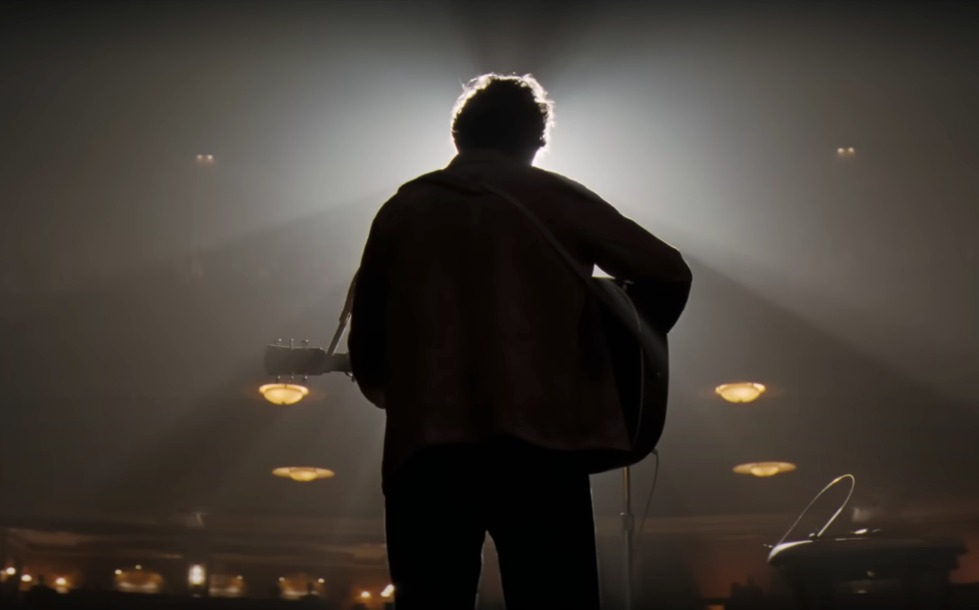
Not having delved too far into the intended plan for this film regarding the amount of time it would span, it took me a bit to click into what it was aiming for. Adapted from the 2015 book “Dylan Goes Electric!” by Elijah Wald, co-writers Mangold and Jay Cocks chose an arc for Dylan that would build toward the 1965 Newport Folk Festival, where controversy arose from the use of electric instruments. Even as one who is a casual Dylan fan, I found this to be a fitting bit of time to cover, as it’s a significant reflection of the evolving music scene of the time and the sort of major shifts Bob Dylan, the musician, would make in his position as one of the most prominent singer-songwriters of the 20th century. It then becomes a matter of how a film can convey these conflicting emotions while incorporating everything going on around Dylan at the time.
Compared to something like Bohemian Rhapsody, flawed as I found that film to be, it could rely on the jukebox musical nature of its soundtrack to guide an audience along with little ambiguity about what’s happening (even while being wildly inaccurate or reductive). Rocketman was a more substantial movie thanks to some imaginative ideas to amplify the musical numbers and enliven the guardrails-like approach to its storytelling. A Complete Unknown does not arrive with the same high-energy soundtrack (we are talking mainly folk music here), but the film rarely goes more than five minutes without a song. However, while narratively linear, the compressed timeframe allows for a specific period to be understood with stronger emphasis where needed.
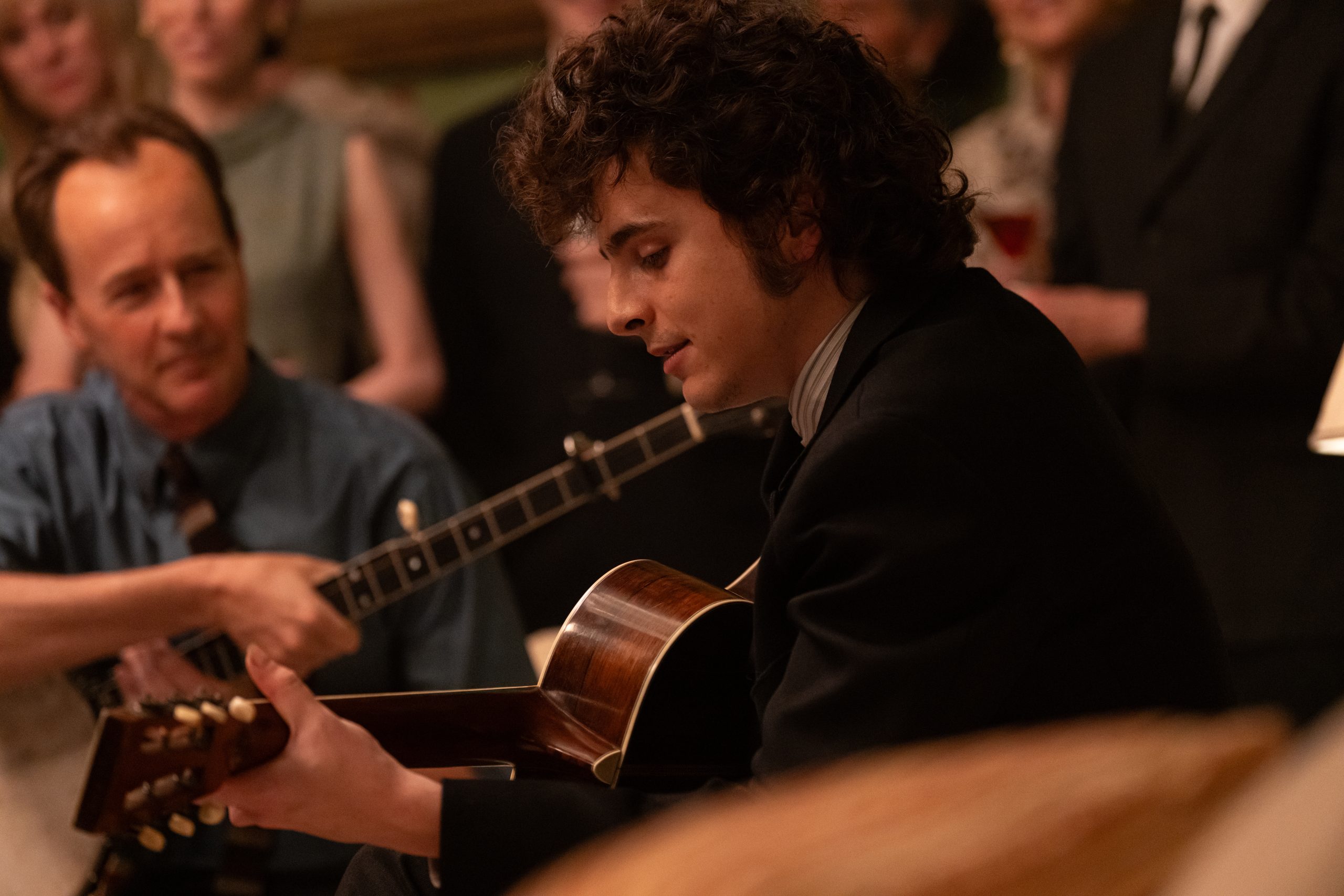
Not presented in a manner as cynical (and darkly comedic) as the Coen Brothers’ Inside Llewyn Davis, A Complete Unknown features a warm New York Village folk scene that lets us appreciate Dylan in the wild. Is he having fun during his early days as a performer? Is he doing this just to satisfy Seeger? Or to impress Joan? Is this all part of a grand plan to move forward in ways he’s unsure of at the time being? While he’s never been closed off about the topicality of some of his music, Dylan has been seen as an enigma for so much of his career. From this film’s perspective, he has no desire to tell anyone about where he comes from and rarely seems to know where he’s going. It makes him a hassle to deal with, especially when he’s smashed, but the film doesn’t cheer on his boorishness. Yes, this is primarily a film that reveres Dylan in terms of his choices to push forward, but his ambitions do come at a cost that affects others.
Conveying this whole aloof attitude, Chalamet is pretty terrific here. Both performing the instruments and singing the songs (along with all the other actors, as if this is the latest film showing off how much more accomplished it feels to be handled in such a manner), he brings out his own take on Dylan to a successful degree. Getting a performance that speaks to one’s interpretation instead of a simple imitation means watching an actor who wants to show you what it looks like to see the wheels turn in his head as he considers his next move. Being so unknowable is the challenge Mangold presented for Chalamet, and he succeeds with aplomb and sounds great, too.
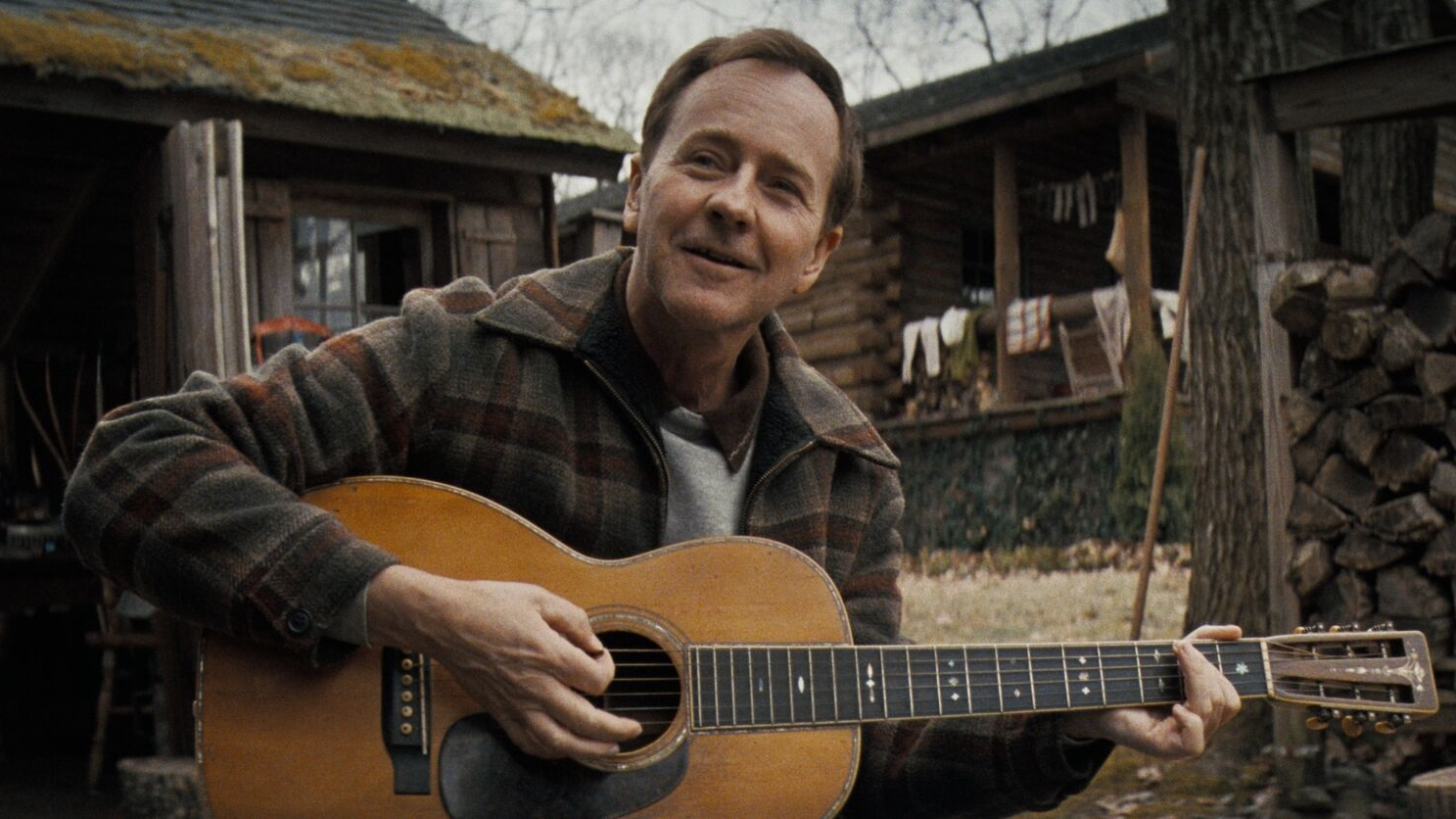
Norton’s take on Pete Seeger was also successful. Watching Norton be this good in a film is a real pleasure. The inherent folksiness of the character easily lets an audience feel lured in by his pleasant demeanor. Given Bob’s evolving attitude, it’s only over time that one can understand certain frustrations building within. With that said, the relationship shared between him and Bob allows Norton and Chalamet to do some of their best work together, giving the film a stronger center here compared to the trials of Bob’s female relationships.
With that in mind, Monica Barbaro is set to break out based on her work here. Sure, she’s a notable presence in the massive blockbuster that is Top Gun: Maverick, but as Joan Baez, plenty of time is spent letting her deal with Bob, voice her own opinion, and still look at the music as what matters as much as anything. Baez is certainly an outspoken person in her own right. I can’t imagine her feelings on this take of her (there’s a lot of Barbaro making a head turn towards Bob in admiration). Still, when the film focuses on how she factors into the various events portrayed, good work is done to help her stand out.
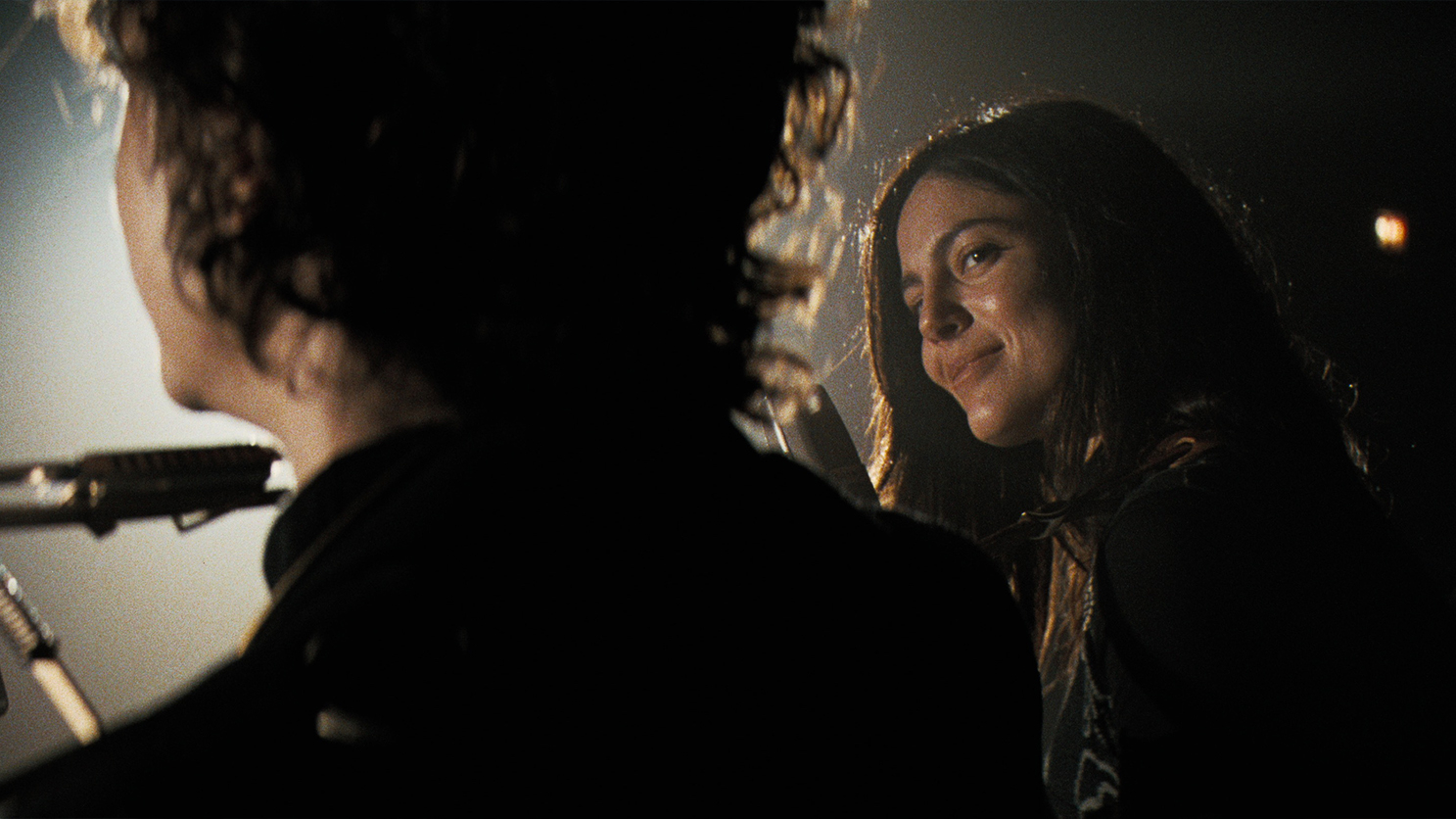
Fanning may be on the lower end compared to the other stars. It’s not due to a lack of effort but her positioning. With a move to put her on the receiving end of bad behavior on Bob’s part, Sylvie is forced to be sad or upset for so much of the film that it upsets the balance of what else she really has to offer (enough for me to have a guess as to why the name was changed). However, Fanning’s expressions allow many scenes to shine, such as one where a musical performance clues her into exactly how Bob feels about her, with no other words needing to be said.
Mangold, the journeyman director that he is, equips himself well by opening up this canvas just wide enough to tell the story needed, even with some of the limitations it creates regarding supporting characters. That said, along with a talented cast (which also includes a game Boyd Holbrook having a blast as a mostly drunk Johnny Cash), he makes the most out of his production budget. This is a 140-minute movie, and that time is utilized well when showing off the locations, sets, and costumes. It’s another case where I’m not trying to feel like I was a part of some decade I wasn’t alive for, but I can go along with how this film has chosen to visualize it, and that works to its advantage thanks to things such as Phedon Papamichael’s superb cinematography.
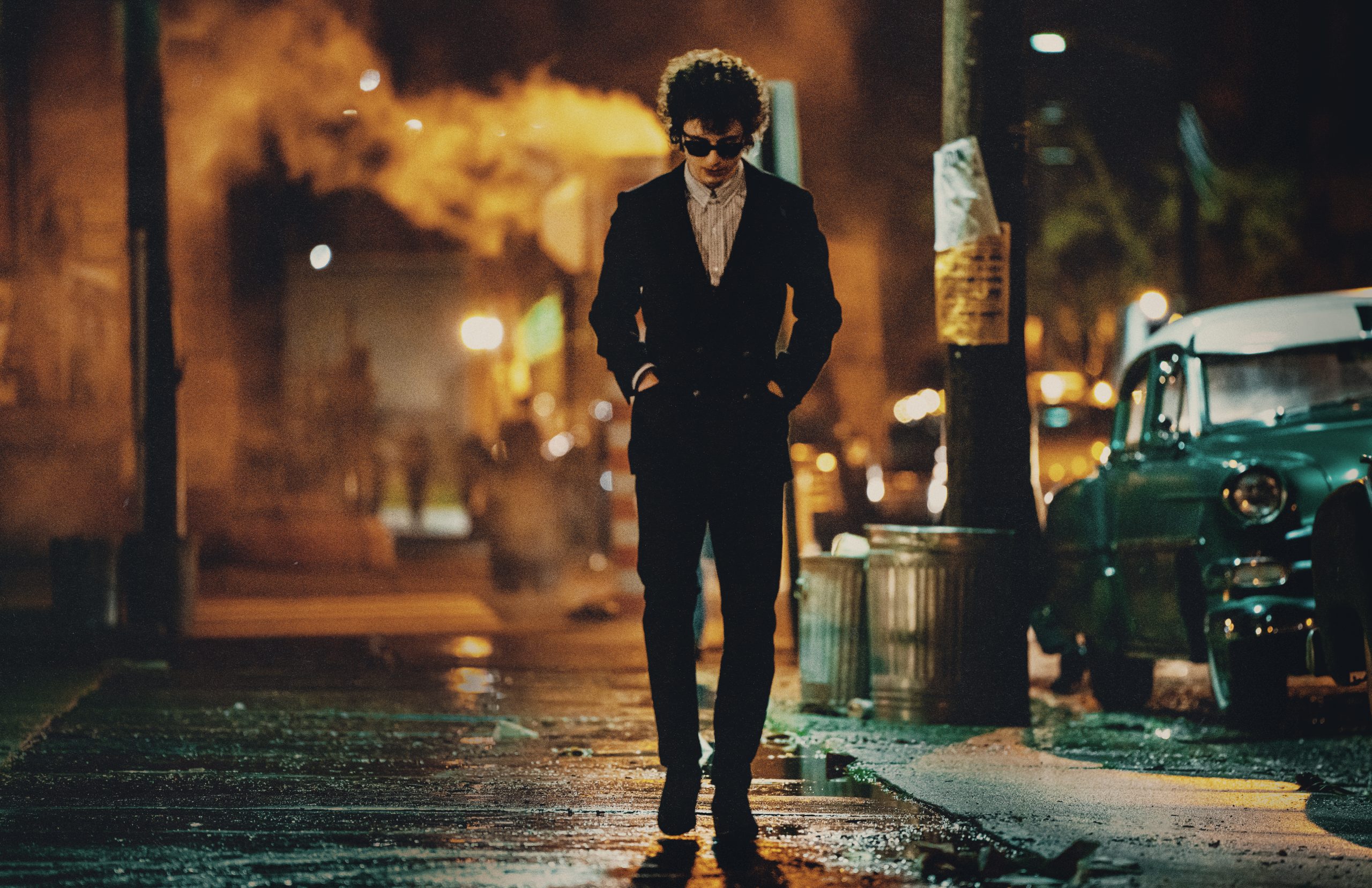
On top of all that, the sound is phenomenal in this picture. As noted, many performances are featured throughout this film. While they may not be as pop-friendly as other musicians with biopics, there’s a real strength to hearing some of Dylan’s music coming together in the studio or on stage. Finding ways to emphasize the dramatic departure caused by going electric in the film’s climax plays great for a big screen feature. And there’s so much harmonica to take in for good measure, providing a distinct pick-up for any center speaker channel.
To make a Bob Dylan biopic, it means considering what there is to do to celebrate the man to a degree, as well as informing an audience as to why his legacy is important. Understandably, the confounding nature of why Dylan made the choices that he did means a dramatized take on his life following a more studio-friendly path will only accomplish so much. That said, Mangold has strong enough sensibilities as a director to deliver something palatable yet studied when digging in where needed and otherwise conveying a proper sense of the time and place depicted. Whether or not this is a defining take, A Complete Unknown still feels like it’s been handled with care.
A Complete Unknown opens in theaters on December 25, 2024.