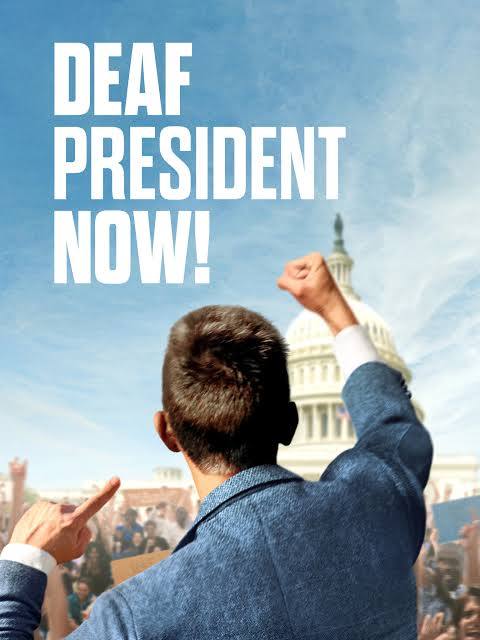
Nyle DiMarco and Davis Guggenheim collaborated to direct Deaf President Now, an insightful documentary that reflects the best storytelling medium, revealing a little-known story about an unsung group of people with something to say and sign. The Gallaudet 4 protest of deaf students paved the way for the Americans with Disabilities Act (ADA). In 1988, Gallaudet University had historic protests after the school’s board of trustees selected a hearing president over numerous qualified Deaf candidates. The protests lasted a week, but their impact mattered in the long run to provide deaf students with vital rights.
Many subjects who discuss the events sign the entire incident, like Jerry Covell, Bridgetta Bourne-Firl, Tim Rarus, and Greg Hlibok, who provide vital context to the events unfolding and unique perspectives. “We are not impaired,” Rarus boldly declares during a highlight, reclaiming the stigma of a disability and leaning into their gifts to share their humanity. Telling a gripping story of the protests, talk about what they fought for, which motivates them to protest. “I’m not sure if I have one foot in each world. I’m teetering,” one subject says about his duality being partially deaf. Though he has a conflict, this moment allowed him to empathize with others.
See Also: Sundance 2020 Review: The Fight – ACLU Can Do It!

Deaf President Now is more than a standard activist documentary and leans into subverting traditional filmmaking techniques, which garners your attention like few streaming docs can. Sudden moments of silence are an effective, if not eye-opening, isolating technique, immersing a hearing audience from their perspective, amplifying smaller and bigger sounds. It is used to cut people off from conversations of influence and power, and remind viewers how much harder it is for them to overcome. The impressionistic, visually stimulating photography also does this to an effect. One repetitive substantive moment was the former President’s language that looked down on deaf people, and how she had to be corrected. How was she in this role to begin with?
Deaf President Now reflected on the struggle that marginalized groups had to overcome, with the understanding that society still has ableism. One moment that caught me off guard was the tension of being civilly compliant, which was at odds with the threat of pulling government funding. Eerily relevant to today’s political landscape. A third act is a tonal change of anger to hope and relief, wearing its heart on its sleeve. The documentary premiered at the Sundance Film Festival, played at numerous film festivals around the country, like True False, and won an audience award at SXSW. Deaf President Now is a must-watch for viewers to understand the events that influenced the Americans with Disabilities Act.