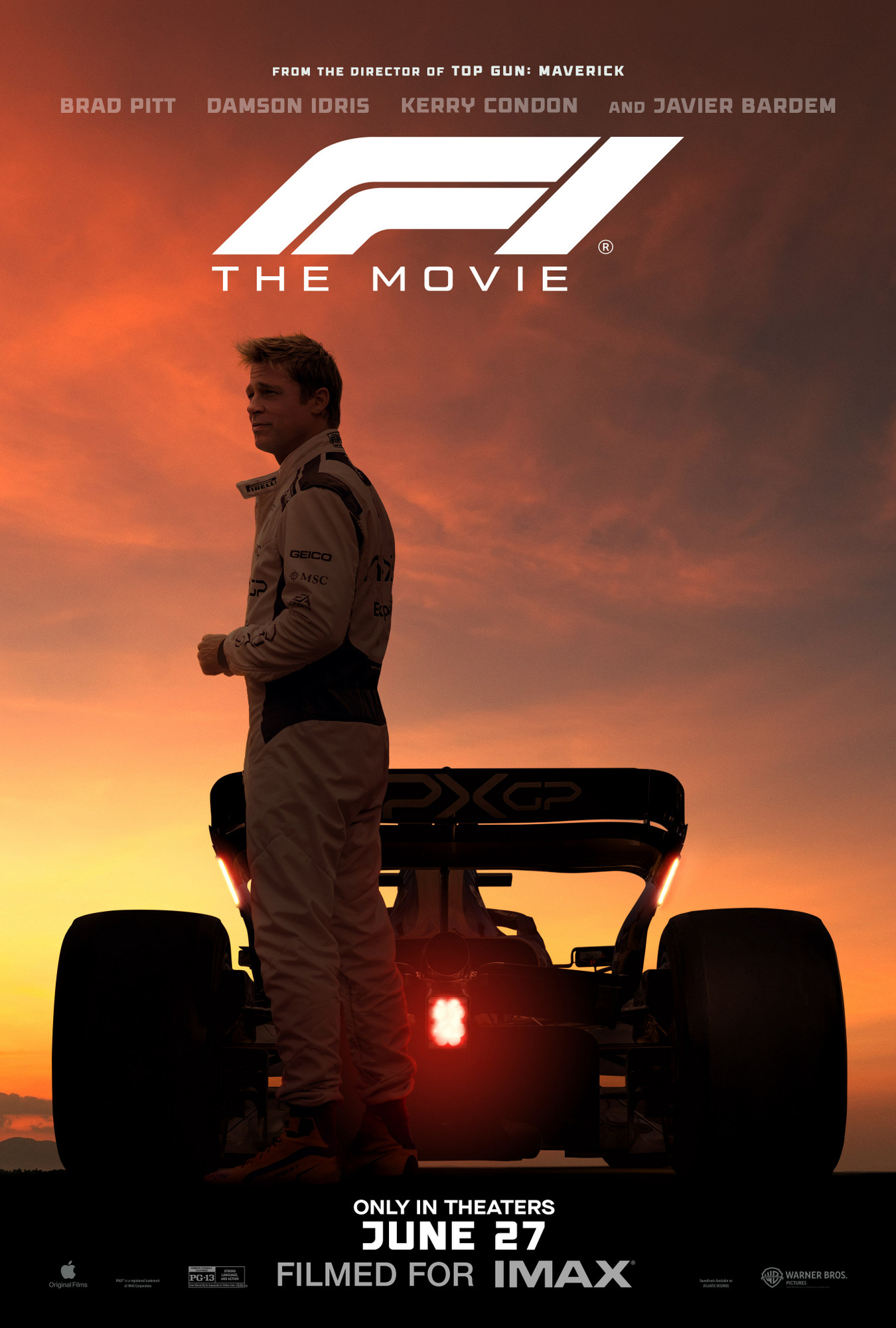
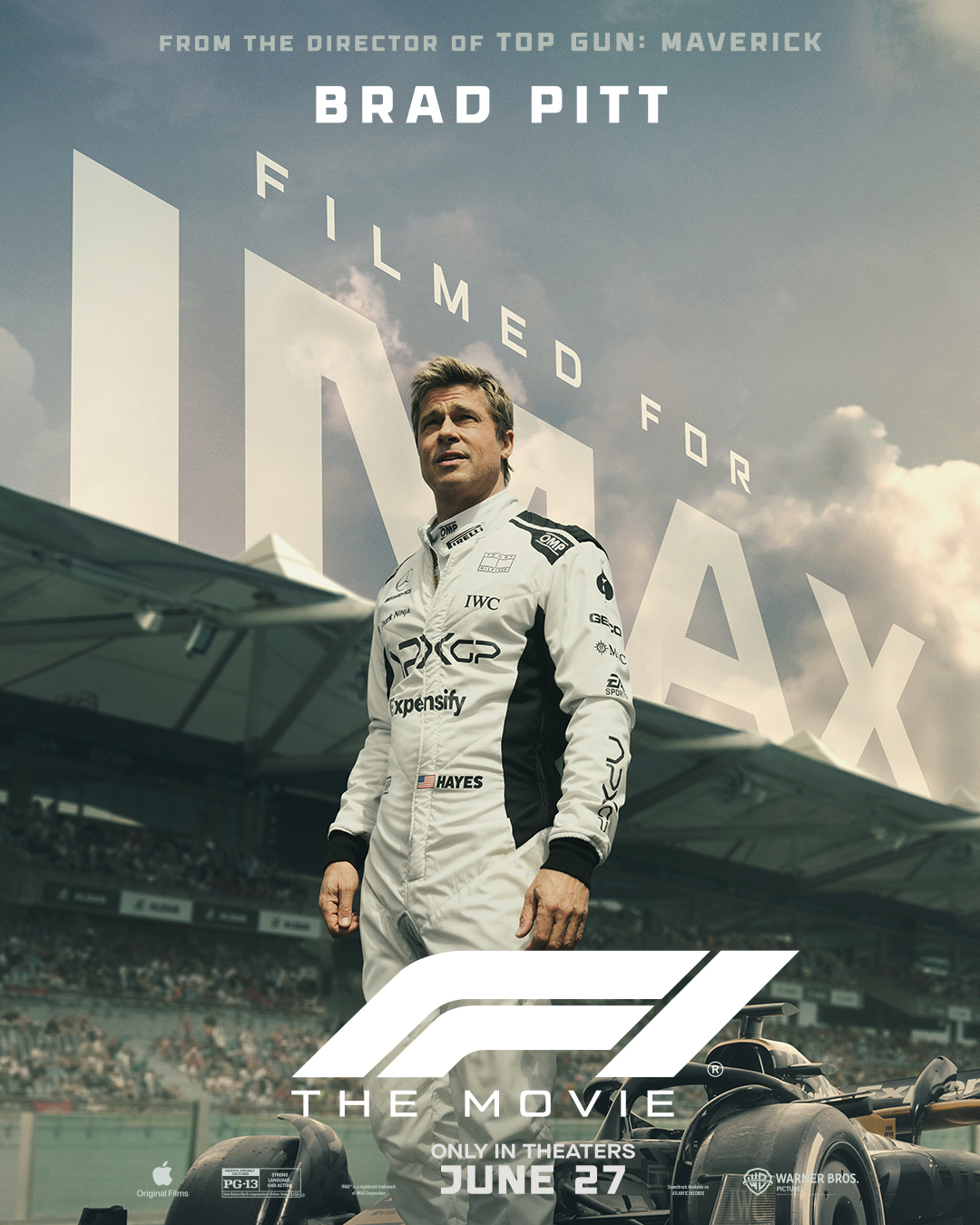
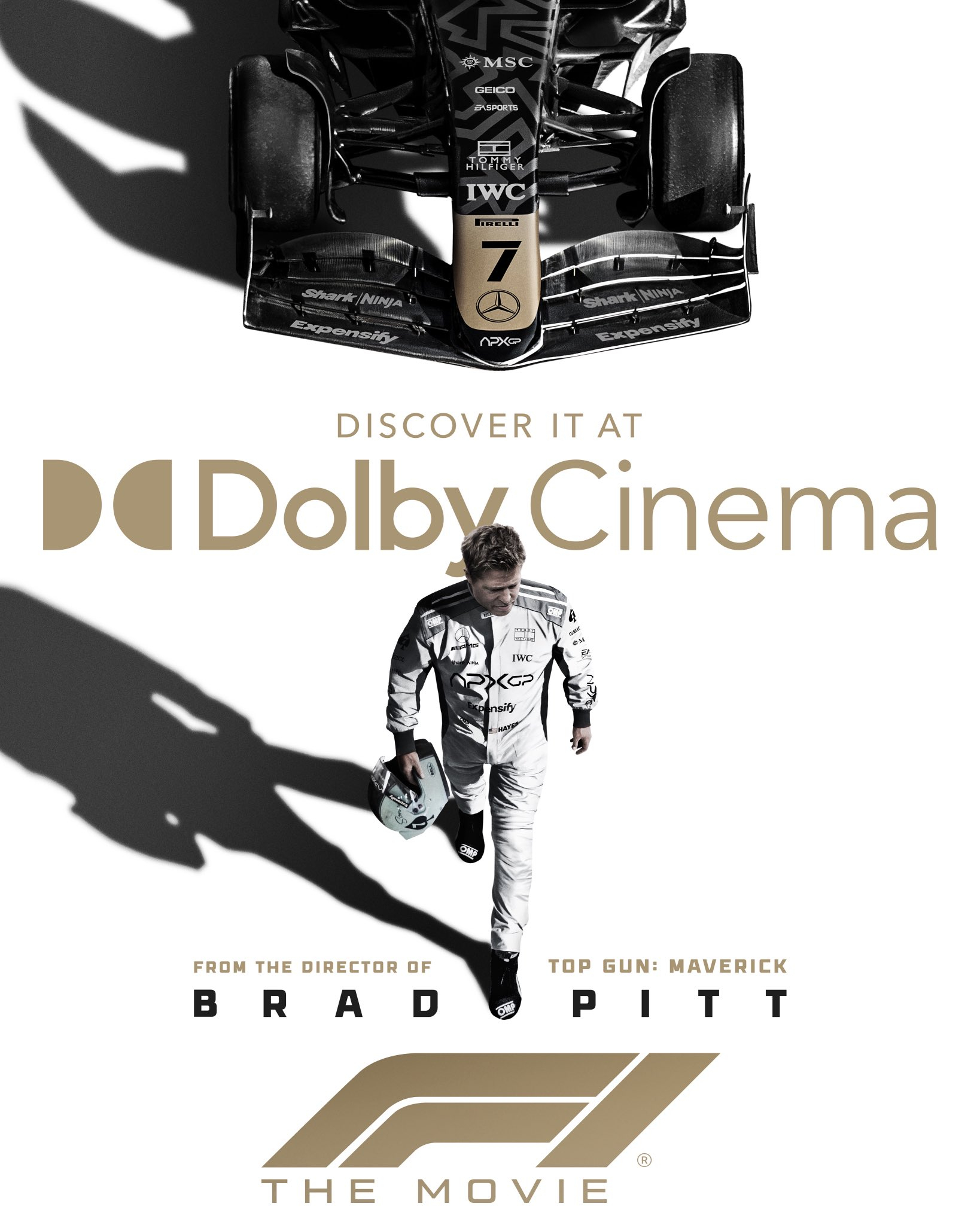
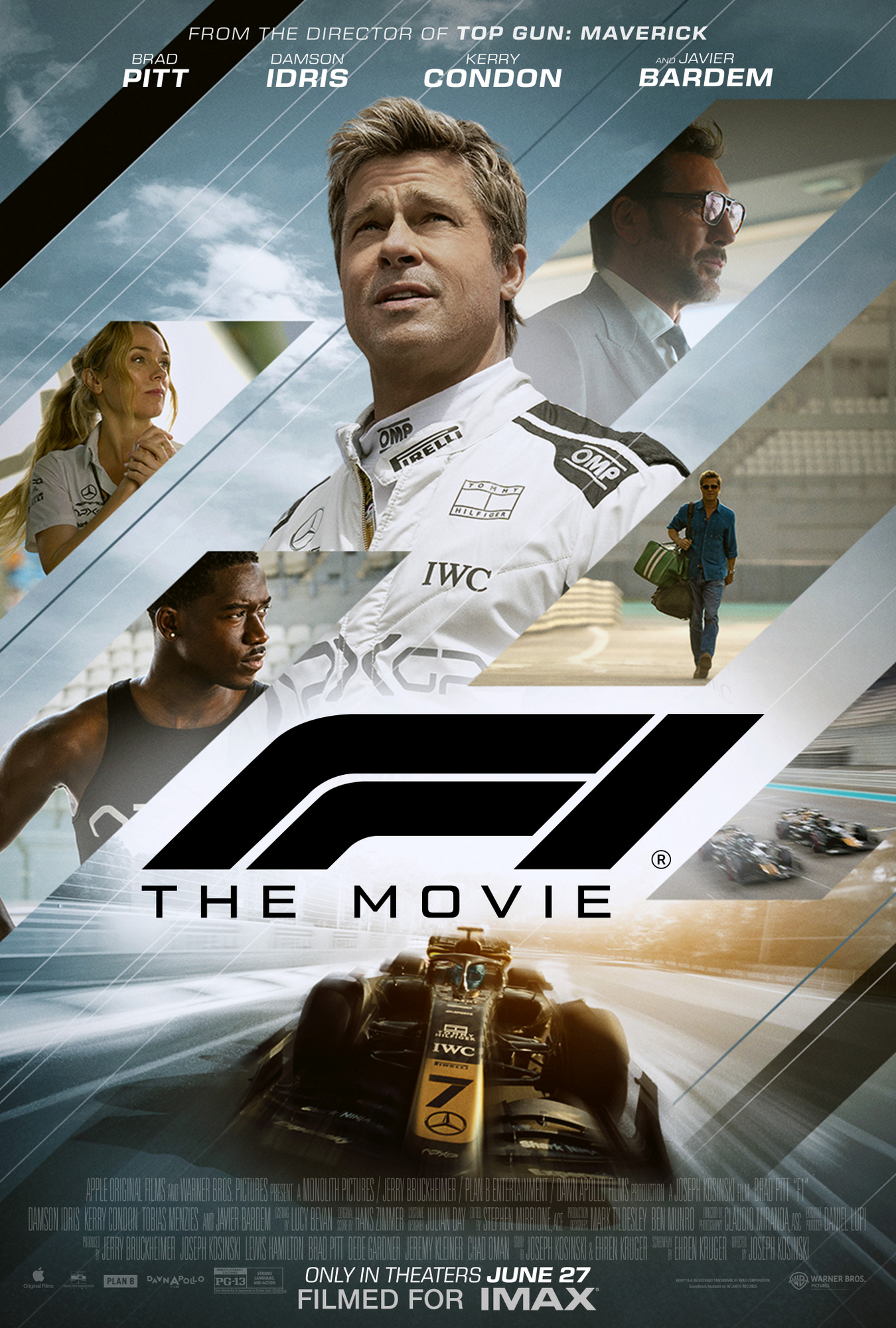
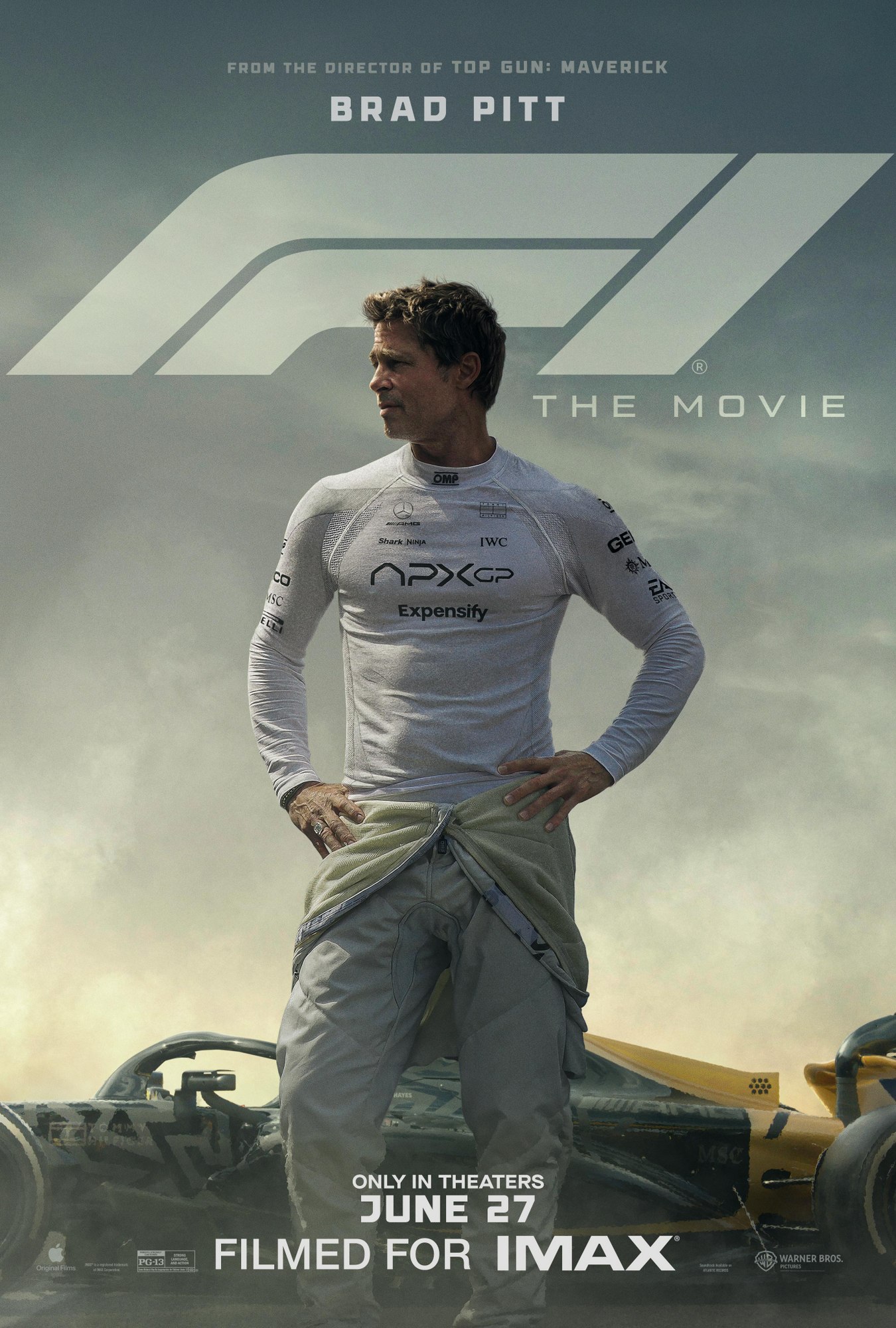
For a film that relies heavily on the notion that audiences want to see Brad Pitt drive cars really fast, F1 certainly taught me a lot about how Formula One works. That’s a good thing, as there are only so many sports dramas that need to do a bit more than average communication of how the sport works. It also means adding a further dimension to a typical story revolving around older and younger team members figuring out their differences, getting through past trauma, and so on. F1 is not exactly reinventing anything, but it arrives with a level of polish and confidence that can easily satisfy one looking to have a good time at the movies, with adult-level stakes being kept in mind, as opposed to more typical escapist fare. That being said, seeing F1 on the biggest and loudest screen available is naturally the correct choice.
Pitt stars as Sonny Hayes, who begins the film as a nomadic racer-for-hire. From his daily routine and some of the scars we see, one can infer that this man has lived a life fueled by a desire to go fast, but not always making the best choices. Does that stem from self-assurance and arrogance, or is it just bad luck? Whatever the case, Sonny is recruited by his old friend, Ruben Cervantes (Javier Bardem), to join his Formula One team and assist with rookie prodigy Joshua Pearce (Damson Idris). While having to look at a mirror of sorts when it comes to looking after another arrogant racer, it does mean Sonny gets to be a part of a team again, and race in a manner that proves just how great he can be. But will these racers be able to get along and do what’s best for the team?
See Also: ‘The Life of Chuck’ Review: Subverting Multitudes
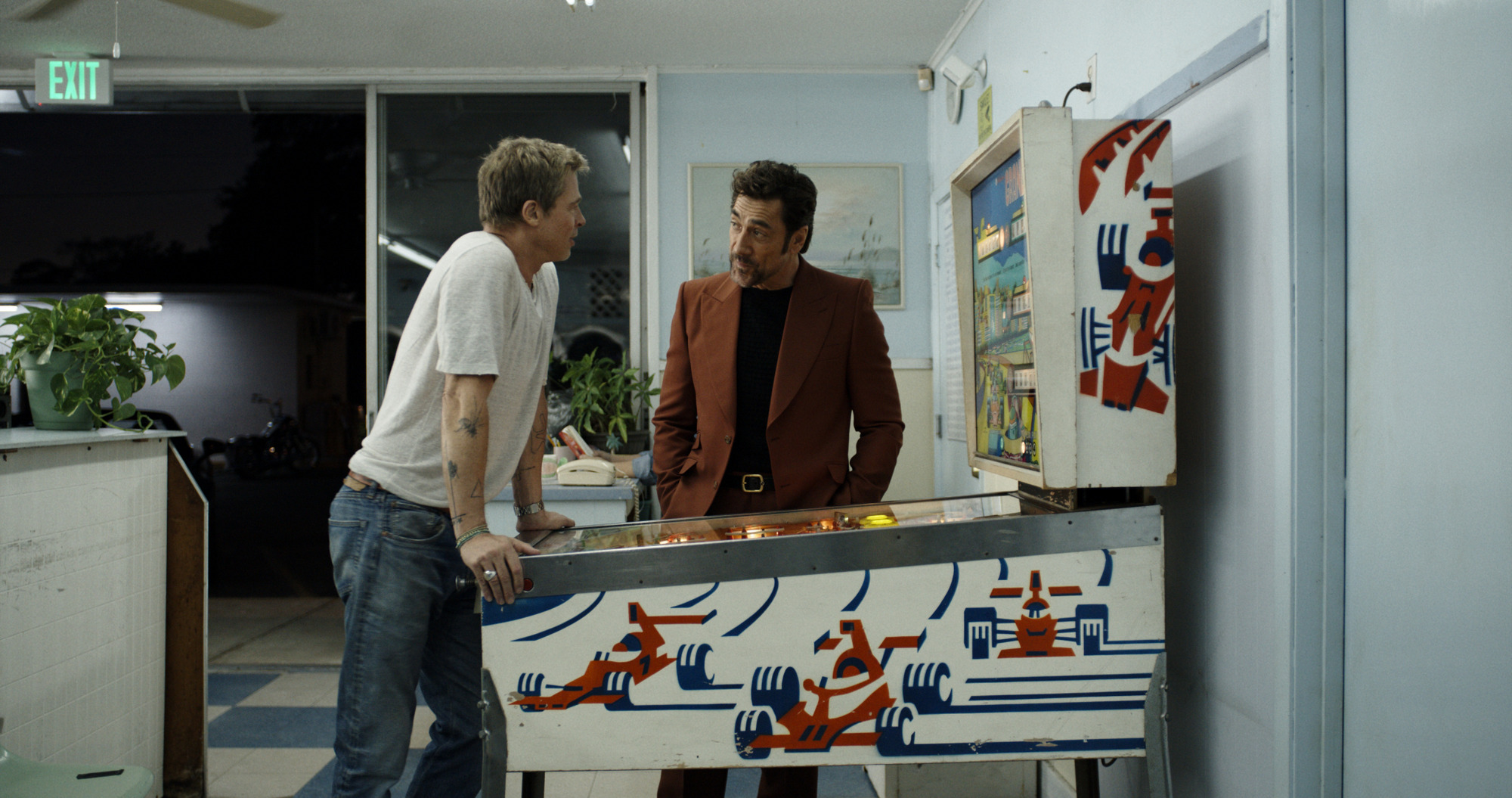
This film comes from director Joseph Kosinski, writer Ehren Kruger, and blockbuster producer Jerry Bruckheimer. Given the massive success all of these men are coming off of with Top Gun: Maverick, it’s only fitting to see a follow-up that feels very comfortable for them. The obvious comparison would be to look at when Bruckheimer, Tony Scott, and Tom Cruise reunited a few years after Top Gun for Days of Thunder. While similar, F1 does have other ideas on its mind, which partially comes down to the lead in question. As much as ‘Maverick’ serves as a metaphor for Cruise’s career and his role in making blockbusters the old-fashioned way (which carries over to the Mission: Impossible films as well), Pitt has a slightly different energy.
F1 appears to be showcasing Pitt as a sort of seasoned utility player who makes the things around him seem stronger. That’s not too far from how well Pitt can work when given an oddball side character to play, as opposed to simply being the handsome lead (see Snatch, Burn After Reading, 12 Monkeys, etc.). That said, the actor also exhibits the weariness of someone who has been in the limelight for a long time, has made some poor decisions to counter the better ones, and now more comfortably navigates his way into effective leading man work with interesting filmmakers (see Tree of Life, Moneyball, Ad Astra). It’s not hard to see how he’s utilized in F1 and recognize how closely tied into Pitt’s life this film can feel.
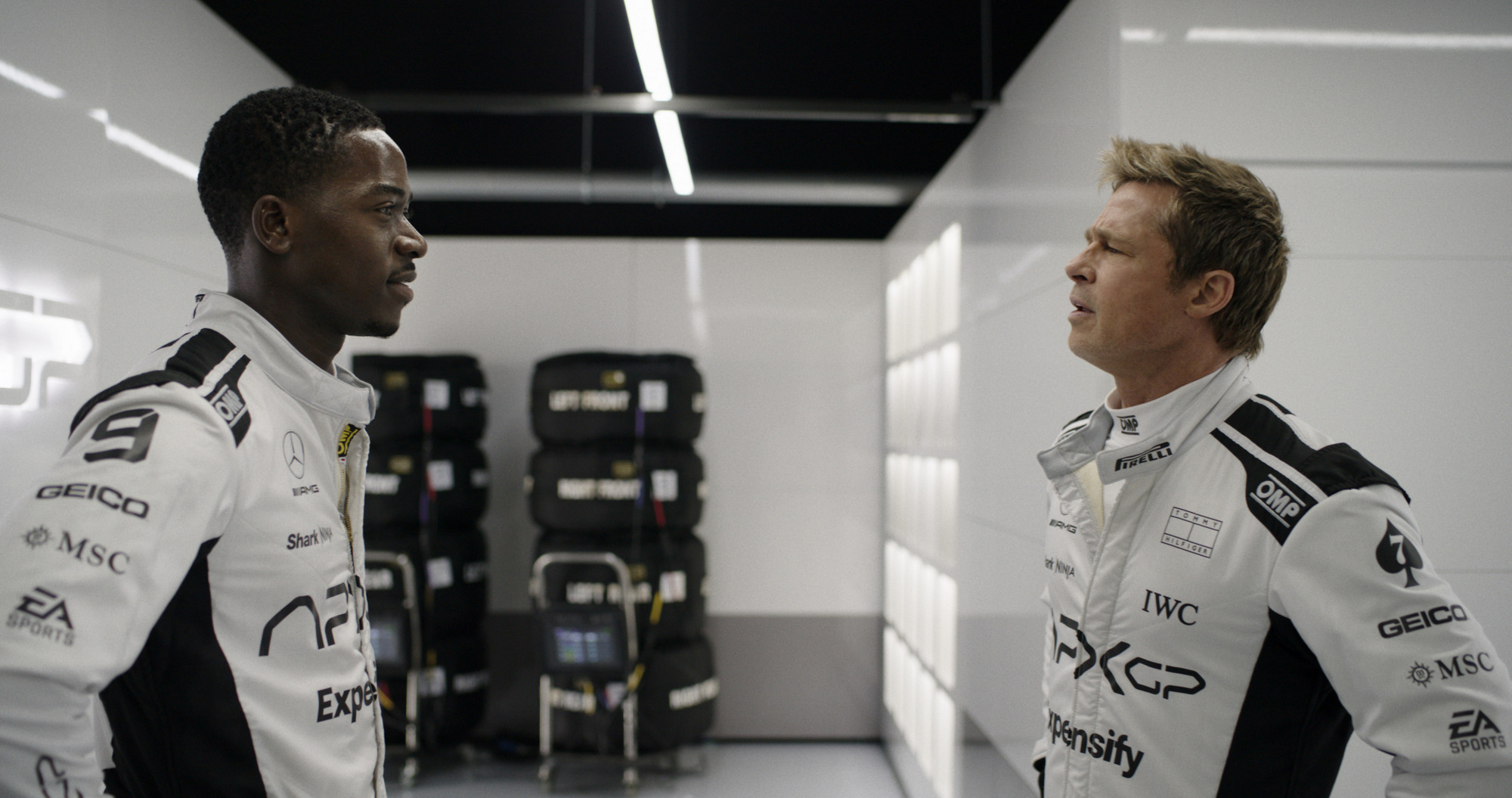
Okay, but for the non-cinephiles who don’t care about all of that, does it matter? Well, fortunately, this movie is still a whole lot of fun. Granted, caring about the levels of detail the film delves into regarding how these races work and what it takes to have a proper car and crew to handle them is a buy-in. I’ve never been much of a car guy, but I absolutely love seeing process being handled in a feature. F1 puts a great deal of effort into informing the audience about the races, the cars, the designs, the politics, and more. Plus, there are the actual racing sequences, which are incredible.
Shot with digital IMAX cameras and featuring plenty of full-screen footage to take advantage of theaters equipped to go big (or go home), regardless of how much driving Pitt and Idris did for the film (which was quite a bit), it’s thrilling to watch these races. It’s also a credit to the focus on how points are scored in F1 that the film can afford to play around with expectations. It’s not simply about being the first person to cross the finish line, and as a result, actions are taking place that reflect the “war on the battlefield” approach, where these men drive against others, allowing for more dynamic sequences.

Getting a sense of how this all works, it’s also great to see how the film incorporates other key characters. Kerry Condon is a brilliant actress, and her role as Kate McKenna, the team’s technical director, is not exactly a challenging one. And yet, the film allows her to shine brightly, matching the energy of the others enough for me to almost overlook how clichéd her relationship with Sonny becomes. Similarly, Tobias Menzies, as a member of the team’s board of directors, and Kim Bodnia, as one of the team’s principals in the pit, have no real depth; yet, the actors put in what’s needed to keep things lively. And, of course, Bardem has enough of a glow around him to hold all of this together, even as he frequently delivers reels of exposition.
Where this movie goes, what it’s ultimately about, and how it manages to deliver are all areas that shouldn’t require too much concern. Even with its huge budget, which allows the film to nail all its details, there’s a grounded level of authenticity at play, allowing the audience to get behind Sonny and the team, as it’s too much fun not to (even if this doubles as a major ad for Formula One). Sure, one can figure out what this will all amount to, but it’s a sports drama in 2025, and the film isn’t trying to throw anyone off. Instead, F1 treats the audience to a rousing story full of speedy Formula One racecars, and strong minds put toward making sure everyone gets a kick out of watching a movie like this come to life, with a bit of movie star introspection to go with it. So, buckle up, as this is a fun one.
F1 opens in theaters and IMAX on July 27, 2025.