
There’s a particular privilege that comes with moderating FYC panels — you’re not just watching films, you’re sitting across from the people who made them possible. When I moderated the Promising Young Woman panel for Focus Features, Emerald Fennell wasn’t in the room. What was in the room was the below-the-line team who had realized her vision — and through their work and the way they talked about it, I understood immediately that whoever had assembled these collaborators and trusted them this completely was a filmmaker worth watching. That panel, part of Ingle Dodd’s Behind The Slate Screening series, is available to view HERE — and it captures exactly what made that introduction so memorable. Two films later — with expanded budgets and expanded ambition — “Wuthering Heights” confirms Fennell’s commitment to craft scales with her resources. This is a bold, visceral, and often stunning piece of filmmaking from a director who knows exactly what she wants and has assembled the team to deliver it.
Let’s be clear about what this film is and what it isn’t. It is emphatically not a faithful adaptation of Emily Brontë’s novel, and Fennell has said as much herself — the quotation marks around the title are doing real structural work. This is her version of Wuthering Heights, filtered through the emotional experience of reading it as a teenager: all obsession and doom and operatic feeling, uncut by adult irony. The result is something genuinely singular — a Gothic fever dream where Heathcliff and Cathy exist as forces of nature rather than characters in the conventional sense, two weather systems colliding until one of them breaks. Audiences arriving expecting the novel’s generational scope and class rage may find themselves recalibrating. Those who surrender to Fennell’s internal logic will find it one of the most intoxicating cinematic experiences of the year.
What is beyond debate is the craft, and it is extraordinary from top to bottom.
See Also: “Wuthering Heights” Review: With Desires Comes A Visual Feast
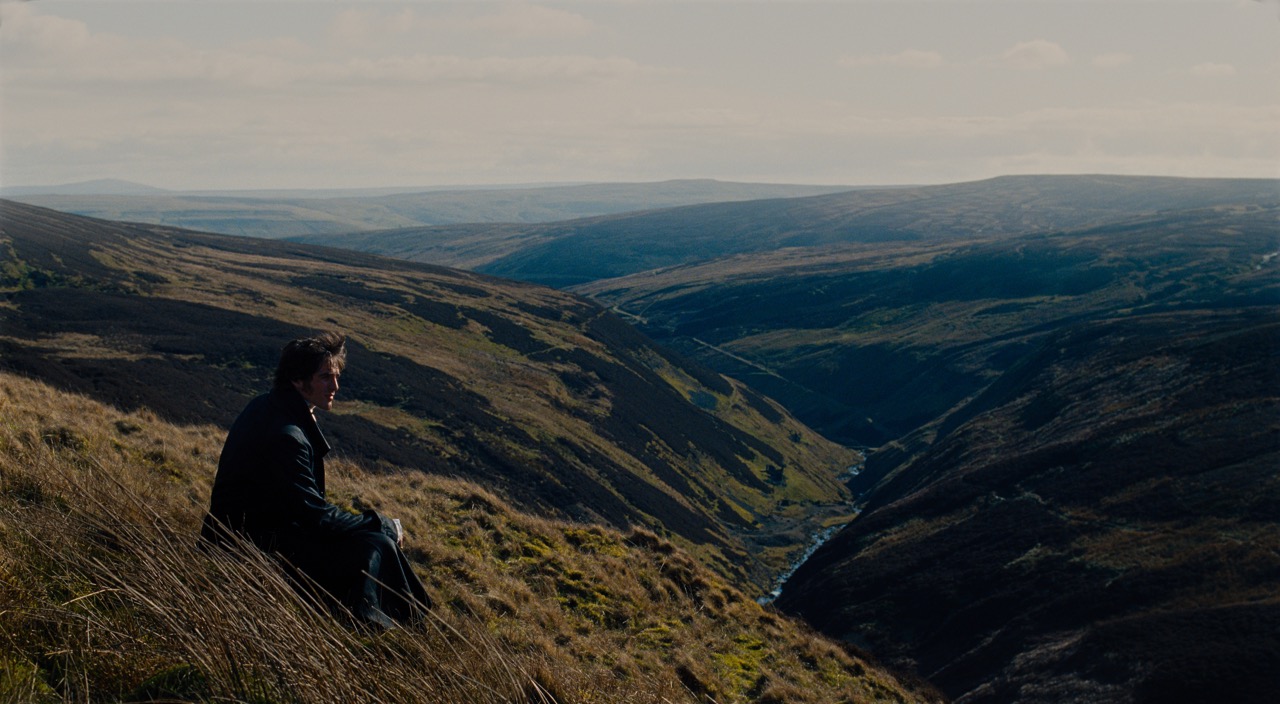
Cinematographer Linus Sandgren, returning from Saltburn, delivers some of the most expressive, formally rigorous work of his already Oscar-decorated career. Shot primarily on 35mm — with VistaVision deployed for landscape shots where small figures need to remain legible against the grain — Sandgren and Fennell developed a guiding principle worth noting: you should be able to pause any frame and understand what a character is feeling from composition alone. When heartbreak arrives, the sky turns blood red. Thrushcross Grange exists in perpetual spring until it doesn’t. The Yorkshire Moors generate fog not as atmosphere but as emotional weather. This is color as character psychology, light as interior monologue, and it represents some of the most sustained visual storytelling you’ll see in a studio film this year.
Production designer Suzie Davies — Oscar-nominated for Conclave and a Fennell collaborator since Saltburn — builds a world of deliberate architectural discomfort that rewards close attention. The kitchen at Wuthering Heights was constructed one inch shorter than Jacob Elordi’s six-foot-five frame, a detail that never registers consciously but creates persistent unease. The white marble staircase with red fur cascading from its underside is the kind of image you’ll still be thinking about days later. Davies’s philosophy — accuracy of feeling over accuracy of period — is exactly the right call for this material, and she executes it with the confidence of someone who understands that great production design is never just decoration.
Costume designer Jacqueline Durran, who dressed Robbie as the literal embodiment of a plastic ideal in Barbie, inverts that assignment here entirely, creating garments that feel simultaneously period-referential and emotionally loaded. The wedding gown is a genuine set piece. Across this film, Barbie, and her broader career, Durran continues to build one of the most versatile bodies of work currently active in the industry, and her contributions here are among the film’s most indelible.
Anthony Willis, a genuine kind soul and father to a newborn, delivers another brilliant score — his third collaboration with Fennell after Promising Young Woman and Saltburn — that dances in a tango with Charli XCX’s companion album rather than competing with it. Willis’s orchestral work leans into sweeping strings and brooding tonal shifts that mirror the moors themselves, while XCX brings gothic rock and neoclassical dark wave influences, most strikingly on the industrial opening track “House” featuring Welsh musician John Cale, and the haunting “Chains of Love.” The repeated use of Olivia Chaney’s folk ballad “Dark Eyed Sailor” threading through the film is among the most quietly affecting musical choices of the year. That the film holds its tonal coherence across all of it is a real achievement, and credit belongs equally to editor Victoria Boydell and the sound team, who navigate between Willis’s classical orchestration and XCX’s modern pop architecture with more grace than the concept suggests it deserves.
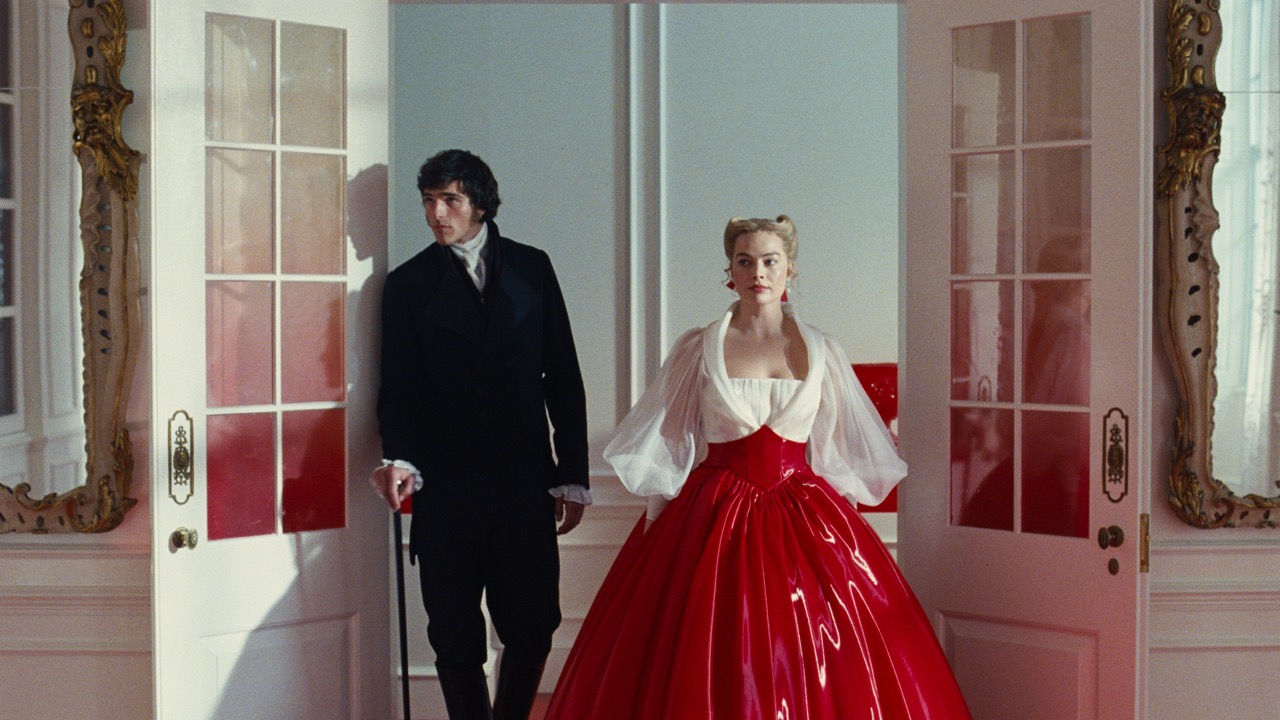
As for the performances — Margot Robbie and Jacob Elordi are doing exactly what Fennell asks of them, and they do it beautifully. This is Robbie at her most uninhibited, fully committed to a version of Cathy that is selfish and magnetic and genuinely dangerous to be around. Elordi, who was reportedly considering stepping away from the industry before this role found him, reminds you why he’s one of the most watchable actors working today — there’s a physical and emotional scale to his Heathcliff that the film earns rather than simply assumes. Hong Chau’s Nelly is the film’s moral anchor, and she makes it feel effortless. Owen Cooper — fresh from his Emmy-winning turn in Adolescence — is briefly and searingly present as young Heathcliff, suggesting a rawness and specificity that signals he’s going to be a significant presence in this industry for a long time.
The critical consensus sits at 59% on Rotten Tomatoes and a 55 on Metacritic, and those numbers reflect a genuine split between two valid viewing experiences rather than a failure of the film itself. The CinemaScore of “B” from opening-weekend audiences tracks with a film that promises one thing and delivers something stranger and more committed. That’s not a flaw — that’s a filmmaker with a point of view, which is rarer than any of us would like.
“Wuthering Heights” is the rare studio film where the below-the-line work doesn’t support the vision — it is the vision. Having been introduced to Emerald Fennell’s filmmaking through that Promising Young Woman panel, watching the team she has built and the scale at which they now operate, this is exactly the trajectory you hoped for. The moors look magnificent, the obsession feels real, and the craft is impeccable. This is a film made by people who care deeply about every frame — and it shows.
Wuthering Heights is now playing in theaters.

