More than a decade since its debut, How to Train Your Dragon remains one of animation’s most enduring and emotionally resonant franchises. Now, fifteen years after it first soared into theaters—and into fans’ hearts—it’s getting the live-action treatment, with Dean DeBlois returning to direct and expand upon a script loosely based on Cressida Cowell’s novel of the same name.
While this new adaptation may look and feel familiar in its emotional and narrative beats, the new expanded story aims to deepen character dynamics. In a way, the old feels new again. Such an approach gives DeBlois creative room to explore the Isle of Berk in ways that the animated version couldn’t and gives us even more dragons in flight scenes that get the heart racing. At the same time, it can be a detriment, as the original 90-minute animated film’s tight pacing requires more padding to stretch into a feature-length live-action format, which results in moments that sometimes feel like filler rather than meaningful expansion.
Even so, Universal has such confidence in a film that is so much like its animated counterpart that they have already announced its sequel.
See Also: ‘Lilo & Stitch’ Review: Cuddly Chaos That Doesn’t Bite
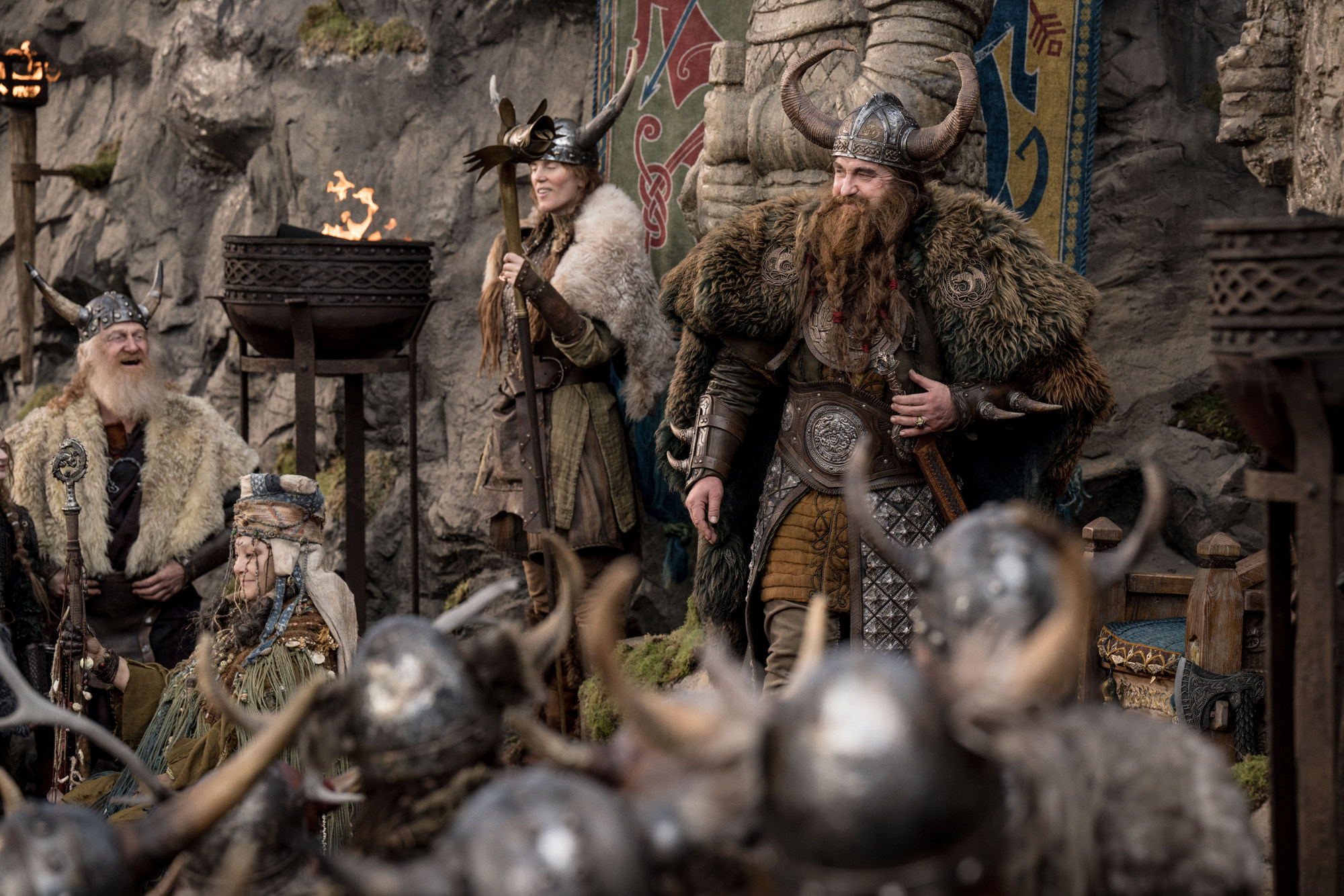
Set on the windswept island of Berk, the story follows Hiccup Horrendous Haddock III (Mason Thames)—the inventive but underestimated son of Viking Chief Stoick the Vast (Gerard Butler)—who challenges generations of dragon-fighting tradition when he forms a secret bond with Toothless, a rare and feared Night Fury. That unlikely friendship becomes the catalyst for a seismic shift in how Vikings view dragons and, ultimately, coexistence.
Since the film doesn’t do much to distinguish itself from its animated predecessor in terms of story or tone, it often feels more like a visual effects showcase than a necessary retelling. While the scale and realism of the CGI dragons offer moments of spectacle, the emotional intimacy and stylized charm that defined the original sometimes get lost in translation. Therefore, the film must rely on the cast’s performances and nostalgia to convey that emotional weight.
Thames is wonderful as Hiccup, matching the awkwardness and gawkiness that Jay Baruchel made iconic in the animated film trilogy while also bringing his own fresh vulnerability to the role. Not only does he want to be a part of the Viking crew, as noted by the opening scene where he tries to convince Gobber the Belch (Nick Frost) that his weapons will trap the dragons, but he also wants his father to be proud of him. At the same time, he is trying to impress Astrid (Nico Parker), a promising Viking with dreams and ambitions of her own.

However, his ingenuity is more of an interference that causes the little village to lose more homes and livestock than it actually protects. As such, he becomes a village pariah and a disappointment to his father. How could the Viking leader have such a son who can’t even wield an axe? Butler’s role shouldn’t be overlooked, even though most of his dialogue is already from the animated film, as the rough, gruff, and tough leader is a father who merely wants to protect his son but doesn’t know how to show him love. It’s the classic story of a father who misunderstands his son.
It’s only when we get to see Hiccup connect with Toothless that the film comes alive. Having captured the dragon on his own—but with no one there to witness it—Hiccup makes the radical choice not to kill it. That decision, born out of empathy rather than ego, sets the stage for the film’s most tender and visually arresting moments, as trust slowly replaces fear.
Hiccup uses those early moments with Toothless to study dragon behavior. The pivotal scene where he offers a fish to the black-scaled dragon helps establish their bond and showcases Thames’ ability to act convincingly opposite a CGI character. While the intimacy of the close-up shots makes their connection feel genuine, that believability starts to waver in the IMAX-sized spectacle, where the emotional nuance can sometimes get lost in the scale. Although John Powell’s score compensates for the visuals’ occasional lack of emotional precision, infusing the film with a sweeping, lyrical energy that helps anchor the bond between boy and dragon in something deeply heartfelt and timeless.
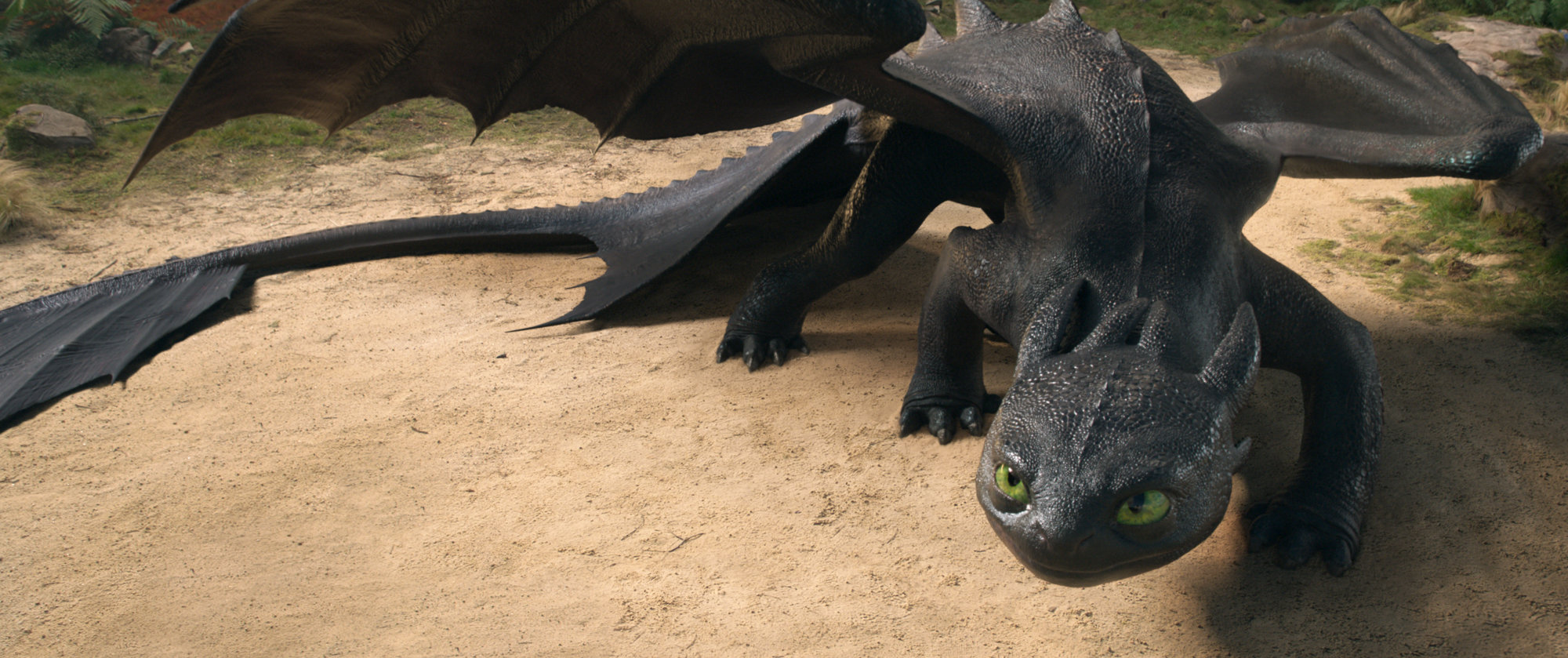
Hiccup’s study of Toothless will serve him well when he undergoes the Trial of Flame—a ceremonial rite of passage that tests a young Viking’s courage in combat, and the winner gets to be named Top Slayer. Of course, the driven Astrid wants that recognition and gets frustrated when Hiccup rises in the ranks. She is serious and focused when it comes to defending Berk and initially views Hiccup as a nuisance who doesn’t belong in dragon training. She is dismissive of him, seeing him as weak and ineffective. So when she sees Hiccup’s sudden success, she begins to suspect something and gets confrontational about it. Of course, we all know where that leads and how it helps shape her relationship with him once she sees his perspective on dragons. Once that is established, not only has he earned her respect, but a romance between the two blossoms.
But beneath the competition and teenage awkwardness, another one of the film’s emotional core is anchored by Hiccups’ desire to make his father proud. Stoick is every bit the hardened Viking chief Hiccup makes him out to be. Butler has the same gravelly authority here as he did in the animated version. As such, he commands respect from his peers but also isn’t afraid to acknowledge the individual Viking contributions. He may have all of the tools and skills to take an army to the dragon’s nest, but he lacks the know-how to navigate fatherhood.
That internal tug-of-war gives the film its emotional heft. Each act of defiance and self-discovery is laced with equal parts hope and heartbreak, which makes any attempt to bridge that father-son divide feel earned. This can also be applied to his friendships, as Hiccup eventually earns Astrid’s respect, which she shows by playfully punching him in the arm.
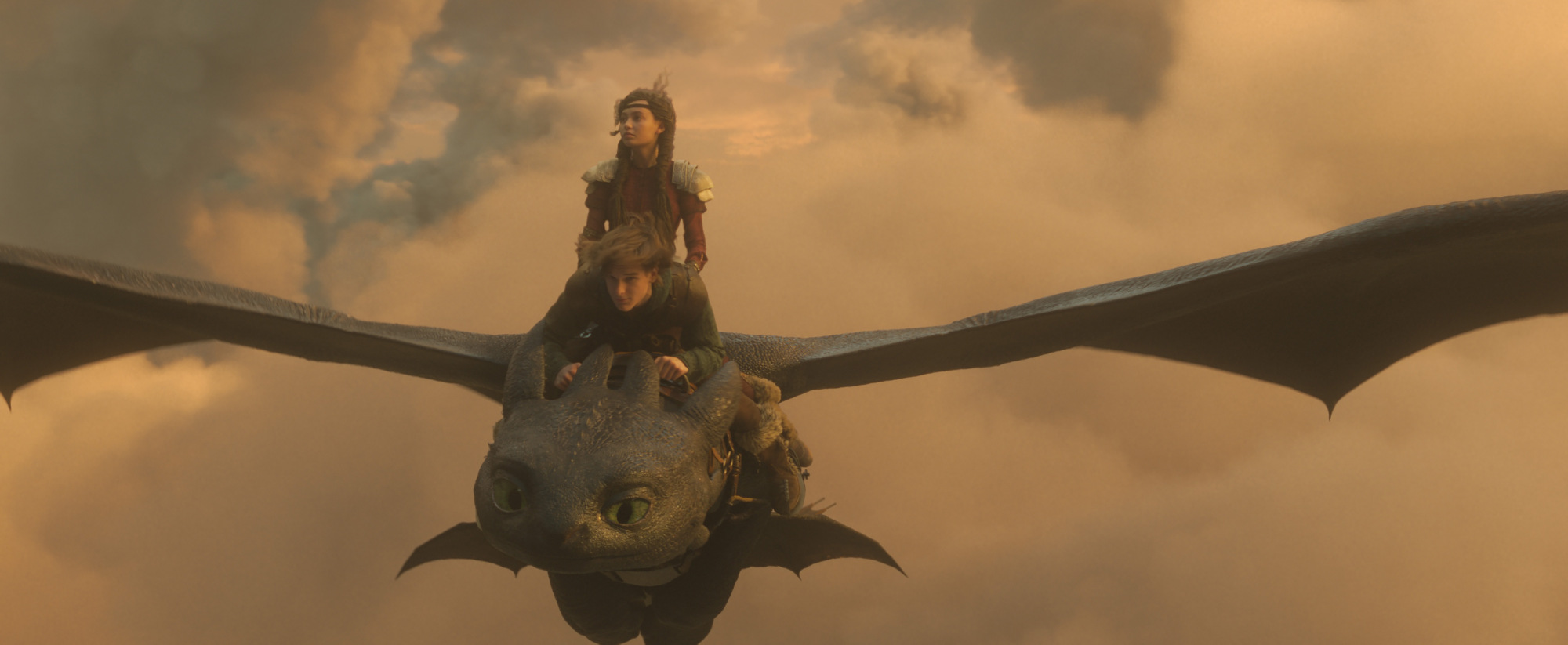
Seeing all of these familiar scenes translated from their animated form into live-action makes the old feel new again. The subtle nuances in character interactions, dialogue, action set pieces, and score help breathe fresh emotional life into the narrative. However, the editing could be more refined as the frequent cuts disrupt the flow and lessen the impact of key moments.
And since dragons play such a significant role in the film, their presence is not just a spectacle but a vital part of the story’s emotional heartbeat. These beasts are not to be trifled with, as they have their own set of unique abilities as well as weaknesses. Some breathe fire, and some are hardheaded, but it is the Queen Dragon that is to be feared by all. And rightfully so, if you decide to watch this in IMAX.
While the dragons resemble their animated counterparts remarkably, the human characters remain just as true to the originals. Parker’s Astrid dreams of becoming chief one day, while Julian Dennison‘s Fishlegs stays faithful to the dragon trivia master that we saw in the three films. And then there’s Bronwyn James and Harry Trevaldwyn as Ruffnut and Tuffnut, twins who constantly get on each other’s and everyone else’s nerves and make us laugh. And finally, Gabriel Howell’s Snotlout is Hiccup’s rival in the ring against captured dragons and in the battle over Astrid’s heart. Although they have something to contribute at the film’s climax, not enough time is spent on developing them beyond being just comic relief.
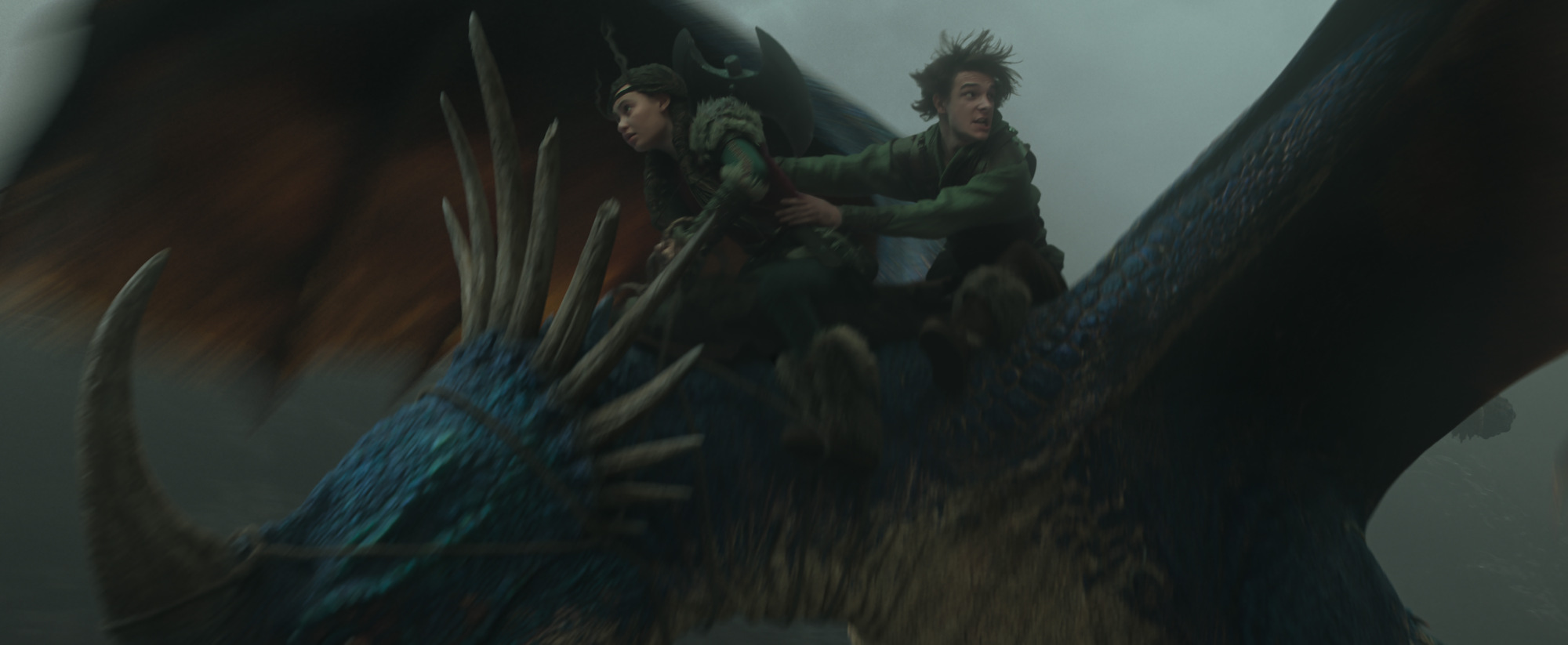
Still, How To Train Your Dragon has always been about Hiccup’s journey of self-discovery, a search for acceptance, and breaking away from the long-hardened tradition of Vikings having to kill dragons.
The expanded scope allows DeBlois to explore Berk and its dragons in ways that feel fresh, even if the story treads familiar ground. The announced sequel signals confidence in this new direction, promising to delve deeper into the lore and characters fans have come to cherish. So let’s hope that said the sequel is willing to take a few more risks to make the franchise its own thing rather than an expanded-upon shot-for-shot remake.
How to Train Your Dragon opens in theaters and IMAX on June 13, 2025.