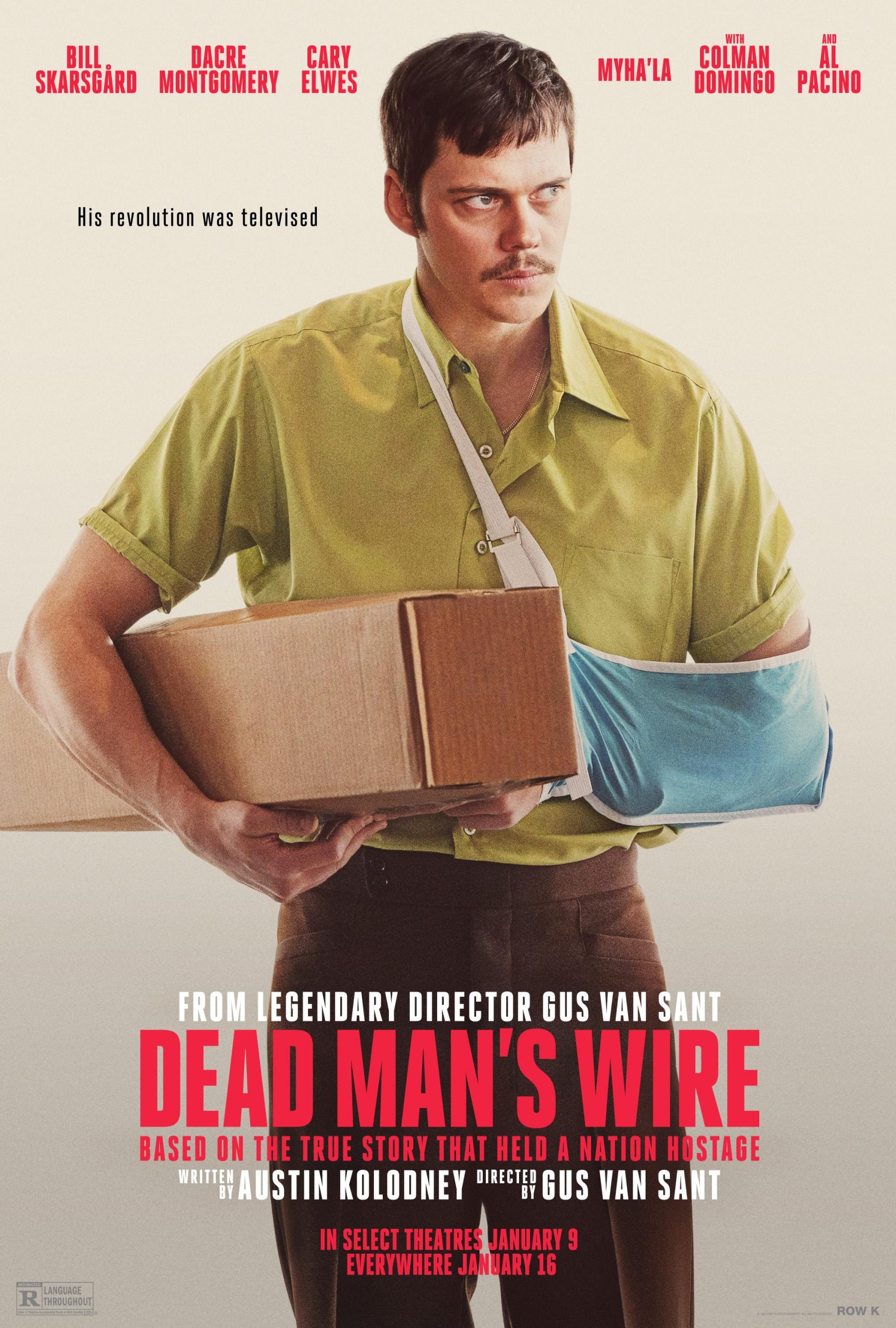
Gus Van Sant’s Dead Man’s Wire unfolds as an Indianapolis-set true-crime hostage drama that focuses as much on the disillusionment of economic anxiety as on the hostage drama itself. Starring Tony, a struggling working-class man pushed to desperation by Meridian Mortgage, takes matters into his own hands. Tony rigs a wire connected to a shotgun to a kidnapped bank exec. The lean dramatic thriller wears its Dog Day Afternoon influences proudly on its sleeve.
The acting is one of the greatest strengths of Dead Man’s Wire. Bill Skarsgård gives a layered performance, menacing without becoming exaggerated. Even without Pennywise’s supernatural presence, he projects unease, facing economic turmoil and personal instability as unpredictable as the hostage standoff he starts. Colman Domingo excels as radio DJ Fred Temple. His calm, commanding tone contrasts with the escalating crisis in Indy. His voice grounds the film, and I enjoyed every moment Colman Domingo was on screen. To me, he is a soothing counterpoint to the chaos that rattles the city.
See Also: Review: ‘Don’t Worry,’ Gus Van Sant Is Back With a Good Flick

Dead Man’s Wire is tonally ambitious, combining thriller and drama with bursts of uncomfortable comedy. The unexpected humor momentarily lightens the mood without undercutting the stakes of the hostage situation. As the dialogue rambles with men in rooms contemplating next steps and a resolution, the lingering threat could kill a man with a single misstep, establishing both the film’s central tension and its underlying critique of capitalism. Pulling the wire can kill you at any moment if you do the wrong thing. One wrong step, and you lose everything.
Needle drops of iconic songs from the period are welcome, if not distracting, reminding us that, in fact, it is the 1970s. As Dead Man’s Wire progresses, Tony is framed as the hero exploited by a financial system, as people call DJ Fred Temple to offer their support.
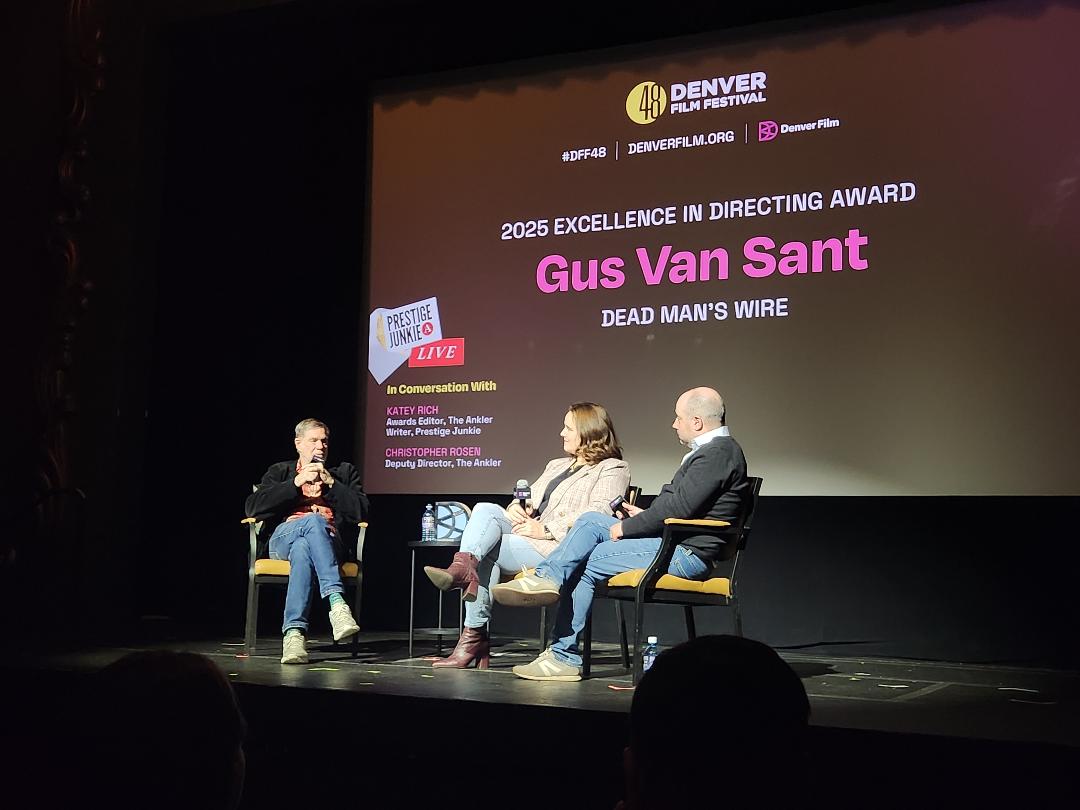
The movie loses narrative focus halfway through, despite a simply effective opening act; the narrative becomes clunkier as it prolongs the central hostage situation. Tension builds to an intense climax, but the uneven pacing during what came before really shortchanges what it is trying to accomplish. Despite my misgivings, when I watched this with the Denver Film Festival audience last fall, the film played remarkably well, eliciting gasps and laughter from both its humor and its tension, and ending with applause.
Dead Man’s Wire may stumble in execution like a booby trap wire that didn’t work. However, its acting performances, tone, and thematic ambition reflect on the past to make a modern-day statement. This makes the film a compelling addition to Gus Van Sant’s filmography. His latest captures the desperation of a man cornered by circumstance and a society all too willing to let him fall, whose time, like every hostage situation, has run out.
Dead Man’s Wire is now playing in theaters nationwide.