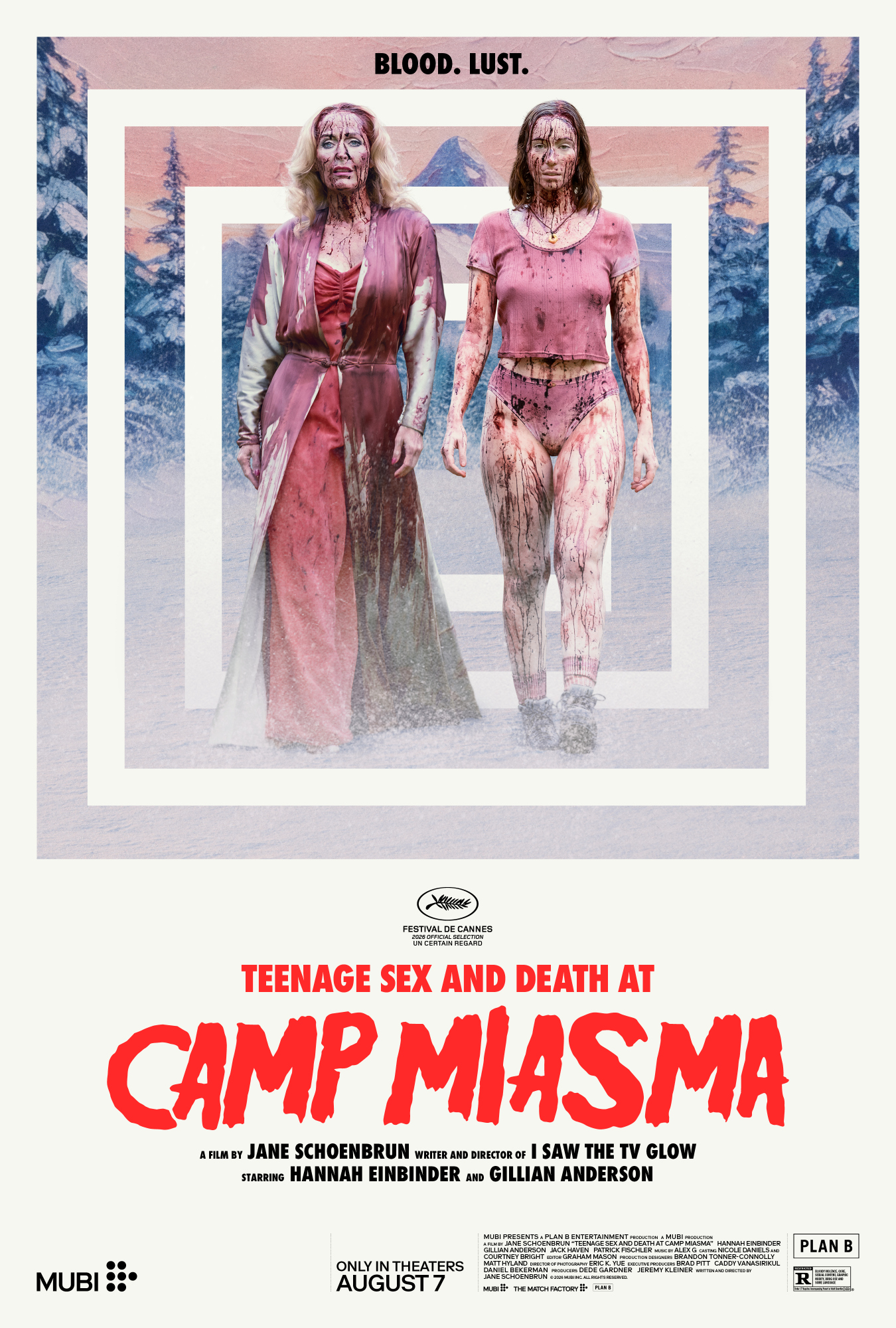
Reheating old IP is far from new. Hollywood has been in the practice of remaking/rebooting/sequalizing films going back to the 1930s. While monetary success is one way to look at it, clear authorship is the stronger determiner of whether the attempt was truly worthwhile. Teenage Sex and Death at Camp Miasma is a complete original, but it takes on horror reboot culture in a way that almost feels as though writer/director Jane Schoenbrun is expressing their reaction to potentially taking on one of these old IPs and going in an entirely other direction. Naturally, much like their other films, there are also themes here that depict the challenges of body dysphoria and celebrate self-discovery. There’s also a lot of blood and candy to go along with the many laughs and intensely stylized filmmaking that allows the movie to work as Schoenbrun’s most ambitious yet accessible film so far.
An elaborate opening credits scene set to a cover of R.E.M.’s “Nightswimming” sets up some backstory. This film exists in a world where Camp Miasma was an ’80s slasher film, feeling like some kind of combination of Friday the 13th and Sleepaway Camp, that was successful enough to spawn 10+ sequels before being left behind. Now a young queer filmmaker, Kris (Hannah Einbinder), has been hired to direct a reboot of Camp Miasma. To accomplish this, however, Kris decides to seek out the reclusive Billy Presley (Gillian Anderson), who played the final girl in the original film, before disappearing into obscurity. Despite certain expectations, the two bond in unexpected ways, leading both down a psychosexual path, allowing them to creatively become in touch with what the other wants, while possibly awakening other forces connected to this horror franchise.
See Also: ‘I Saw the TV Glow’ Review: Self-Discovery Through Late Night Binging

While We’re All Going to the World’s Fair and I Saw the TV Glow certainly held to a state of forlorn throughout much of their runtime, they were not bereft of a sense of humor either. ‘Camp Miasma,’ by comparison, is a much more inviting film. Between Einbinder’s natural comedic tendencies and the movie’s openness to clear Hollywood satire, there’s a good amount of runway for the viewer to understand the central plot and characters involved. That said, it’s not surprising to see the film throw itself off into more esoteric territory the further along in the journey it goes. By the film’s climax, this becomes hardly a movie about maintaining familiar linear approaches to storytelling and one more invested in visualizing its themes and metaphors. So, the question becomes whether or not this movie is successful in doing so. I say yes.
Of course, there’s more going on than just simply accepting the film as a weird one and moving on. Between the implied notions of what it means to justify years of filmmaking work in an effort to reach some fantastical arrangement of recreating a famous scene that has subconsciously informed one’s regard for the act of sex and the collage of forbidden fruit (aka candy) constantly found all over this film, suggest too much on their own as far as just how deep ‘Camp Miasma’s’ rabbit hold goes, before looking at all the other things at play. That Schoenbrun can so deftly handle shifting power dynamics, oddball comedic and horror sequences, and the notion of watching a movie inside a movie is praiseworthy to say the least.
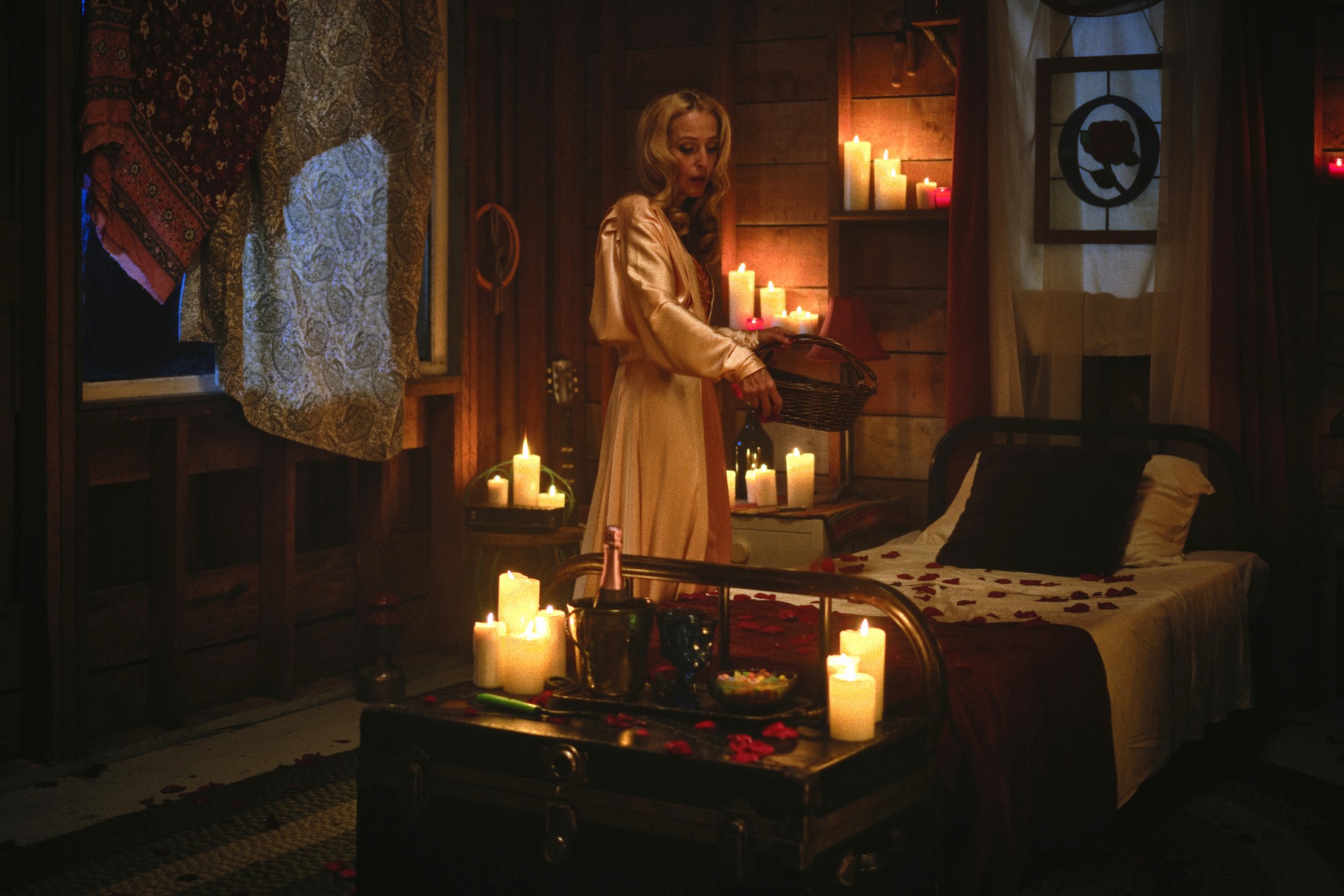
Within all of this, there are also the great performances to dig into. Einbinder has only been active as an actress for so long, and yet she is fantastic here. Bringing depth to her natural comedic self, layers of understanding when attempting to communicate why her queerness makes her character especially qualified to take on this filmmaking project, and her interactions with Anderson really speak to what a great performer she’s evolved into. And on top of all of this, Einbinder is allowed to use her own sexuality to her advantage, leaning into the gaze the characters in these slasher films receive and having it effectively be encouragingly pushed upon her.
Meanwhile, Anderson continues to shine as a veteran performer with years of experience. Here, she happily leans into the Norma Desmond-like aura around her reclusive Billy, with a helping of Dolly Parton to further inform her accent. The costumes she wears feel like a further extension of the character, adding a level of panache that can seem ridiculous and yet is entirely appropriate for her interactions with Kris. Are Billy’s efforts meant to convince Kris not to go through with something, to fully make a new Camp Miasma something of her own, or to warn her of the adverse effects that any of these interactions can lead to? While Billy is actually pretty straightforward with her interactions, the aloofness of the character makes the performance stand out for its own strong reasons (and much praise should go to Amanda Fix as the younger version of Billy as well).
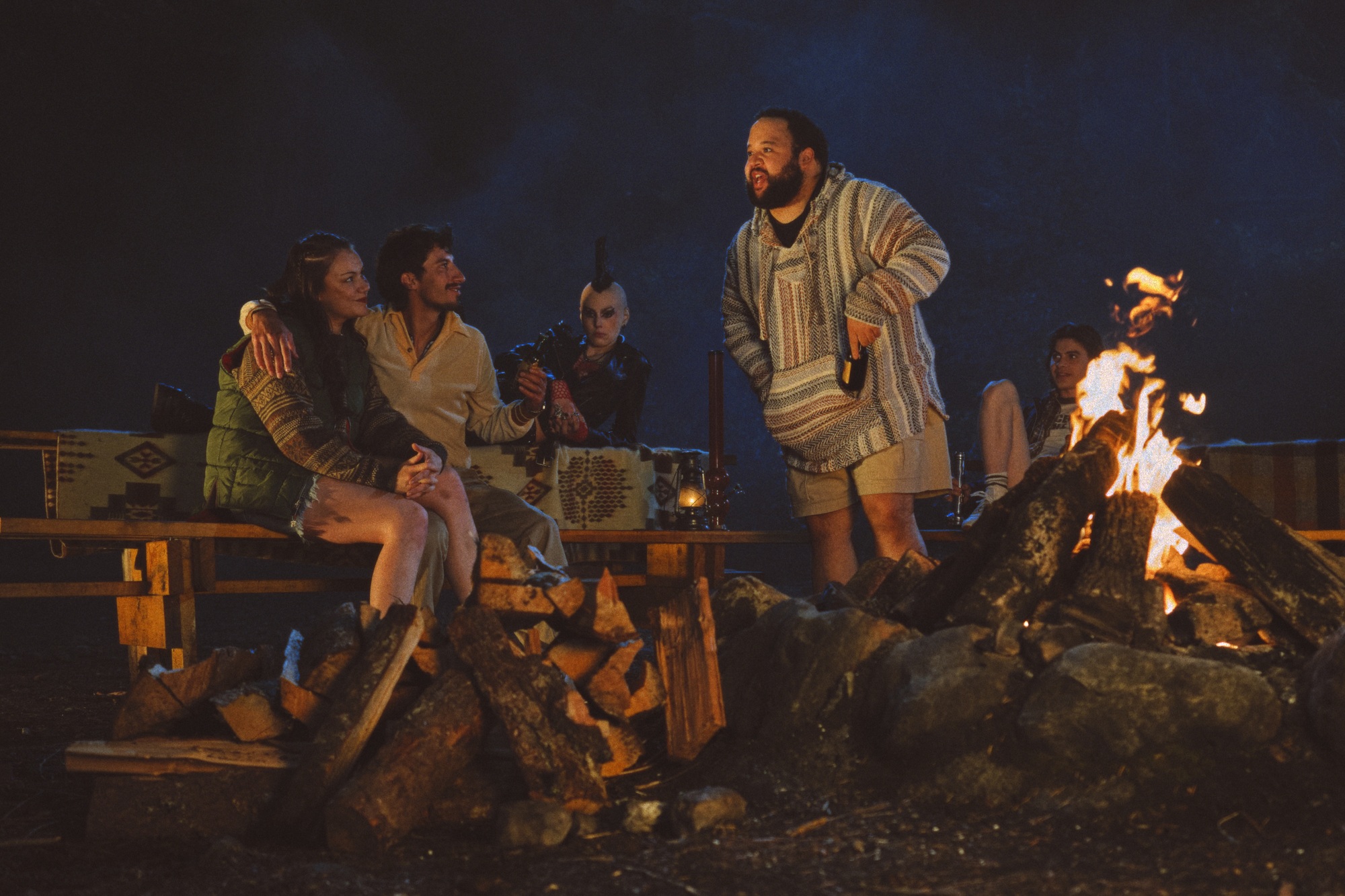
Additionally, while the film is loaded with talent that includes comedic actors like Kevin McDonald, Sarah Sherman, Zach Cherry, and Eva Victor, along with character actors such as Patrick Fischler and Dylan Baker, there’s a real joy in seeing what Jack Haven brings as “Little Death,” the slasher villain of Camp Miasma, who becomes its own force to be reckoned with in different layers of reality, along with one the film connects us with through empathy and other elaborate ways.
Largely seen wearing a ridiculous outfit involving a cubic, metal ceiling air vent as a helmet and equipped with a double-sided spear, Haven still has the chance to emote thanks to a small space allowing us to see their eyes, let alone the evocative physical performance being put on display. A bravura moment in the film finds Little Death going on a slasher rampage set to an unpredictable song, designed to look as though it was shot in a single take, and at the core of this sequence is Haven’s absolute dedication to keeping a sense of character alive amid the chaos.

There are quite a few fantastic sequences scattered throughout the film, suggesting just how much Schoenbrun wanted to put into this story to get across some truly ingenious ideas in ways that are emotionally intense in one way or another. A disastrous Zoom call is both incredibly funny and crucial to understanding a character’s state of mind. There’s a sex scene that dives into the intimacy needed to understand the importance on the part of both involved, while knowing the lingering threat of violence is not too far away. Even while having only so much in common with the surface aspects of the filmmaker, there’s a specificity informing so many scenes in this film that absolutely brought me closer to truly understanding and reckoning with the emotional toll this film wants its viewers to have.
With that in mind, there’s much to enjoy about ‘Camp Miasma.’ Beyond it having such rich ideas to dive into, the filmmaking choices are fantastic. For one thing, it’s often very funny. Also, this movie exists in a heightened reality to say the least, and that includes the use of matte paintings to establish one of our main locations, how we see the 80s-style horror movie deaths, all of the uses of color in to really bring life out in ways that will go on to define the characters (and allow for at least a couple of good jokes when it comes to the candy). I also just love all of the details that help establish the history of this full-on slasher series, including the many scenes of the actual film.
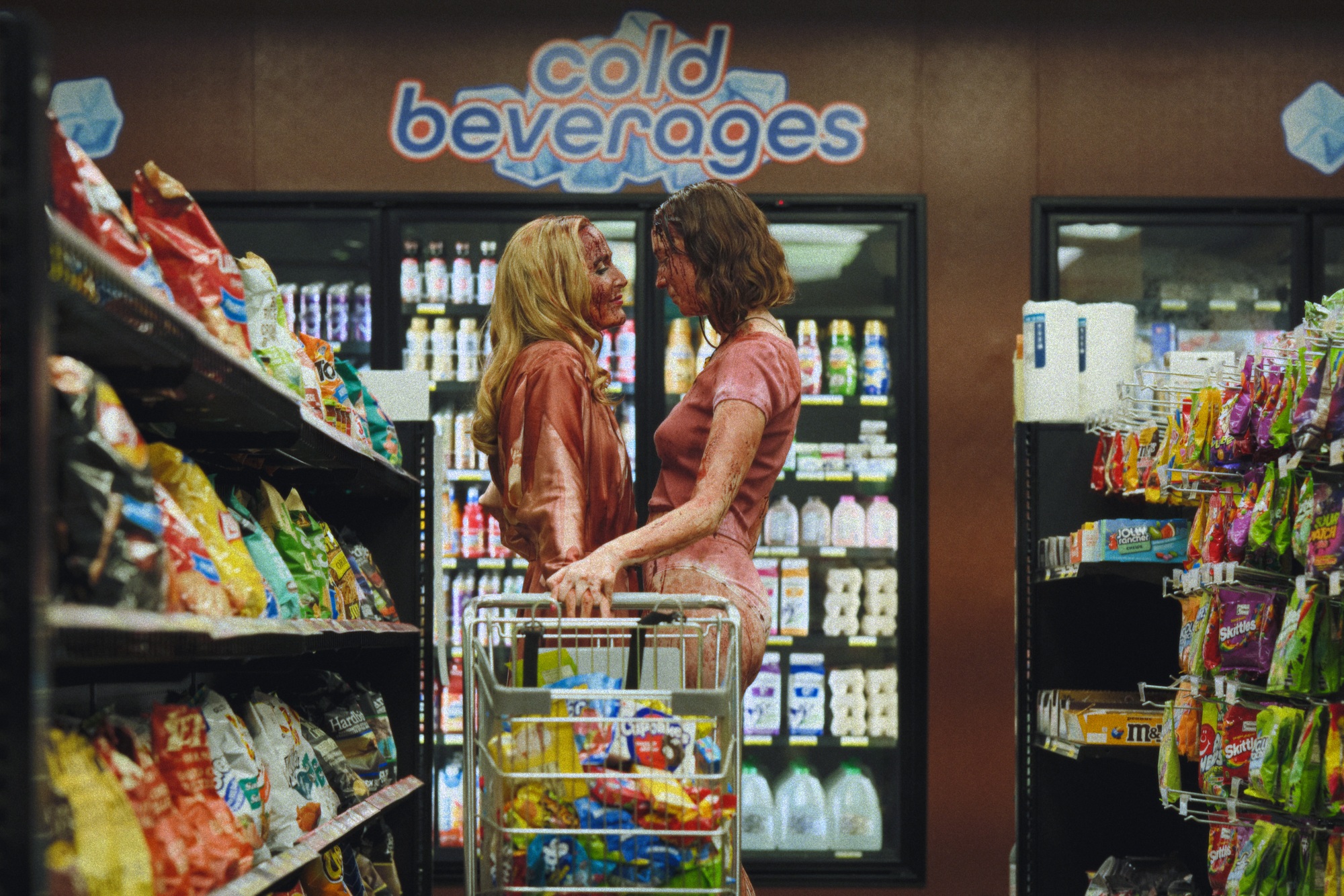
While formally fitting within the arthouse zone of features when matching this to the cinematic work around it, there’s so much to appreciate about what Teenage Sex and Death at Camp Miasma has to offer. For one thing, it is a really fun watch. In a world where we’ve had so many takes on slasher films, this is a nice breakaway, putting audiences into a different sort of zone when it comes to the overall results and takeaways. Beyond this, there are the terrific lead performances, a strong hand when it comes to the production value and other filmmaking elements at play, and, of course, the bevy of themes and ideas to consider while watching, let alone when thinking about it later on. A little death goes a long way with this one, and it’s certainly as compelling as anything else looking to shake up a certain status quo, even if it is just reinventing zombie IP.
Teenage Sex and Death at Camp Miasma opens in select theaters on August 7, 2026.