It’s hard to say if there’s something profound going on with Backrooms. Still, there’s something to admire about a film or a series of shorts (which this film is based on) that operates as anthropological horror. Sure, the inherent creepiness of being in a mysterious, empty space, only to be jolted by random noises or some mysterious entity, can allow for sharply delivered jump scares. With that said, here’s a film that wants to respectfully look at this world’s void and attempt to find further depth in it through vibes and straightforward investigation. The results are compelling thanks to solid control of pace, performances that resonate, and the choice not to take itself too seriously, leaving it devoid of humor. With all of this coming from such a young voice in the filmmaking world, it certainly doesn’t feel as though there’s a void in creativity.
Following a cold open that establishes the backrooms’ world from a first-person perspective, giving audiences a sense of what they’re in for, we meet Clark (Chiwetel Ejiofor). On a downswing in his life as far as his relationship and professional career go, Clark owns a furniture store in the 90s. He has meetings with a therapist, Dr. Mary Kline (Renate Reinsve), who also seems to have fallen into a detached state herself. Things kick into gear when Clark discovers a hidden portal to these backrooms, a series of empty rooms and hallways that occasionally trip the boundaries of physics when we see things like doorways and other openings appearing in the floors or on the ceilings. Clark takes a pragmatic approach at first, using a video camera and enlisting the help of his employees (Lukita Maxwell and Finn Bennett) to map out the area. Not long before, however, a danger emerges, making way for a new line of thinking regarding this liminal space that eventually brings Mary along for the ride as well.
See Also: ‘Bring Her Back’ Review: The Cost of Young Pain
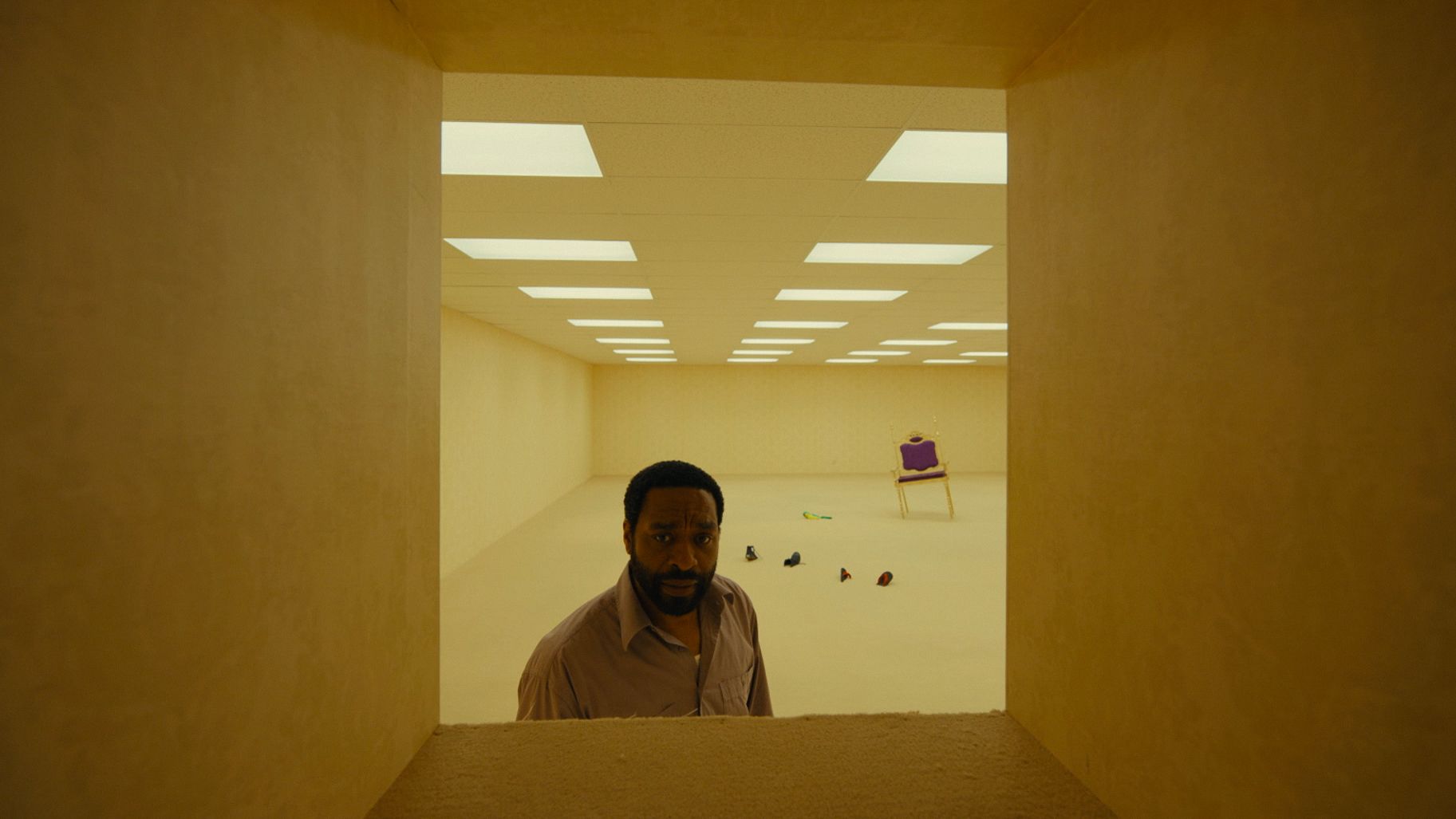
This film comes from director Kane Parsons, a 20-year-old YouTuber with experience in visual effects, electronic music, and developing online fiction. He’s more enamored with the world of video games and these online deep dives into liminal spaces than with film. Yet, Parsons has a clear knack for developing mood and atmosphere. While limited, even his direction of the actors seems effective in getting them to a point where they can expand on his vision by taking what’s necessary to build characters that feel appropriate within this world.
Notably, the film was written by Will Soodik. While I’m sure he did the job that was needed, this is certainly a collaborative effort rooted in the ideas already evident in Parsons’ web series. Naturally, finding ways to further flesh what’s taking place out to reach a longer running time means more than just making the backrooms bigger or prolonging certain inevitabilities. This is where one hopes Soodik was able to be on hand to solve the potential issues that come from making a maximalist version of a short film with such a distinct key environment.
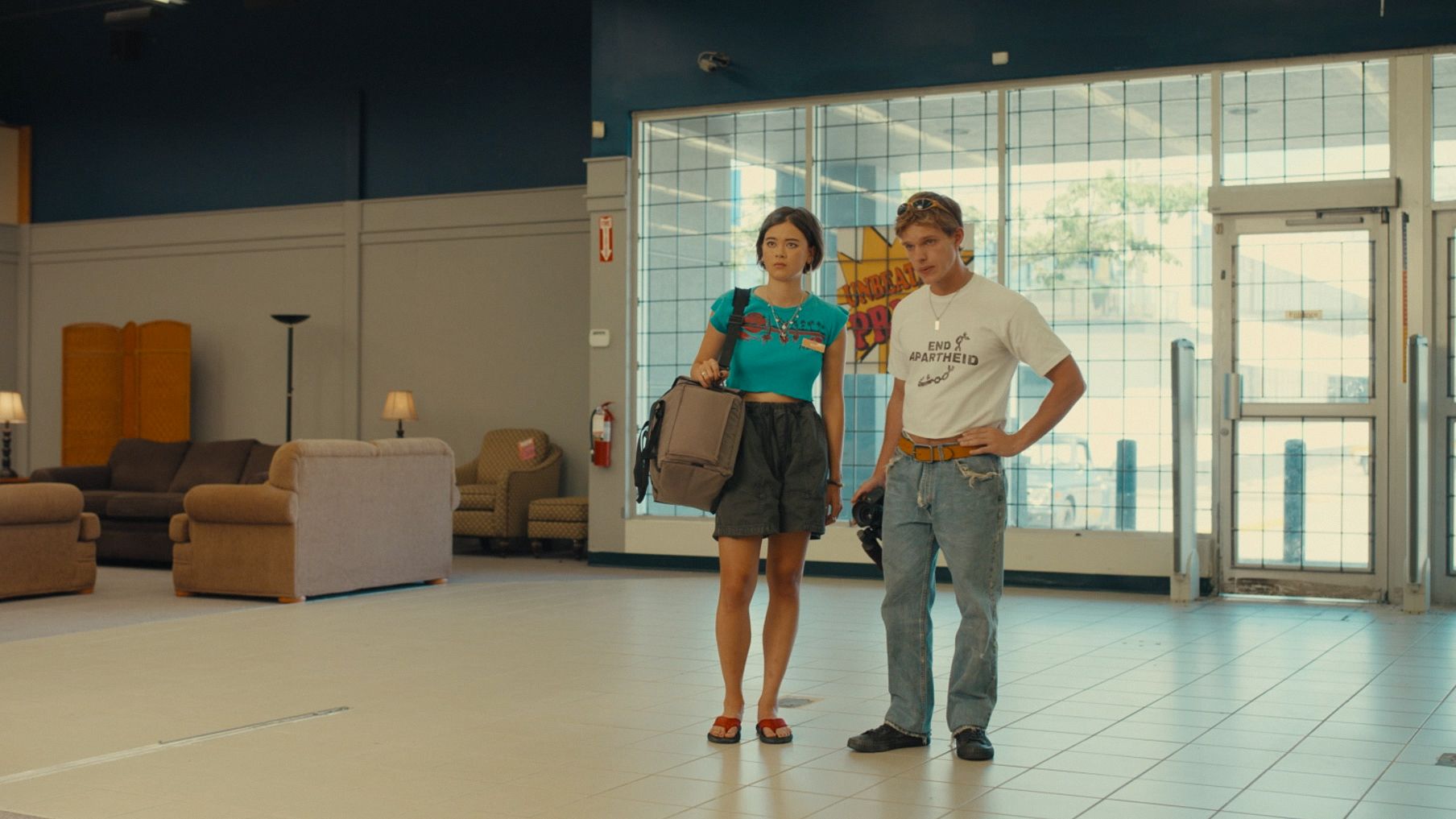
That choice allows for one of the film’s strengths: finding a handle on its tonality. While one can easily get wrapped up in the intriguing nature of the backrooms, grounding the movie through characters who fully acknowledge the strangeness of their situation allows it to shift gears and add at least some fun to the scenario. From the start with Clark, we already get a sense of this guy’s shortcomings and what he’s had to do (and stoop himself to) for the sake of keeping the lights on in his store.
With the backrooms, while the film avoids a plot that involves Clark trying to profit off them, the exploration, with help from his staff, does allow for human reactions and choices fit for a nervous audience worried about what could be around the next door at any moment. Sure, the film has to eventually dial all of that down as we shift in perspective and begin to open up to the possibilities of what’s going on, but what matters most is that Parsons understands there should be fun to go along with this journey.
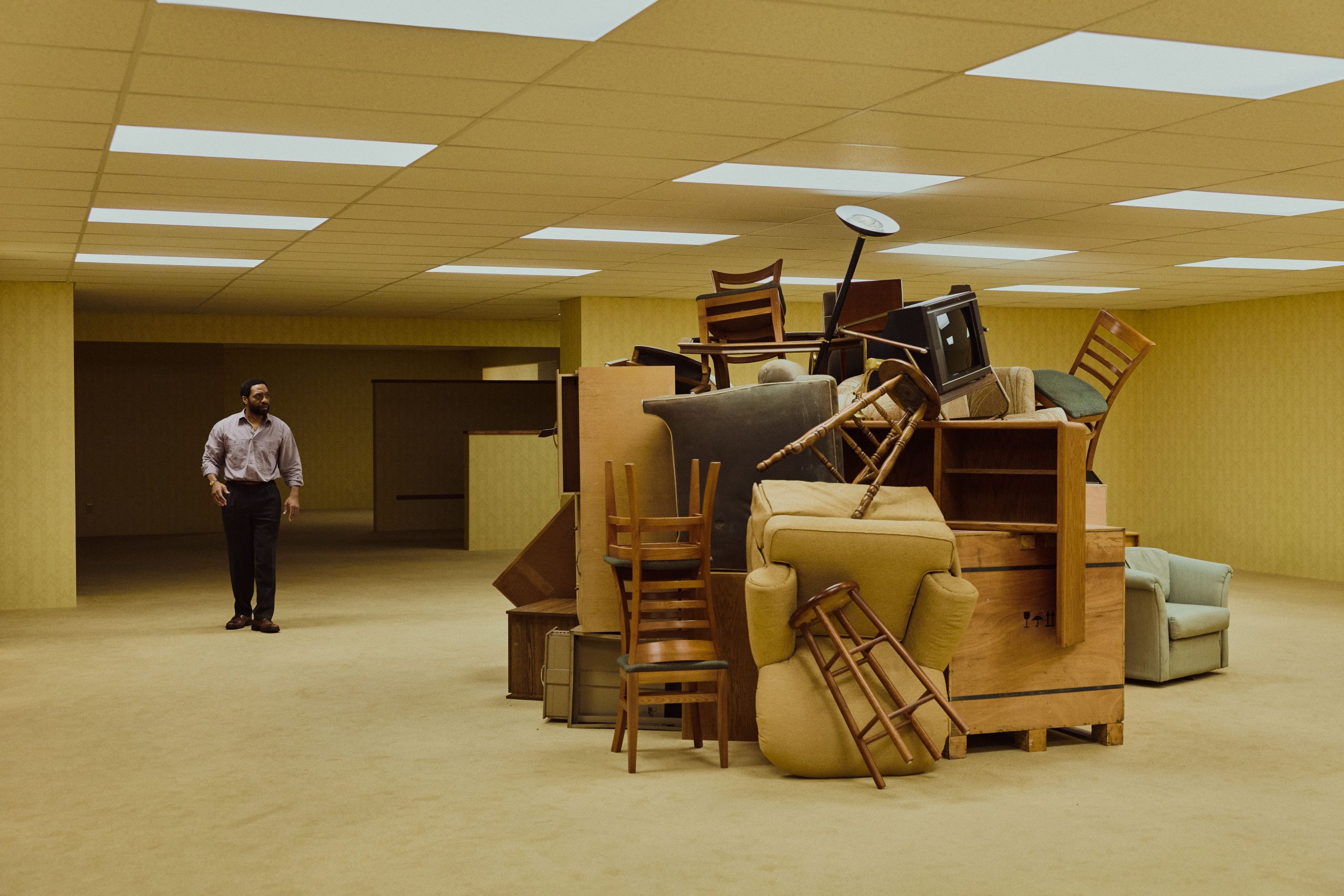
Of course, with any journey comes the attempt to find meaning, and it was pleasing to see a film confident enough to understand how much of the curtain to pull back and how much it could get away with leaving as is. Whether or not there are exact answers to be found, as time goes on, even with certain developments that add additional context, Backrooms feels like a movie that wants the viewer to explore, interpret, and explain away their own meanings to what is taking place. Whether that comes in the form of organic answers related to the properties of the world we see or if it’s more of a psychological breakdown of what’s happening, neither would feel out of place.
It’s great to see the success of this film rooted in what it ultimately offers. Backrooms give viewers the opportunity to look at a space between spaces on a big screen and choose how to feel about it. Not being obtuse to the idea of entertainment value, Kane Parsons shows he cares enough to offer well-acted characters, a sense of humor, and some urgency by way of thrills, while still maintaining the construct of a trippy arthouse film that feels different from other movies. It’s well designed, made in a way that’s not easy to explain, and fitted with the sort of extra touches in the score and production design that allow the film to be all the more memorable. Not bad at all for a creepy cinematic take on a popular subreddit topic.
Backrooms opens in theaters on May 29, 2026.