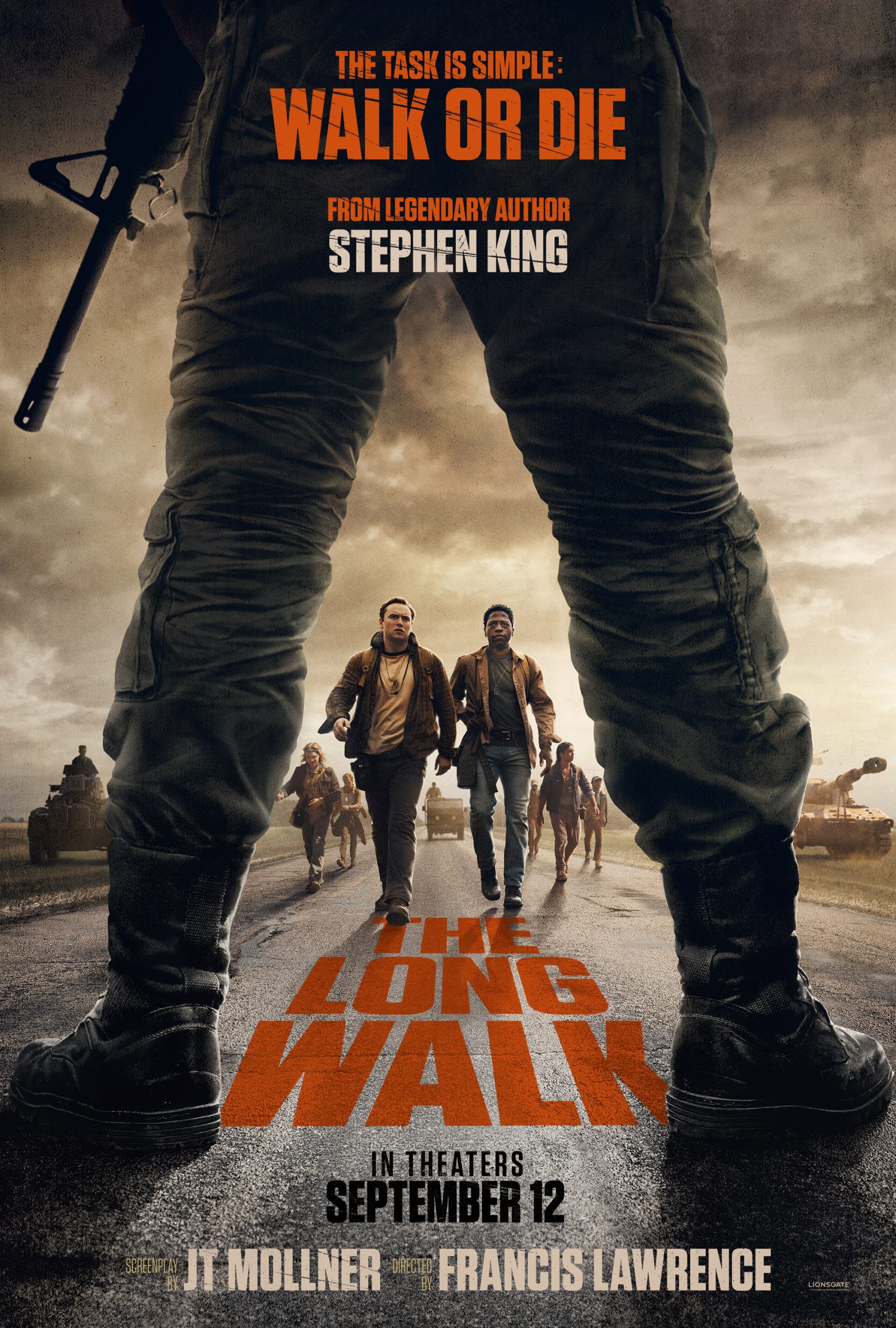
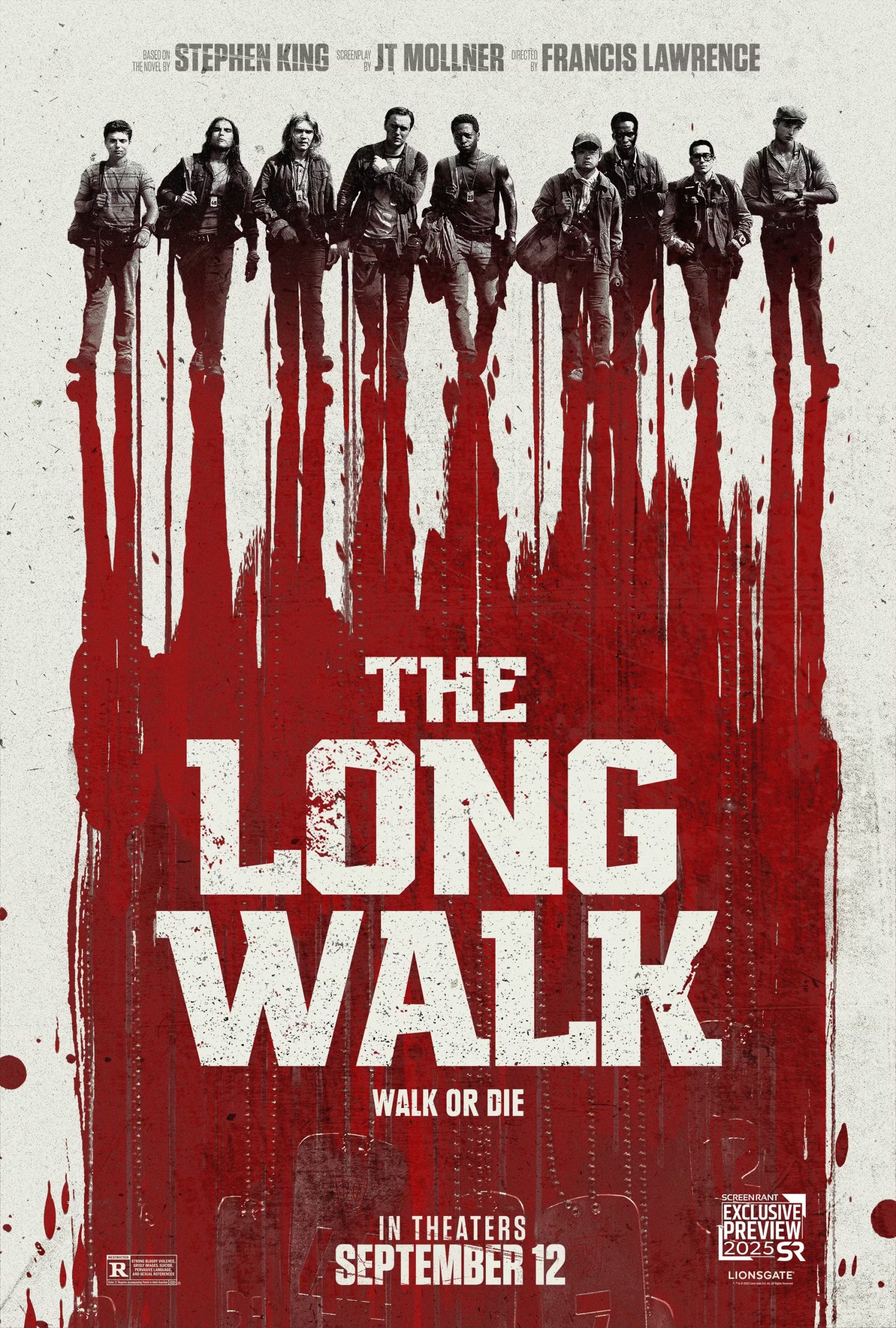
While I’m sure there’s a more direct answer out there, I’ve been wondering where we came up with the competitive survival thriller. Sure, 1924’s “The Most Dangerous Game” is the core story that one can root many subsequent versions of in. Still, over time, we’ve gotten things like Battle Royale, The Running Man, Predator, Death Race 2000, The Hunger Games, and Stephen King’s “The Long Walk” (written under his pseudonym at the time, Richard Bachman – same with “The Running Man,” for that matter). Beyond functioning as extreme commentary regarding society, class, and adherence to government, I guess it’s the audience/sport angle that fascinates me. The Long Walk is a bit different. Rather than revel in the carnage of what’s taking place, spectators have an admiration they share. It balances well against the various attitudes of the young men entered in a contest that will literally leave one last man standing. The film also happens to be the best Stephen King adaptation I’ve seen in a long time, bringing together suspense, violent deaths, a bit of mischief, and a unique coming-of-age aspect that helped carry this movie each step of the way.
The film is set in a dystopian U.S. that is now ruled over by a totalitarian regime. Supporting this new world order is an annual walking contest in which 50 young men must all walk on an endless road together, maintaining a speed of 3 miles per hour. There are some other rules, but following a couple of warnings, any further violations are punishable only by death. Plus, there will only be one winner, meaning that of all the characters we meet in this contest, only one of them will presumably walk away alive. Our gateway in is through Cooper Hoffman’s Raymond Garraty. With the prize being both untold riches as well as one wish, Garraty makes it clear what he’s after early on, and we learn more about several of the others as well. But what’s to come of the reality of this long walk?
See Also: ‘Weapons’ Review: The Youth Who Could Not Shiver and Shake

Fittingly, this film is directed by Francis Lawrence, who took over for Gary Ross after the first cinematic entry of The Hunger Games and has remained as its primary cinematic voice. Compared to the violent yet still PG-13 YA franchise, you can almost tell Lawrence is letting off a bit of steam by taking full advantage of the film’s R rating. While it’s referred to as “getting their ticket,” the full extent of the executions in this film is made to look as shockingly brutal as possible. If anything, it speaks to why this film decided to age the kids up a few years compared to the book, as there’s no mercy given to any of these young men getting murdered, and the story finds plenty of ways to upset the walks of different contestants.
If anything, the shock value both invests more humanity in the film while taking away another angle, as the book does give way to the notion of these kids becoming numb to the death of their various comrades. Still, because there are only 50 kids in this movie vs. the 100 in the book, I suppose that makes more sense in the grand scheme of things. With that in mind, however, one would hope the film would have a good answer for why any of these guys would voluntarily sign up for The Long Walk, knowing all the suffering and probable death that comes with it. This is, again, where I think the film shines due to both strong direction and good screenplay work from JT Mollner (Strange Darling).
Without going too far into it, it’s the way this story approaches its young characters that allows us to understand more about this fictional version of the United States they exist in, which can have us on board with them signing up equally as a point of pride. Yes, some ulterior motives rely on either supreme confidence or the simple understanding that they have nothing left to lose, but, again, this is a film that understands how to take its time and let us eventually catch up with certain characters in a way that has us accepting the circumstances.
Amusingly, The Long Walk, while not inherently a funny movie, is not opposed to reveling in the chance to take what feels like signature cornball dialogue straight from the page and have characters recite it verbatim. Yes, that means getting some clunky exposition out of the way at times, let alone some characters that speak with less wit and intelligence than they clearly have, based on some of the dialogue feeling as though it was coming from younger individuals. All of that in mind, that’s the kind of charm I like from films like this or filmmakers like M. Night Shyamalan. The earnestness that originates from an innocent place allows for a more natural transition into darker territory, while simultaneously endearing us to these individuals, so that the consequences of their actions register more effectively.
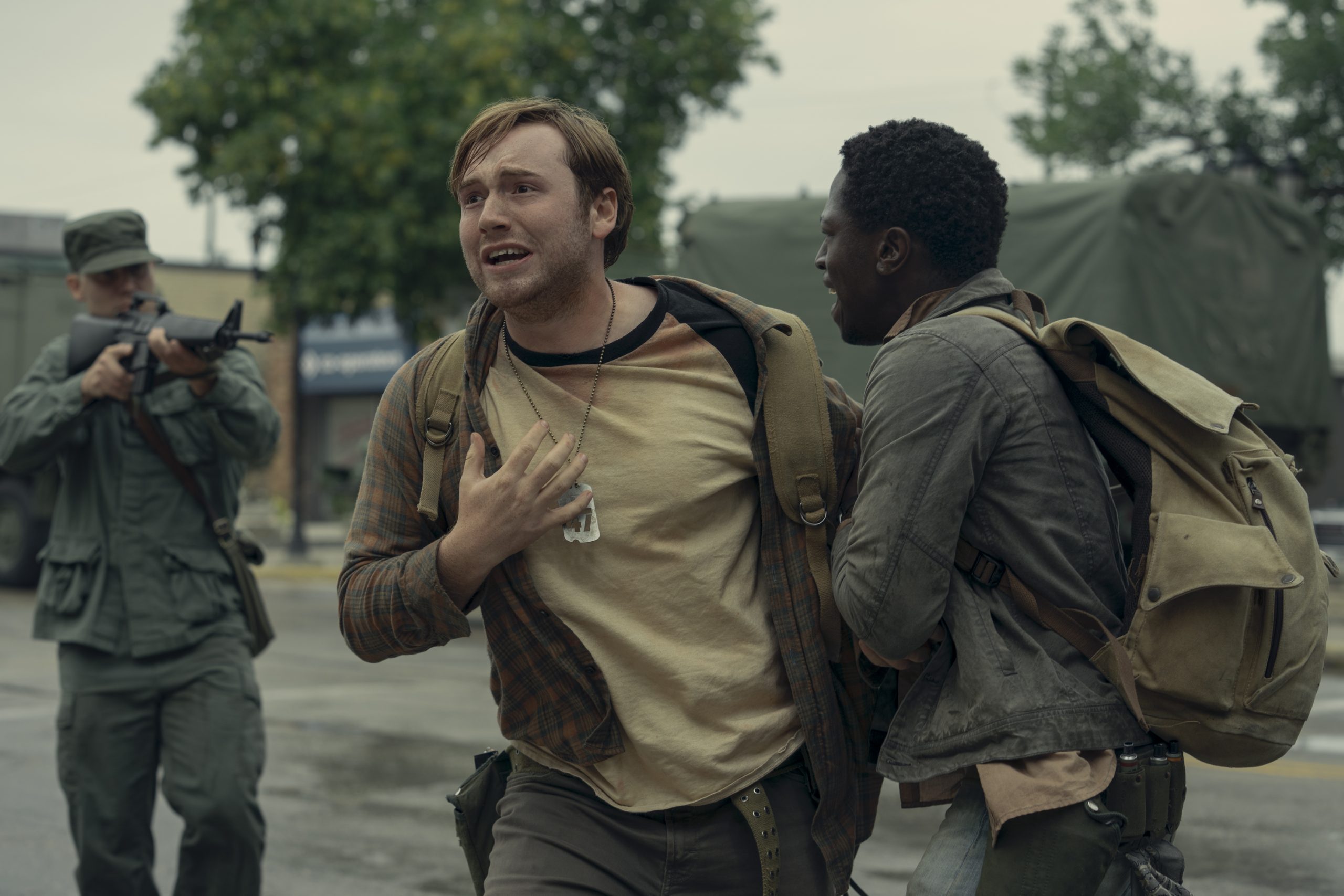
Speaking more to these characters, there are no real weak links here, but a few clear highlights. Hoffman is terrific. Following Licorice Pizza and Saturday Night, whether he is as chameleon-like as his late father, the young performer is clearly showing a sense of range that makes his work here all the more impressive. Speaking of, David Jonsson, the breakout star from Alien: Romulus (and star of the fantastic British romantic comedy Rye Lane), has another excellent role on his hands as Peter McVries. Pete and Garraty basically form the closest bond in this film. The way both eventually share their motivations allows the actors to shine. And yes, Jonsson really comes off as an actor who could easily be playing these emotions off of even more dynamic characters in richer roles and bigger films.
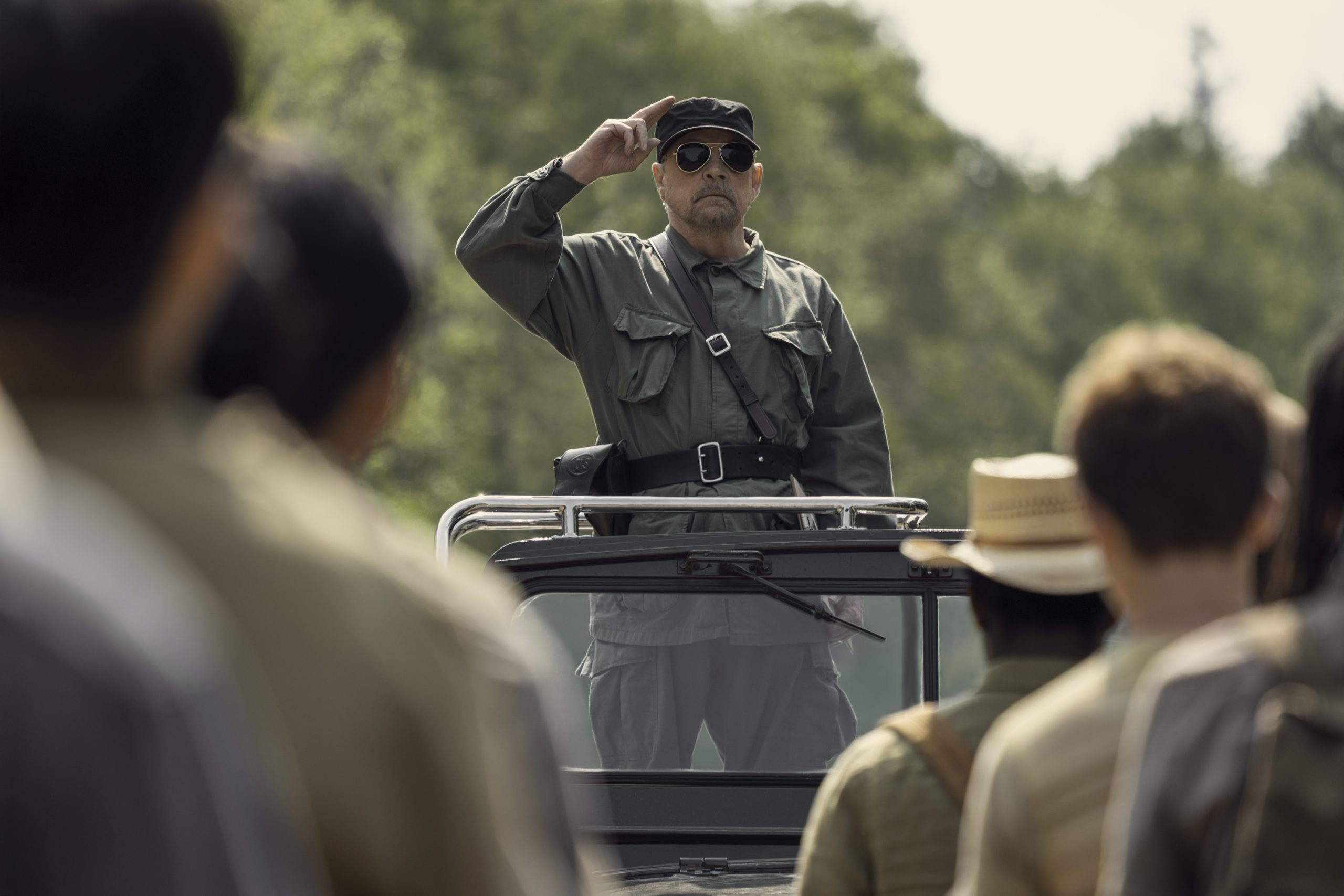
For what it’s worth, while presumably not a very fun movie to make, Mark Hamill is clearly relishing the time taken to play “The Major,” an intimidating man whose booming voice makes it clear he’s in charge and everyone needs to follow his orders, or else. Judy Greer is here, looking more haggard than ever, as Garraty’s mother, who pleads with her son not to go on this walk. For a film that wastes almost no time, it does allow some character actors a chance to shine.
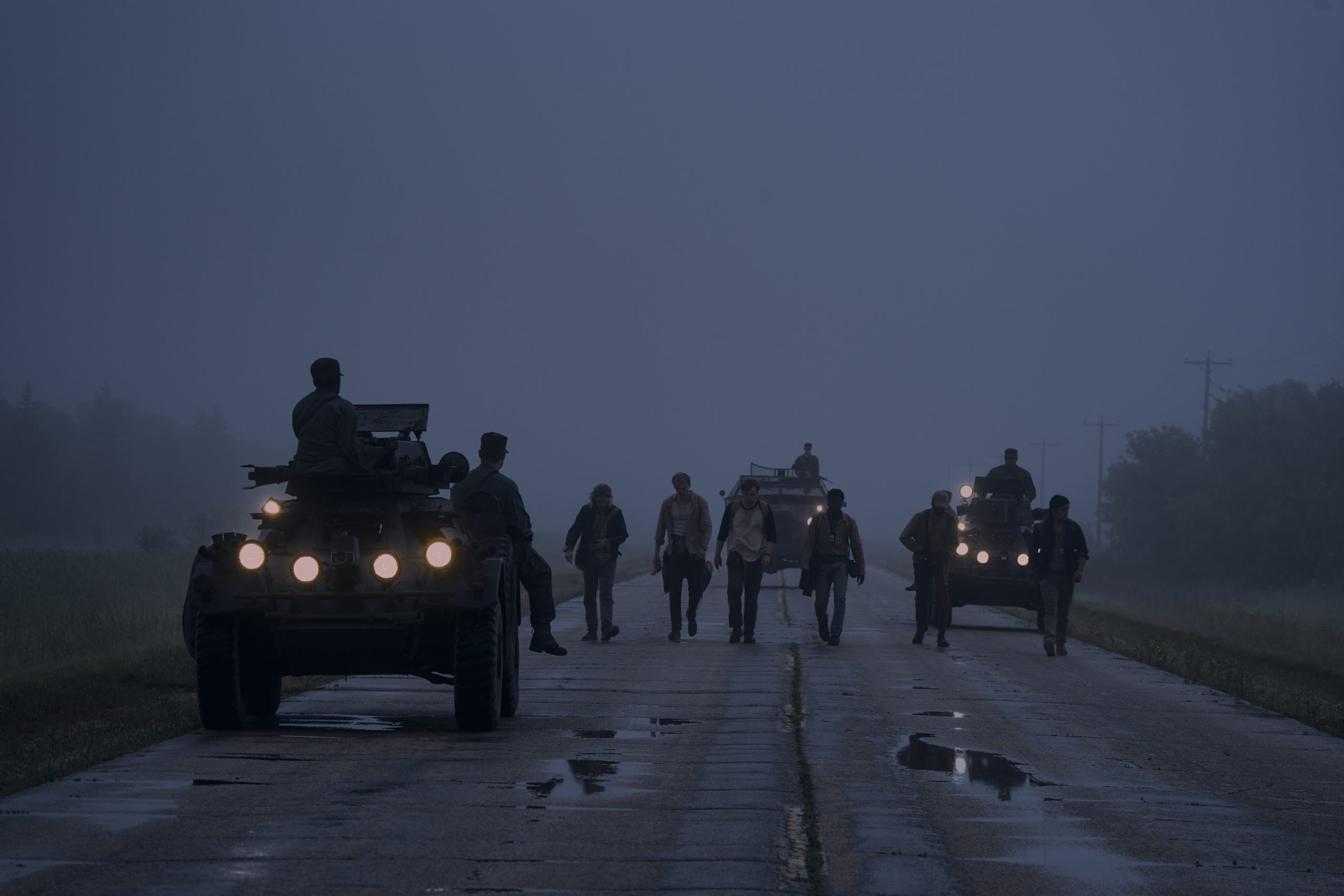
The overall look and feel also speaks to the proper levels of commitment. The Long Walk presumably starts in the New England area. While we are mostly seeing small towns and countryside roads, the cinematography doesn’t push hard to juxtapose a more serene series of surroundings. It remains relatively muted, well-composed as many shots may be. Even the music in this film, with all of the country twang it aims for, is low-key enough to feel like more of a tension-builder.
While I can’t say there’s an absolute joy in getting to see a film like this, I did find it quite fascinating based on how much all involved commit to not only telling a great story, but never backing down from what has been presented. This is a dark Stephen King story, and the filmmakers do the work in finding honesty in how that affects the characters without doing anything to push them off track, so to speak. Instead, there are arcs of sorts, and the movie has more in common with Stand By Me than I would have expected. Still, The Long Walk is a thriller with a killer hook, and it’s a real treat to see filmmakers sticking to their guns and showing what films like this can be made of.
The Long Walk opens in theaters on September 12, 2025.