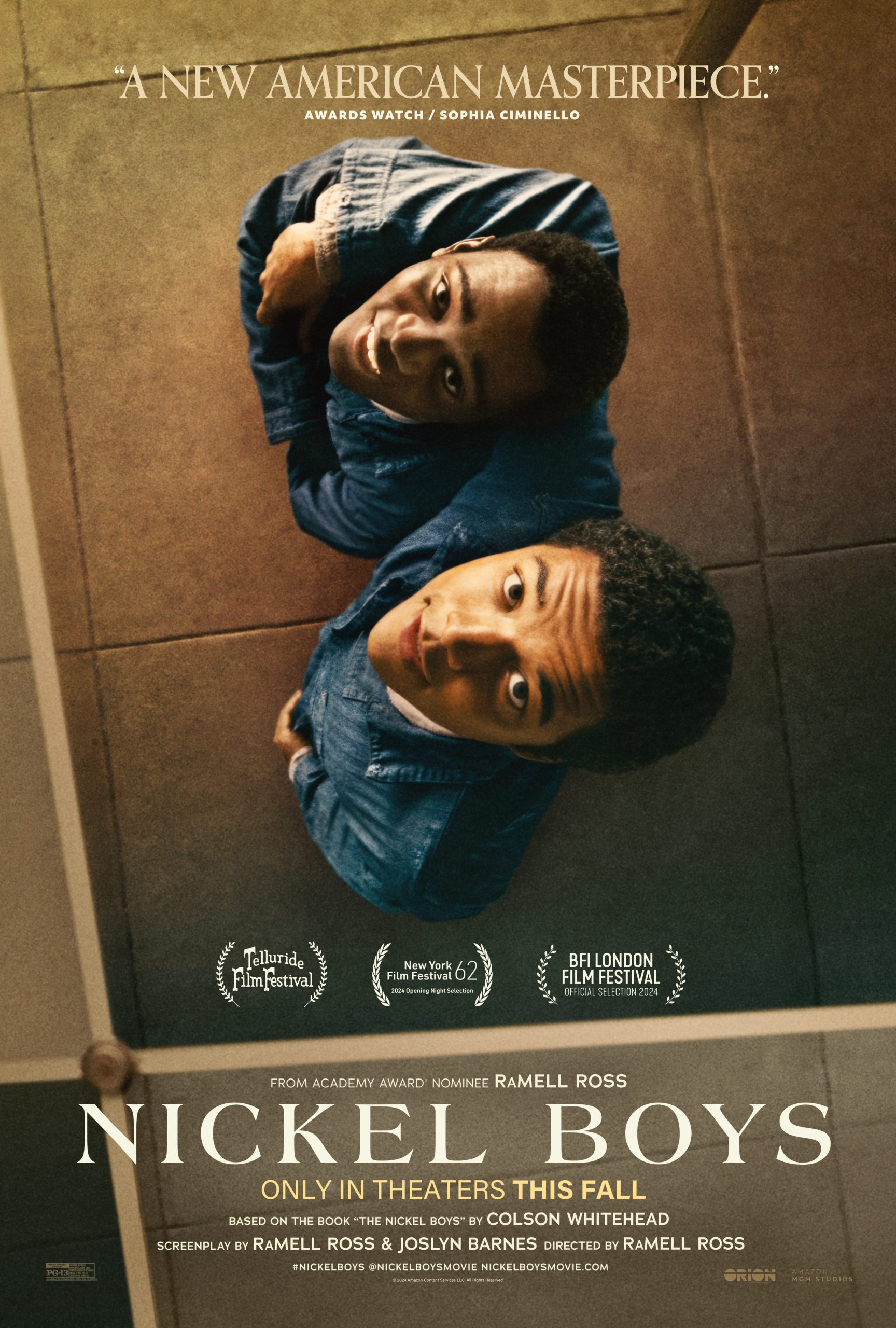
What does an innocent do when their potential is stifled by obstacles rooted in ignorance and hate? How can one observing this help when a system is designed to hold certain people back? Nickel Boys is about a couple of brilliant young minds being kept from a regular life due to the unfair circumstances established around them. It’s a historical drama and Black coming-of-age story, adapted from Colson Whitehead’s Pulitzer Prize-winning 2020 novel “The Nickel Boys.” Approaching the film by shooting everything from a first-person point-of-view from the eyes of the two protagonists, director RaMell Ross set plenty of challenges on himself for creating and maintaining this unique way to carry a lengthy feature. The results are incredible. Thanks to all involved, Nickel Boys succeeds in everything it aims to address, what it wants to look and sound like, and how it intends to make the audience feel. It’s far more than an excuse to build up empathy through trauma. This is a work of cinematic dexterity that creates a living, breathing world and characters for an audience to truly feel connected with.
Set mainly in the 1960s Jim Crow era in Florida, Elwood (Ethan Herisse) is a high schooler bright enough to have been chosen to attend university classes. He has aspirations of becoming a part of the civil rights movement, which he has been observing from a distance, admiring the words of Martin Luther King Jr. However, on the first day of his classes, Elwood is wrongfully accused of being an accomplice in a car theft and sent to a segregated reform school called Nickel Academy. Once here, Elwood forms a friendship with another boy, Turner (Brandon Wilson), who is also quite intelligent but far from the idealist his new ally is. This stay at Nickel leads to brutal abuses by the school and its corrupt administrators, but what will it take for these boys to achieve their exodus from this place for good?
See Also: ‘American Fiction’ Review: Black Writes

The Nickel Academy is a fictionalized version of the Dozier School for Boys, an infamous reform school well known for its horrific treatment of students. This institution is so heinous that an investigation that was only finally launched in 2012 has led to the discovery of over 50 graves on school grounds so far. It’s important to note this upfront, as the film tackles the severe aspects of what these kids were forced to endure. However, something still distinguishes a story like this from one of Whitehead’s other novels, The Underground Railroad. No doubt, these works share in their depictions of Black struggles. Still, while suffering is often a core element in stories like this, Nickel Boys is rooted in something different. There’s pain on display, sure, but we are really locked in understanding the other side of Americana.
This film is notably rated PG-13, and I think that speaks to some of Ross’ intentions. The film does not sanitize what is occurring but instead turns away from the more explicit violence, aided by the movie’s chosen POV. In doing so, this movie can still serve as a coming-of-age story that can be played to a broader audience but understand that the ideals of the typical versions of those films are not shared here. Instead of young love and approaching maturity, there’s the questioning of Black masculinity, a loss of innocence, and a display of what the real world has to say about how it will treat people based on external factors.

Understandably, were the film to only rely on communicating the events of Nickel to the audience, it could be a punishing affair. Ross’ film is more substantial than that. It’s not here to exploit the pain distributed to Black bodies for the sake of once again stating how awful racism is. Those elements are inherent, but there’s more to them. As noted, the film puts our perspective directly from the point of view of Elwood and, eventually, Turner’s as well. It’s a calculated move that requires a lot of careful choices, let alone choreography, to pull off, but there’s so much value here. With both of these having a viewpoint, Nickel Boys can speak to both the hopeful and cynical sides of what they are directly dealing with and the potential outcomes. This allows us to engage in different understandings of what the world is throwing at these characters, or at least what to do with emotions that must be grappled with by two characters set on differing paths yet working together.
Cinematographer Jomo Fray does tremendous work here, utilizing carefully planned framing presented in the full screen aspect ratio to make for an even more intimate approach. On top of this, the choice of how we follow these two is accomplished through many long takes. It becomes an interesting way of pushing us through time, as these one-ers force us to experience so much in real time. Yet, the film spans years and even features some flash-forwards to someone’s future, where they are given the chance to reflect, further ensnaring us in the interpretation of what has occurred.

While not operating with the logic of magical realism in mind, some fantastical imagery is thematically appropriate and similarly about understanding a state of mind for both the film and the characters involved. That said, there’s often an ethereal quality to so much of how we see this film, thanks to being in the heads of our leads. As much as the film is mainly stuck at Nickel, there are looks ahead and to the past, which is how the brilliant work by Aunjanue Ellis-Taylor as Elwood’s grandmother can be appreciated. Her role is small but significant, as we can see the effects of a rigged system even on someone outside the school. The slight detachment also leads to a way of looking at some of the school’s teachers (played by Hamish Linklater and Fred Hechinger) before giving way to the awful realities in play (one much more overtly than the other).
As performers who have to act in front of another’s point of view and serve as the actual operator of the camera in many instances, I can see a real challenge in developing a character that feels consistent in this unusual approach. Herisse and Wilson deliver strong work, which bodes well for them as up-and-coming performers. While these characters speak to experiences being dealt with firsthand, having them explore their thoughts through their relationship as friends, along with their own introspection that must often be achieved through physicality, means fully committing to a process in a film that can only utilize so many resources to be made.
With that in mind, as a director working on his first non-documentary feature-length production, Ross has found his way to assemble all he needed in the form of locations, casting, and more. Shooting in various Louisiana locations, the production design conveys the idea of a barren environment with what passes for a school in the South for supposedly troubled youths. The score by Scott Alario and Alex Somers balances the quieter moments with the implications of danger that approach on occasion. As far as stitching together a lengthy narrative deftly balancing between the two boys, let alone multiple time periods, editor Nicholas Monsour finds the right ways to deliver a deliberately paced study of the situations at play, feeding into both the present narrative and the dreamlike ventures.
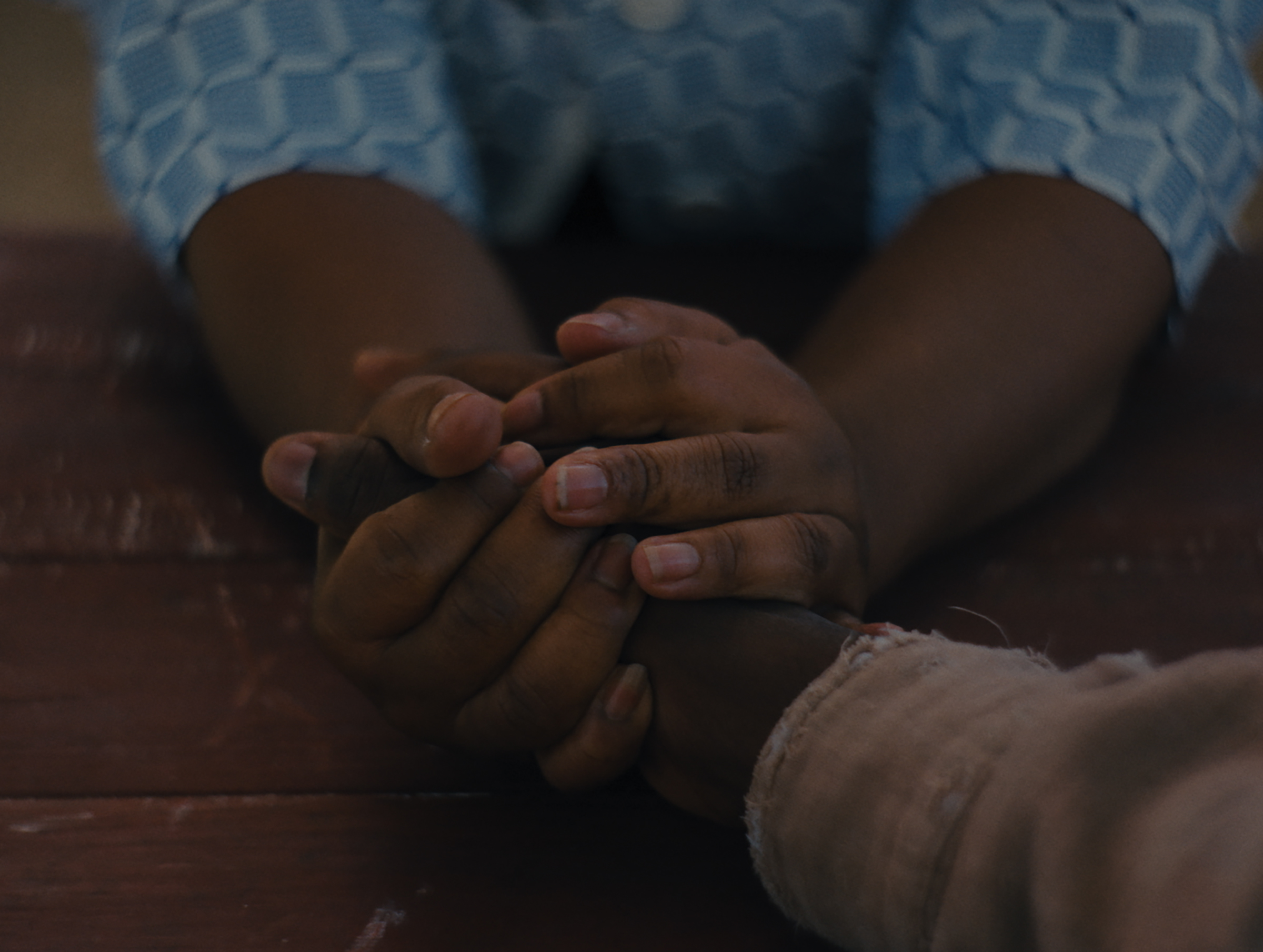
Through all of this, some running motifs emerge. The use of archival footage serves as a way to help transition between specific periods. It allows the film to build its own visual language, matching the fictional elements of this story with pointed moments in history. This also speaks to why a story of Black boyhood would require more closure than just a resolution to what happened at Nickel Academy. Daveed Diggs serves as an older version of Elwood. Even with the continued use of the chosen point of view (with a slight adjustment), the storytelling on display speaks to a life that was dramatically affected, with considered responses being used to counter the overwhelming nature of revisiting such a past.
Through all I’ve observed here, the accomplishments on display and how they have remained with me are what make Nickel Boys the movie of the year. Sure, there’s social relevance to the material, but there’s also the first-rate filmmaking that takes chances. The performances are compelling, with a friendship that serves as a spot-on focal point, speaking to how the bonding over a traumatic experience can shape everything that comes next, whether depicted through memory or a sense of understanding. How this film is displayed does wonders for the cinematic value here to be observed and felt. It’s a dramatic adventure that propels this story, no doubt, but thanks to the power of a proper adaptation by Ross and co-writer Joslyn Barnes, Whitehead’s exceptional novel finds new life in the form of an excellently crafted feature. Even within the darker sides of American history, there’s beauty to be found, and Nickel Boys delivers a soulful study.
Nickel Boys opens in select New York theaters on December 13, 2024, expanding to Los Angeles on December 20, and additional markets in subsequent weeks.