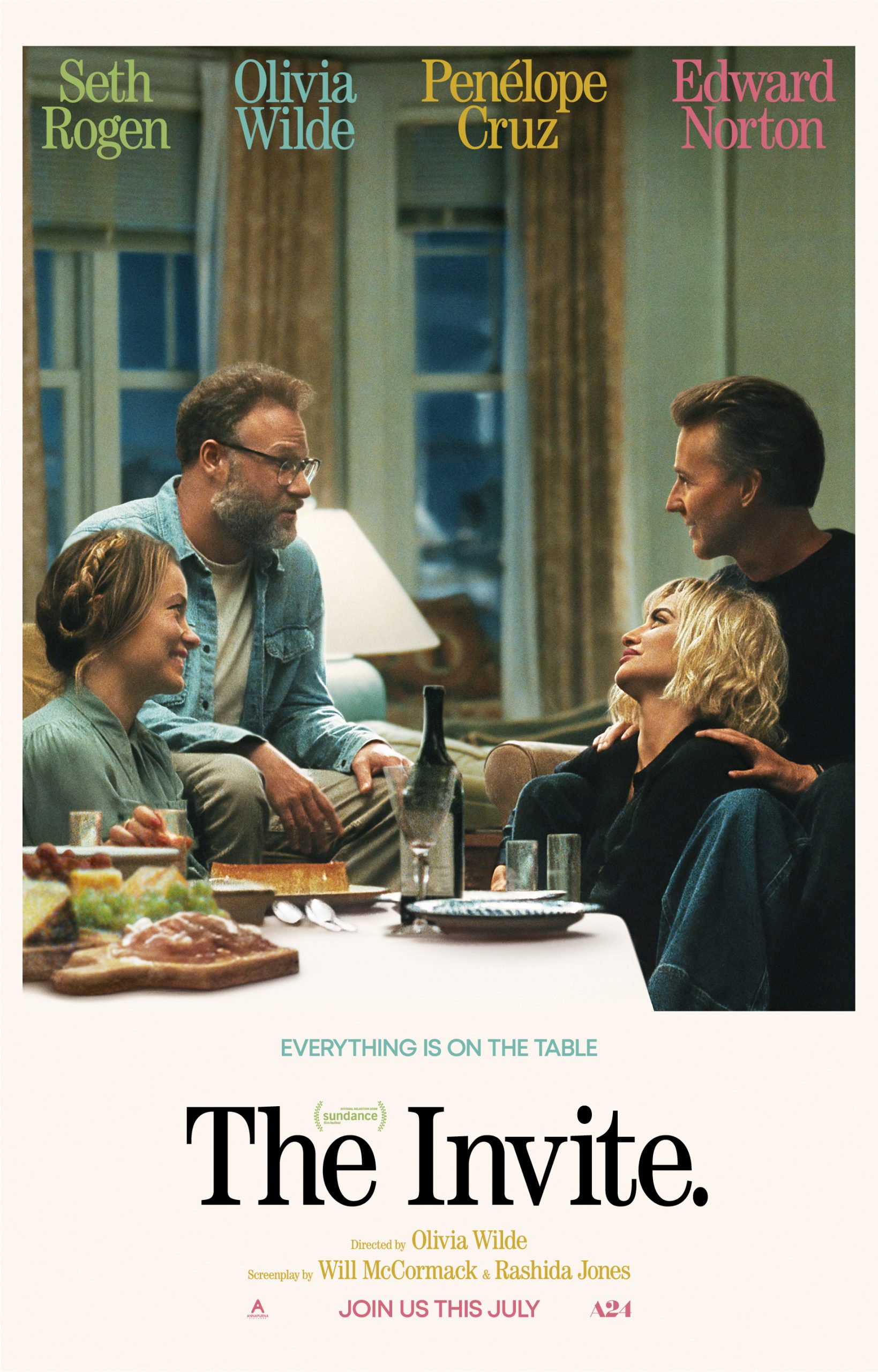
Olivia Wilde’s The Invite opens with an Oscar Wilde quote that doubles as a thesis: “One should always be in love. That is the reason one should never marry.” It’s a bold way to frame a dinner-party comedy about a struggling married couple whose friendly invitation from their neighbors turns into something far more provocative. It’s also exactly the right one. That tension is the film’s greatest strength, like an unspoken character lingering in the background, an elephant that no one wants to address. Both the comedy and the drama live in the contained setting, in the walls and rooms that hold people together who probably shouldn’t be, while the threat of something messier keeps pressing in from outside. When it bursts through, it earns its laughs.
The cast makes the difference, elevating a sharp and observational screenplay. Seth Rogen has the best jokes to make you laugh in a situation. He’s sharper here than he’s been in a while, allowed to push into slightly edgier territory while still being unmistakably himself. That’s a hard balance. He lands it. Olivia Wilde, as director, is confident and in control. Olivia Wilde as the lead is more complicated. My first instinct was that someone else should have taken the role. I’ve revised that. She needed to be in front of the camera as much as behind it, and by the end, that choice makes some sense. It just took me a while to settle into it. Maybe because she is hosting the party, it felt like her character was directing.
See Also: ‘The Invite’ Review: A Wilde and Crazy Night
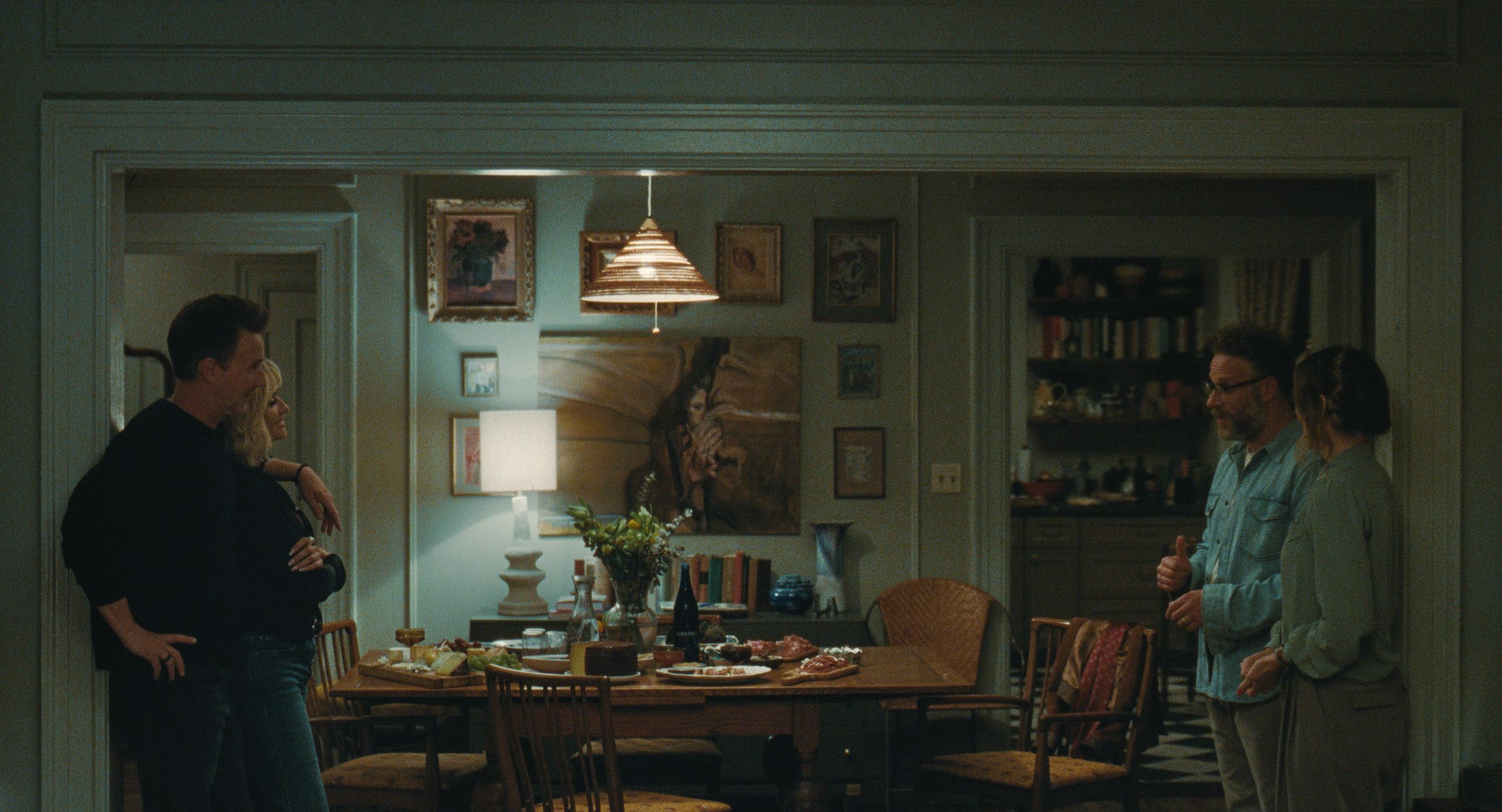
As for the other couple, Edward Norton and Penelope Cruz arrive as the neighbors and immediately complicate everything. Norton is natural and slightly unknowable, which is exactly what the role needs. Cruz is the therapist this marriage didn’t know it needed, and her warmth makes the seduction feel almost reasonable. Almost. Together, they’re the catalyst the couple couldn’t avoid and probably shouldn’t have.
What settles, and quickly, is the chemistry between Wilde and Rogen as a married couple running on fumes, struggling to express their emotions or feel in love, but barely tolerating each other. The kind of comfortable, worn-down disconnection that longtime couples recognize immediately and would rather not. You sense the history without being told it. You also sense the distance.
That distance is what makes the dinner party upstairs so dangerous. The neighbors want them in their lives, at least over for their parties. The film leans into this with the confidence of a 70s bedroom farce and the neurotic self-awareness of early Woody Allen, and is dialogue-heavy in the best way. Like those movies, people say too much. People say nothing when they should say everything. The swinger undertow gives every polite conversation a second meaning, and the film knows exactly how long to let a pause sit there as a linger guest before someone ruins it.
The Invite is a palette cleanser. No capes, no franchises, no IP. Just messy people, sharp writing, and relationships tangoing with each other despite everything. Grounded in reality even when it isn’t. That’s enough. Sometimes that’s plenty.
The Invite is now playing in theaters nationwide.