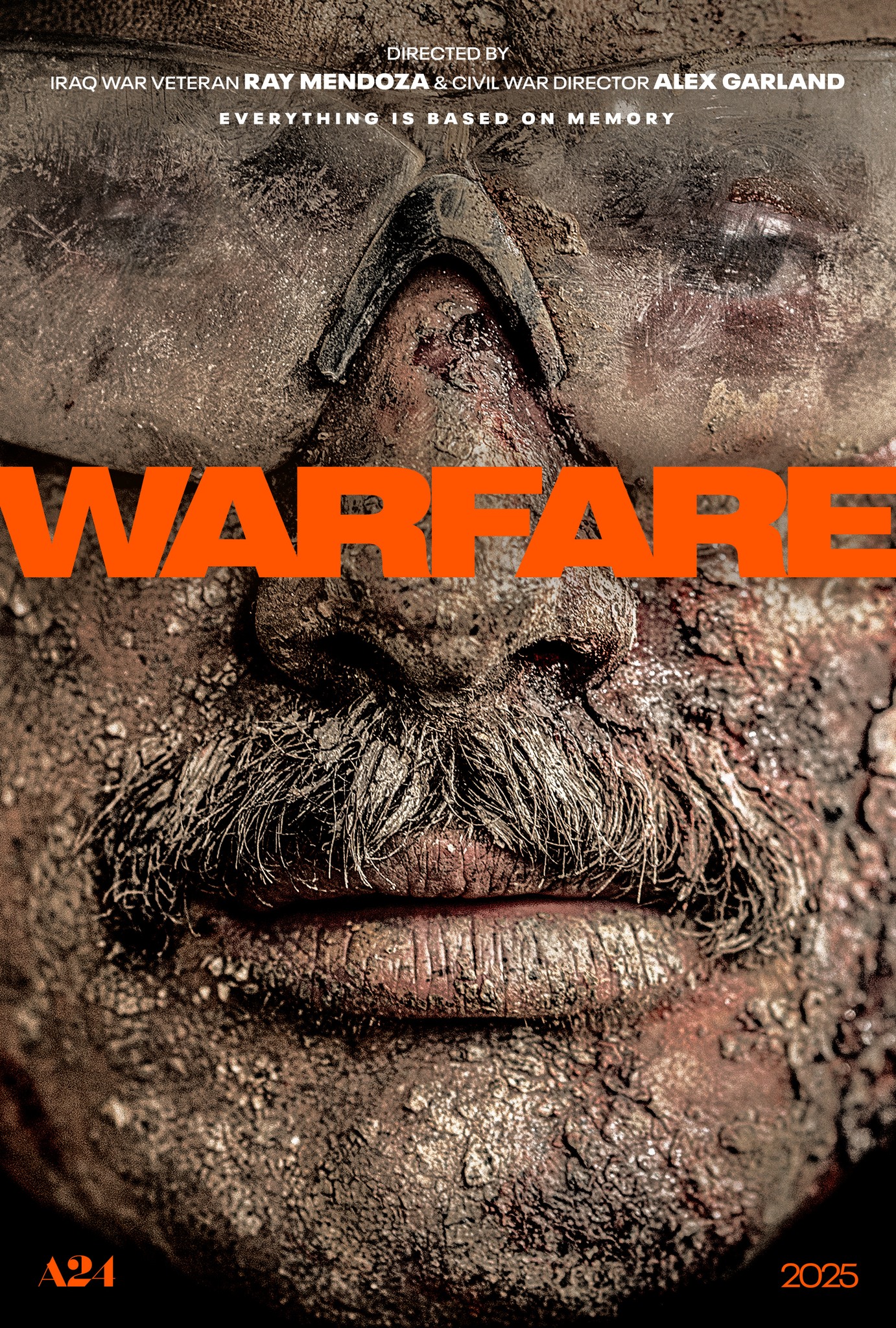
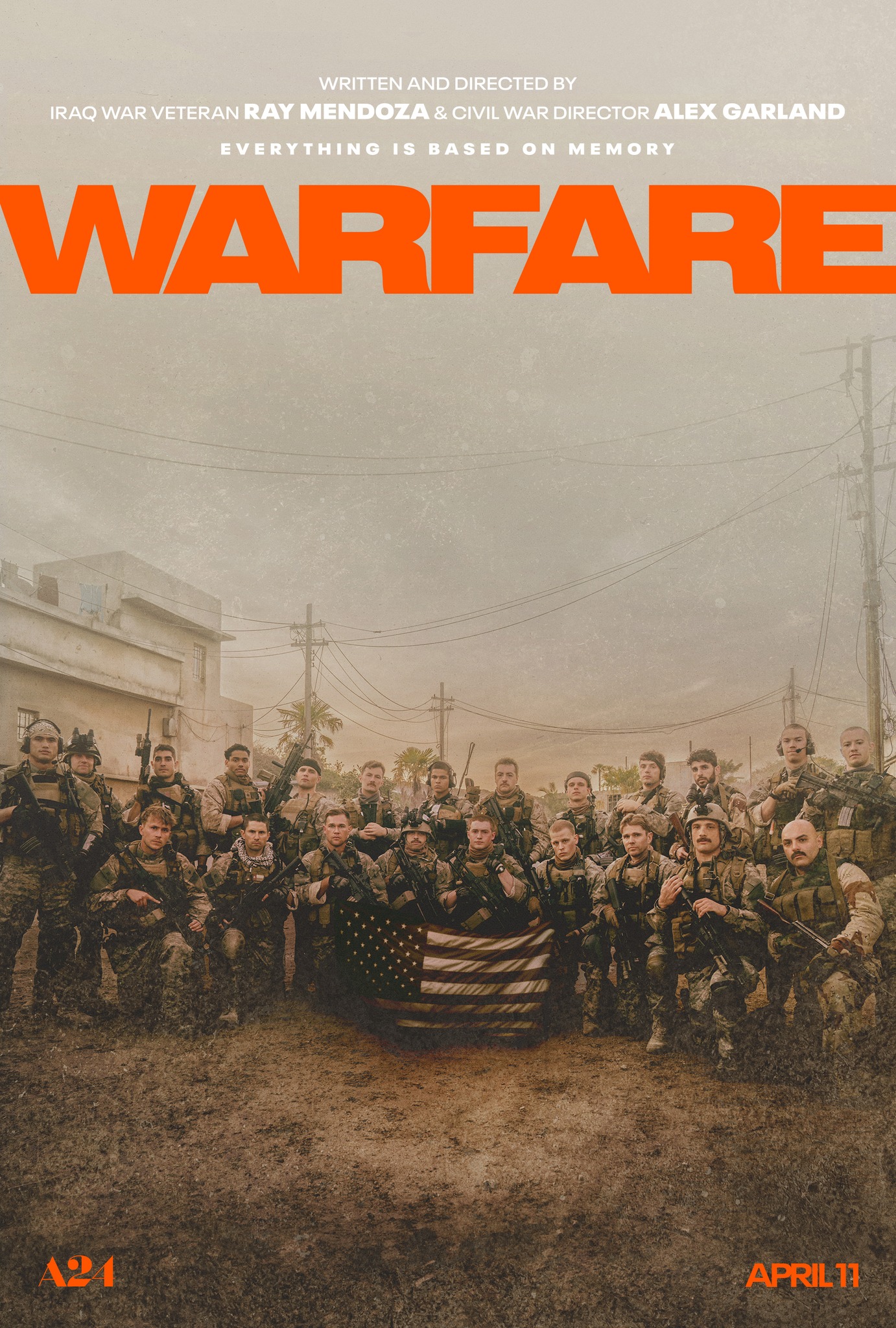
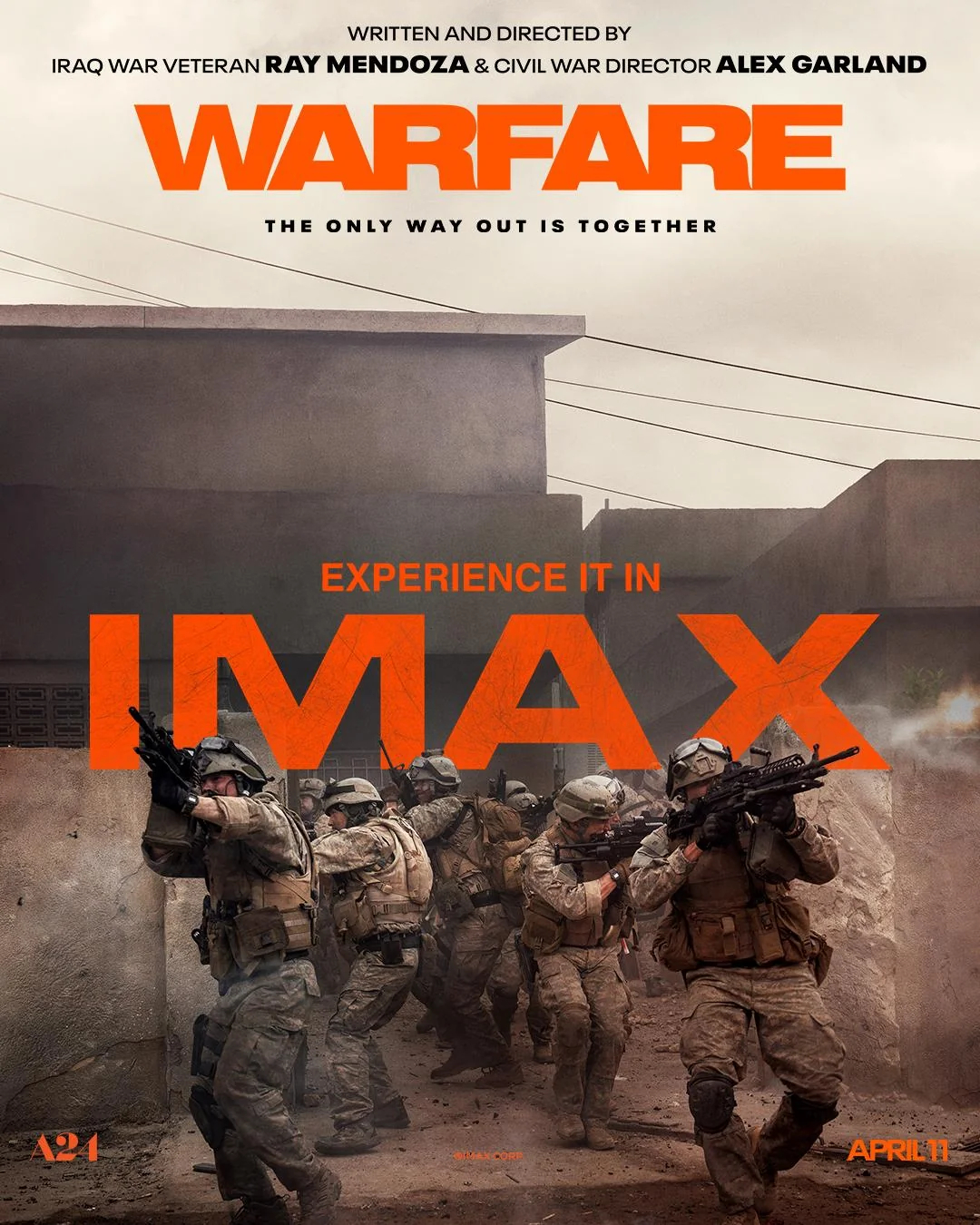
Well, that was certainly intense. Not so much an experimental effort as a stripped-down one, Warfare is the result of a filmmaker aiming for something raw and honest. Prominently billed as being “based on memories,” this film is doing all it can to keep the theatrics out of the intensity of battle and display what it is to be experiencing heavy action within insurgent territory. The results are pretty thrilling, and the efforts by all involved do a lot to ensure the viewer is never ahead of where the action may take them. At the same time, taking a step back from everything except the technical elements does leave the film feeling a little impersonal. That’s not to say it needed more manufactured drama, but the efforts taken to make this movie as well-crafted as it is present certain limits.
Warfare opens on a scene of comradery, as a platoon of Navy SEALs are gathered around a small television, enjoying a suggestive video and the music that goes with it. This is about as light as it gets, as the rest of the film is devoted to what occurred in November 2006 during the final stages of the Battle of Ramadi in Iraq. We follow this platoon, almost all of whom are given alternate aliases for their characters, as they deal with a surveillance mission that goes haywire. Presented almost in real-time, much of the film focuses on the efforts of this platoon to evacuate from a heavily armed area.
See Also: ‘A Working Man’ Review: A Sound of Statham’s Demolition
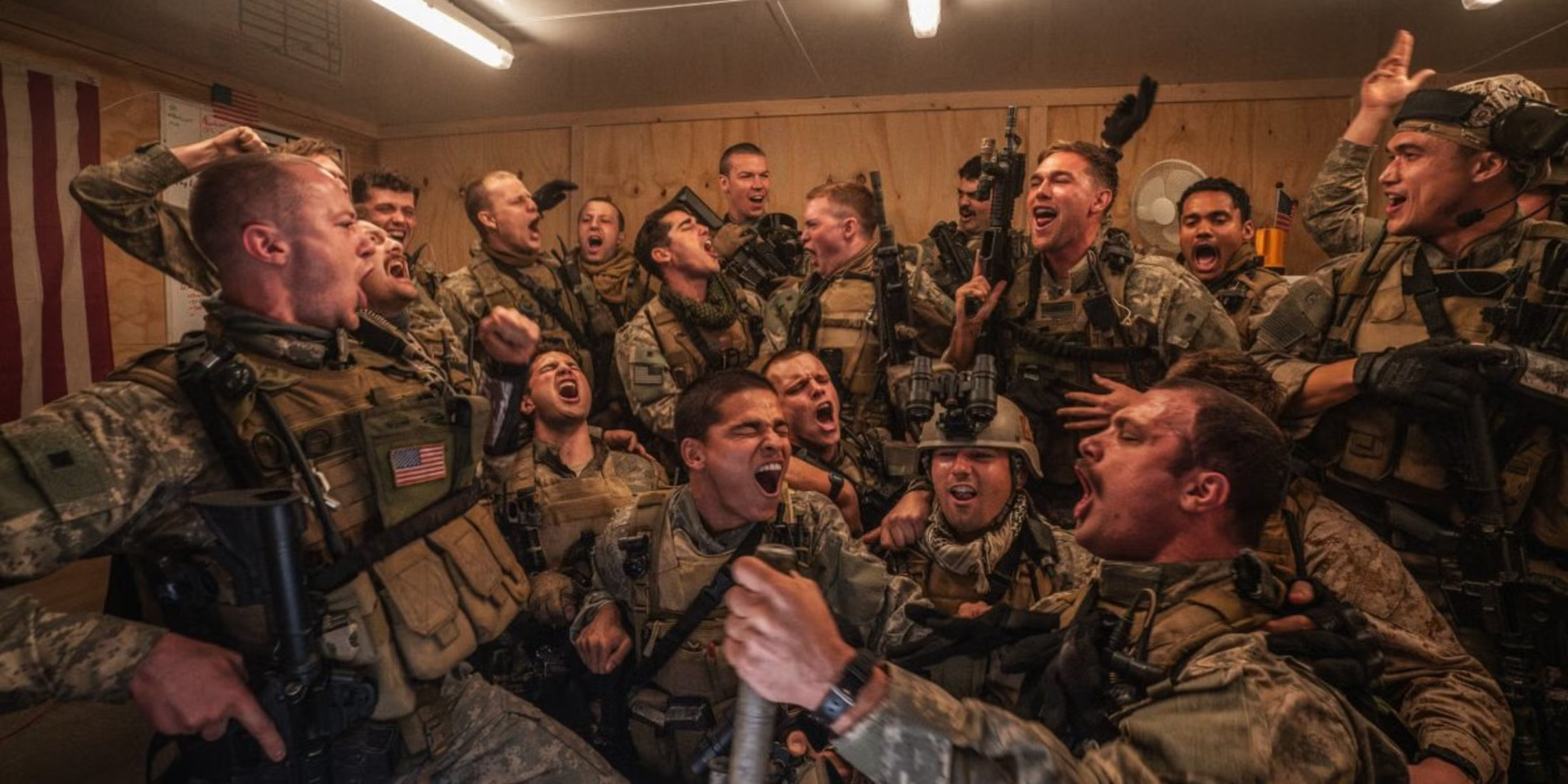
Not unlike several chaotic war movies, such as Ridley Scott’s Black Hawk Down, this film features a pretty stacked cast of young men in Hollywood, even if one has a hard time separating them from each other. Reservation Dogs’ D’Pharoah Woon-A-Tai is one of our main players, as he portrays communicator/JTAC Ray Mendoza (the real Ray Mendoza co-directed this film with Alex Garland). The film also stars Will Poulter, Cosmo Jarvis, Joseph Quinn, Noah Centineo, Charles Melton, and Michael Gandolfini, among others. While not exactly a film featuring a showcase for any one performer, there’s a clear dedication on the part of these actors to portray these SEALs as accurately as possible.
Last year, Garland released his alternate-history action thriller Civil War, which took the perspective of journalists attempting to cross a part of the country, risking all sorts of danger in the process. Warfare similarly attempts to keep a particular focus to be apolitical about what the audience sees. If anything, it’s even more successful in that regard, as we have no context to understand anything other than what these men are going through. Does that create a better-balanced or more effective feature? That is not really the point. However, if there’s a desire to get any real sense of interiority, that’s not what Warfare is after.

That could also lead one to believe that this movie is basically all action, which is also inaccurate. It would be dismissive to write this film off as an extended cutscene pulled out of games like Battlefield or Call of Duty, as even those sequences rely on manufactured drama, specific character interactions, and theatrics designed to make it all look very cool. Warfare does not have major gunfights, allowing our heroes to lock onto their targets or make last-second decisions that save lives. This film is, at its core, a thriller. We watch with hopes against any action taking place, as that means people are going to die tragically or be severely injured. Plus, going as far as asking for the “why” of it all is rendered moot, as the film does not intend to provide that sort of answer.
From a construction standpoint, the film works best in developing suspense or relying on the visceral nature of being stuck in a compromised area. With Mendoza guiding much of the direction in terms of getting the details right, and cinematography by David J. Thompson remaining constantly close and aware of the close quarters, it keeps the viewer on the edge of their seat by not making it clear what could happen at a given moment. Having seen so many films rooted in a heightened reality makes something like this all the more intense, thanks to expectations being subverted by the nature of watching a movie attempt to tackle the scenario in a much more grounded way.

Through it all, however, I wouldn’t say I found myself detached, but I did have to contend with knowing there wouldn’t be more to what I was seeing than the battle on display. It’s gripping, for sure, but is it really leaving me with anything beyond the obvious appreciation for what these men in service had to go through? I suppose the knowledge could be enough, but this still ultimately amounts to being a handsomely mounted studio film instead of one of the many excellent Iraq/Afghanistan War documentaries out there (Restrepo comes to mind).
There’s certainly a value in getting films like Warfare. It also leaves me curious about Garland’s instincts that led him to make what amounts to the B-side of Civil War after working with Mendoza on that film as a consultant. Did Garland get what he wanted out of his system by moving from a fictional reality into an accurate take on a different military situation? Whatever the case, it makes for a riveting feature, even if I am only so connected to what it has to offer beyond being able to see a particular kind of courageousness in action.
Warfare opens in theaters on April 11, 2025.