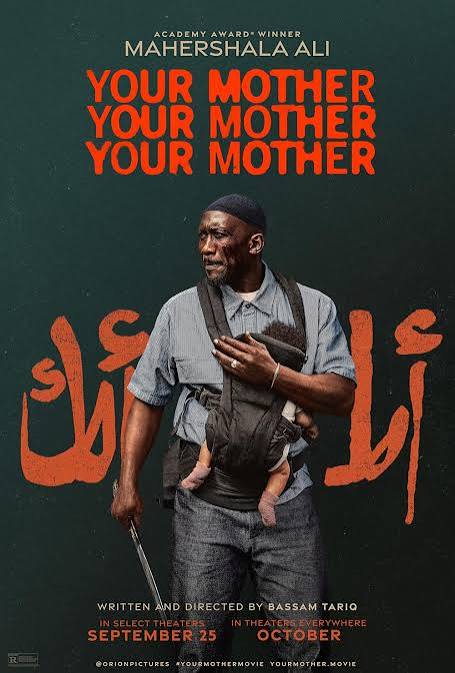
There’s probably no other way a movie like this gets made, except as a lower-budget, near-independent film that came together at the right time. Your Mother Your Mother Your Mother, named after an old Islamic account, is the sort of genre-bending that will operate on different levels for different audiences, depending on what they expect. Yes, this is a film about an assassin played by Mahershala Ali, who is in the proper shape to handle himself. It is also about a man challenged to hold onto his faith and keep up his religious practice, even when it requires bending the rules. Sincerity is key to the film’s success, and its self-control makes it easy to champion.
Ali stars as Latif, a devoutly religious man who has just become a widower. He is left with three children – a teenager, a preadolescent, and a baby who is having trouble feeding without her mother. Latif is also a talented assassin who takes jobs to keep some income. He does not prefer this work, especially as it brings attention to him and those he is friends with from those who bring dishonor to Islam, let alone nefarious figures who could prove to be quite dangerous. Once Latif puts himself in a situation where an extremist pastor (John Cho) is now in his opposition, it means he will have to move his family all over Houston, while coming up with a way to escape his situation.
See Also: ‘Resident Evil’ Review: Outbreak The Mold

It feels like a couple of movies people can’t help but bring up in relation to this story. The most obvious one is Blade, as director Bassam Tariq and Ali were going to team up for a new take on the Black Vampire-hunter superhero for the MCU before it all fell apart. Whatever that movie was going to look like, it’s not what we’re getting here. Inspired by a near-tragedy Tariq experienced, this is an introspective journey about a man balancing multiple lives, grief, and the challenges of parenthood. It’s not without humor, nor does it pause to show the many different ways Muslims live their lives, but it doesn’t put those aspects on hold for extended action sequences.
Another film that naturally comes to mind is one of my absolute favorites, Ghost Dog: The Way of the Samurai, directed by Jim Jarmusch. It’s a more apt comparison, as both films center on men who live unique lives and channel their spirituality in ways that speak to their physical abilities. The difference lies in the men’s motivations: Forest Whitaker’s character has let his whole life be consumed by his study of samurai culture (with an effective blend of East Coast hip-hop courtesy of the RZA). At the same time, Ali’s Latif only uses these skills as a means to an end, with a much stronger focus on maintaining his devoutness and ensuring his children similarly hold onto their religion as a key part of identity.
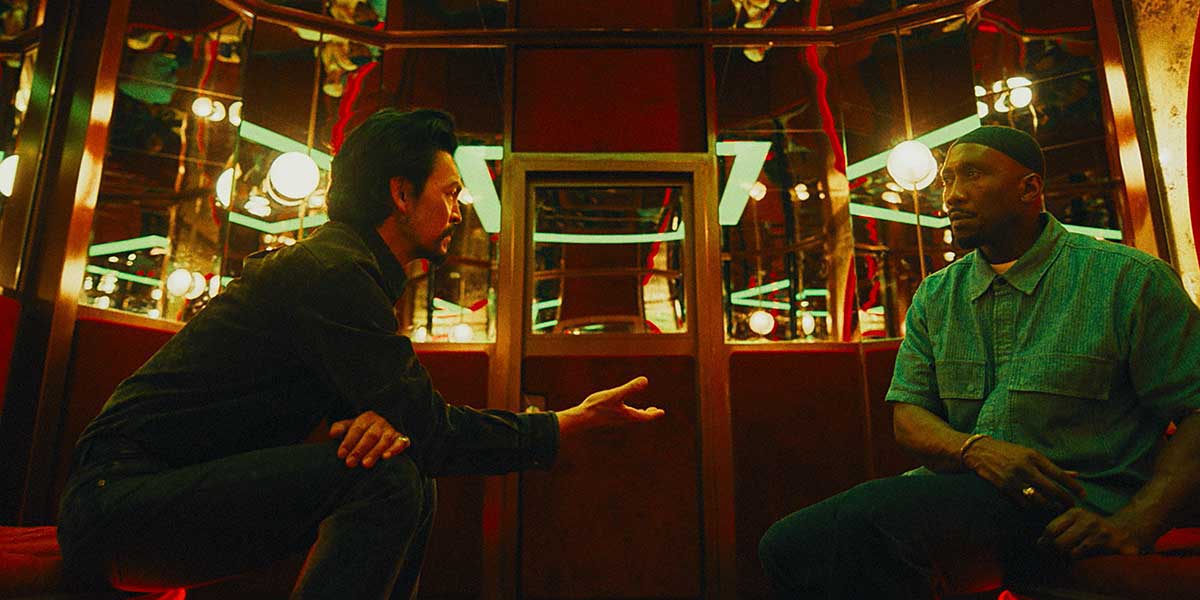
While plenty separates me from Latif, I could appreciate how this film lets him see things for what they are. He is not so devout that he is oblivious to the world around him. Whether it’s people he’d rather not associate with or his own daughter, whom he catches using WiFi to look up non-halal entertainment online, he is reasonable enough to apply the kind of judgment that comes from someone who’s lived. While we get glimpses of his past, it would be interesting to see who Latif was before his wife passed. That said, with his back against the corner, the thrilling nature of this movie comes from only having so much we can take away from this man, his notoriety, and what to make of his possible legacy.
Ali commands the screen, of course, in a way fitting for a two-time Oscar winner who hasn’t been given nearly enough time to shine, despite such high honor. He’s imposing, yes, but he can be soft-spoken enough to relate to others, including people in power played by Giancarlo Esposito and Tramell Tillman, which makes him feel relatable. There’s also the vulnerability that comes from the ways he must act around his children, especially when cornered by people who mean him harm in the presence of these innocents. And, yes, when it is time for action, the man shines.
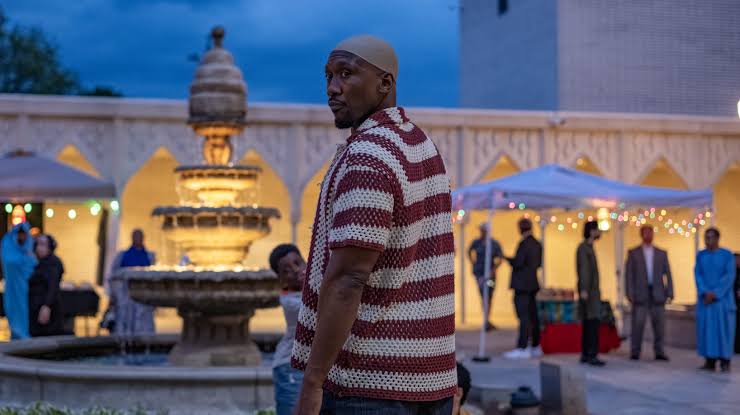
I know Tariq best for Mogul Mowgli, the 2020 film he directed, starring Riz Ahmed. It told the story of a rapper dealing with an illness just as he’s about to rise to larger fame. It’s an intimate story with no action, but it uses visual choices that create a heightened reality at times. Your Mother Your Mother Your Mother functions somewhat similarly. Despite being more ingrained in a genre film world, it’s still largely an intimate story, only straying when it deals with the film’s villains. At that point, the film alters its own reality, which is clearest during an ambitious finale that makes some interesting choices.
Leading up to the end, however, is an involving story that works best when it focuses on the struggles of an everyday man who happens to be deeply religious. It lets the film speak to several intriguing areas, whether it’s religion, race, or a father’s duties in relation to his own masculinity in modern times. Adding an exciting genre detail pushes each of these elements further in ways that are exciting, sure, but also feel carefully considered, so it doesn’t rise to the notion that this film is making excuses just to relish being some kind of exploitation flick.

Your Mother Your Mother Your Mother has many strengths, chief among them the chance to watch Ali shine brightly in a somewhat unexpected but entirely fitting role that pushes him to be more revealing, while inviting audiences to understand the man’s range. On top of that, a compelling story unfolds around him, one that doesn’t shy away from the complications that can come from multiple angles within the established premise. It makes for a film that’s both emotional and unpredictable, allowing Tariq, in turn, to show that beliefs can cut deep.
Your Mother Your Mother Your Mother opens in select theaters on September 25, 2026, and expands wide on October 9.