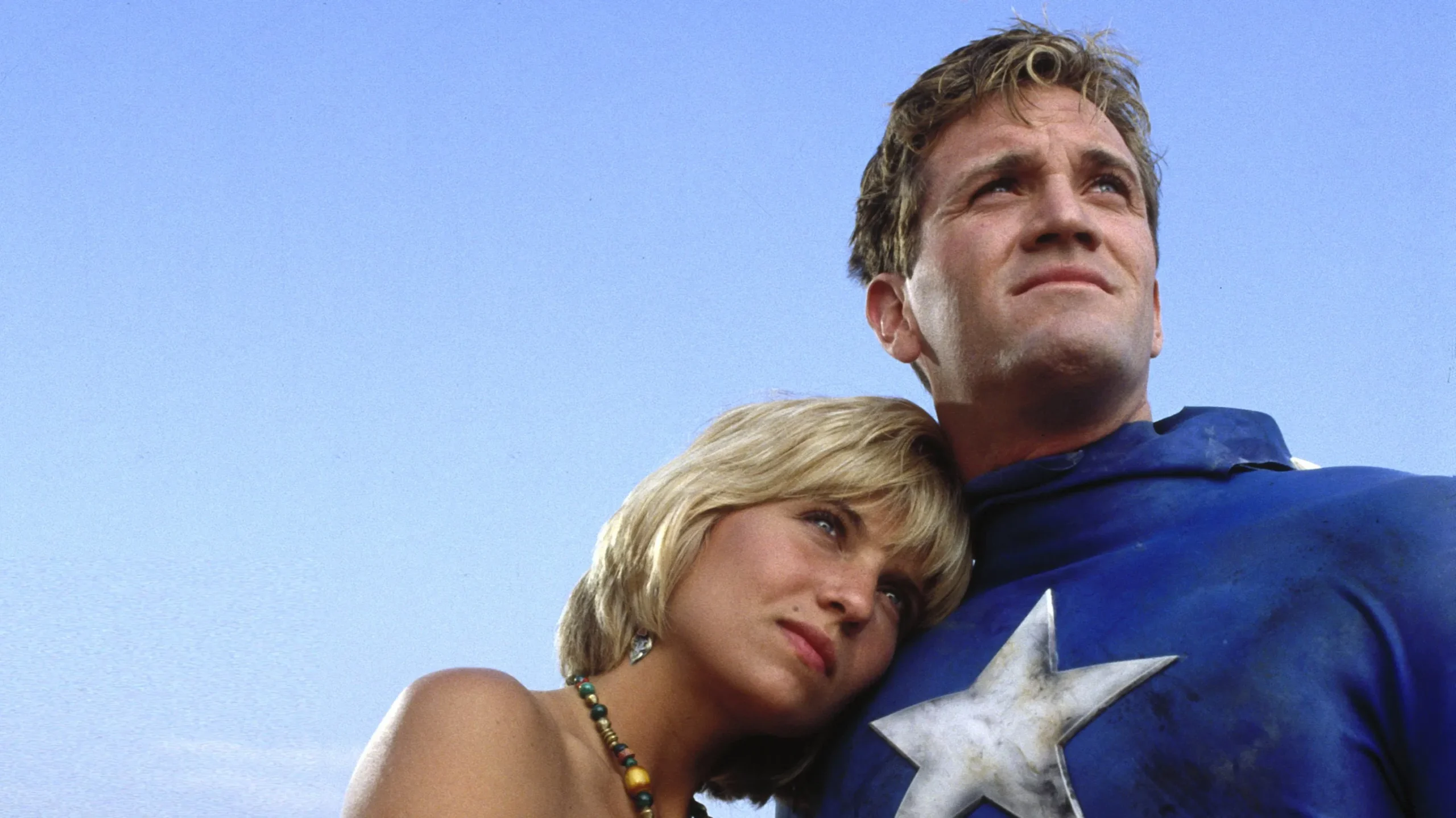
A rare showing of Captain America: Albert Pyun Cut screened at Big Bad Film Fest 2025.
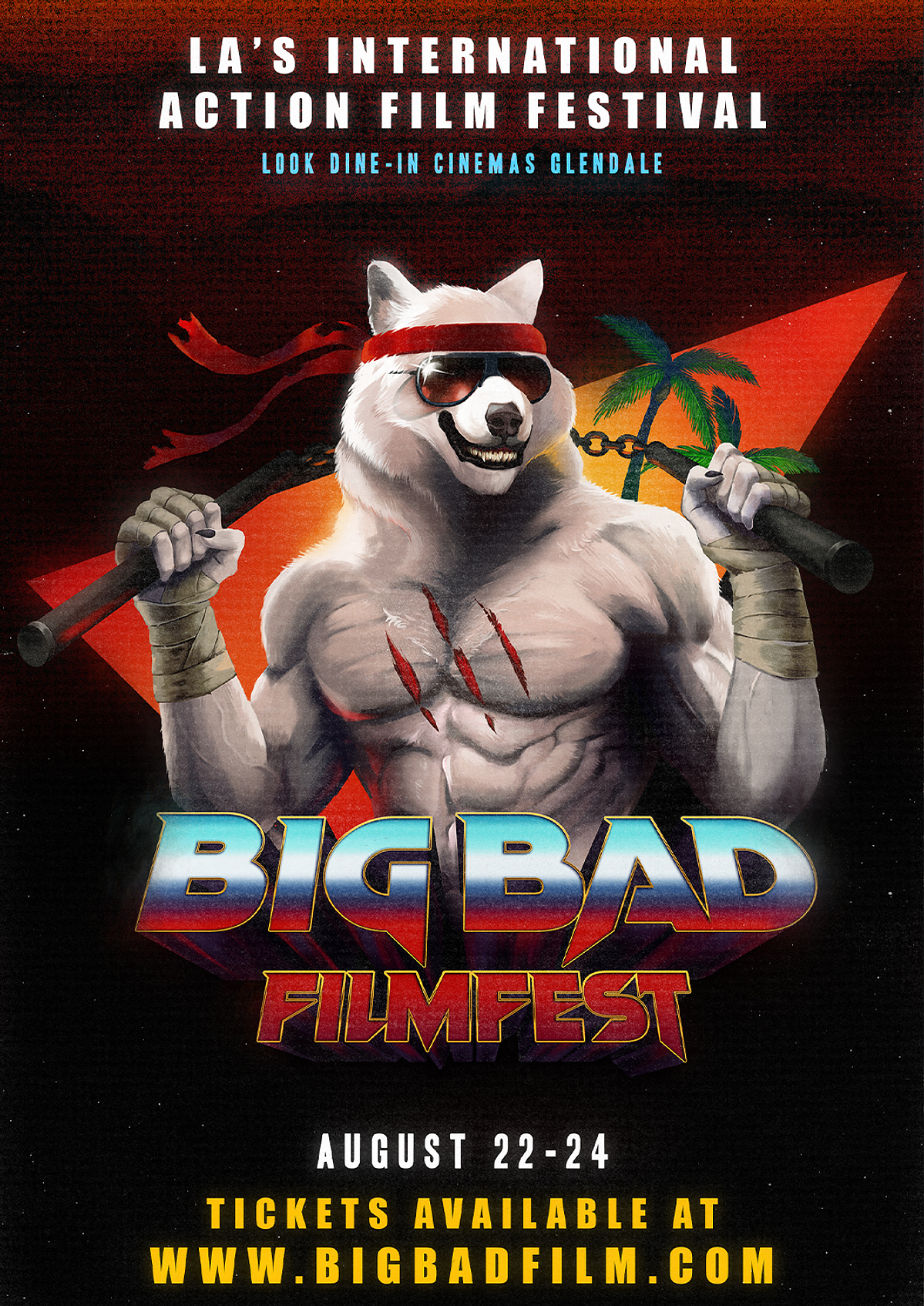
As noted in my post covering Opening Night, I was able to make it to this year’s Big Bad Film Fest, a genre-specific film festival set in Glendale, California, which focuses on presenting a killer lineup of independent and international action films in short and long form. Friday presented a world premiere in the form of Gladiator Underground and a friendly familiar face in the form of Scott Adkins in his latest, Prisoner of War. Saturday met that challenge with a wild variety of features and shorts, including a modern action throwback and a ’90s cult favorite. That said, it all culminated in the surprisingly emotional finale that was an exclusive director’s cut screening of Albert Pyun’s 1990 version of Captain America. Once again, the audience was ready for a kick ass day of cinema.
I’ll note here that the day began with the West Coast Premiere of Samurai Fury, which I wasn’t able to attend, nor did I get to see the short, Trapo Sucio, from director Jordan Santacana. Hopefully, I’ll catch up with the film at some point, though, as I’m all for a historical samurai epic that puts a lot of emphasis on sword-fighting action.
See Also: Big Bad Film Fest 2025 – Opening Night
Under Fire
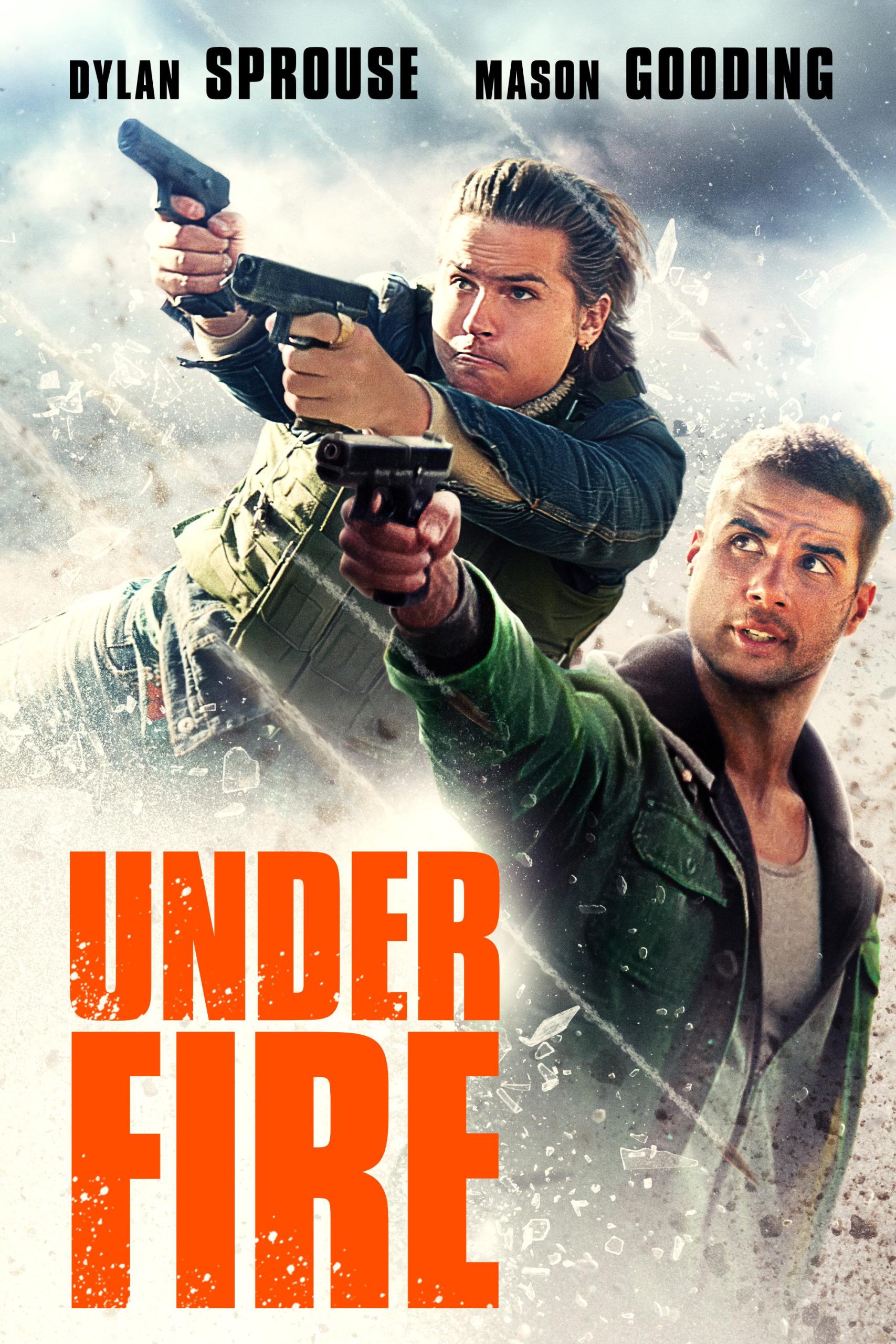
Fortunately, I was on hand for the remainder of the day, and the first film I was able to check out was Under Fire from director Steven C. Miller (Werewolves). Here’s a director who, as he explained in the post-screening Q&A, is all about delivering big popcorn movie fun with the means available to him, and I can absolutely see what he’s going for, even while working with a feature set mainly in one location for an extended period of time. I’m all for a good dusty and grimy firefight (think of films like The Way of the Gun or…well… Firefight), and this one delivers the goods, while keeping a sense of humor at play.
Dylan Sprouse and Mason Gooding star as what first appears to be gun and drug runners for bosses on different sides of the Mexican border. We eventually find out that both are actually undercover agents for the FBI and the DEA working the same case. It matters little in the moment, however, as the two (now exposed) friends are pinned down in a desert valley by a sniper, and will have to improvise ways of holding onto cover and working their way out of a hot area.
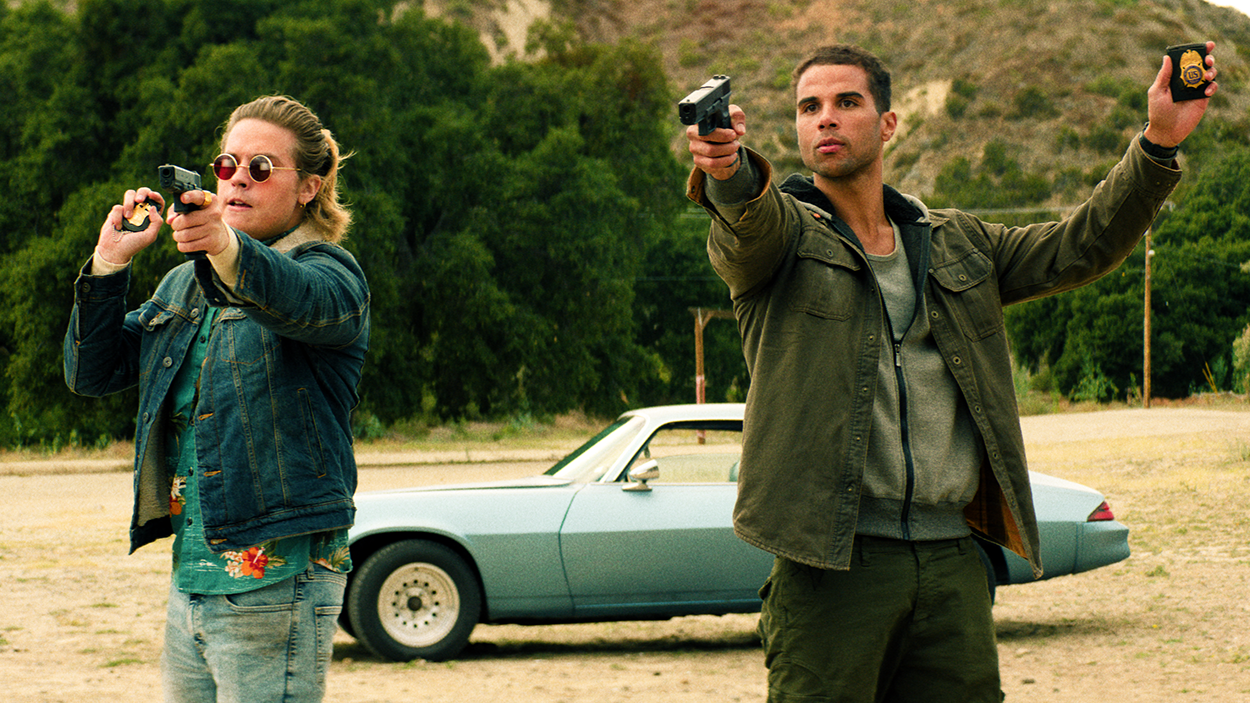
There’s a lot of fun to be had here. An early shootout brings in the modern element, as we see slow-motion bullet hits, elaborate choreography, and some key kill cam moments. Once the dust settles, however, while the film itself doesn’t slow down (there’s basically no fat on this thing), it is fun to watch more of an analogue way of approaching the choices these characters can make really shine through.
Amidst all of this is constant banter between Sprouse and Gooding. I haven’t seen Patrick Lussier’s Aftermath, which was the first film to team these two up, but now I’m certainly interested, as Under Fire gets so much mileage out of how strong the chemistry between the two of them is. Director Miller referenced Bad Boys as a strong influence on the types of films he wanted to make growing up, and it’s evident in movies like this, where a heightened scenario allows for humor without disrupting the flow. Thanks to that, there’s plenty to enjoy about an action flick that knows how serious to take itself, and is supported by slick filmmaking that holds steady for a good 90 minutes packed with ways to keep things fresh, under fire or not.
Showdown In Little Tokyo
Here’s a film that perfectly showcases why some movies truly shine on the big screen with a packed audience. I’ve only recently caught up with the joy that this ridiculous buddy cop action flick has to offer, but Showdown In Little Tokyo is reasonably assured for what it has to work with, and that’s only amplified when watching a group of action fans take in all that it has to offer.
The story focuses on Detective Chris Kenner (Dolph Lundgren), an American cop with a Japanese upbringing, who possesses a unique blend of skills. He’s partnered up with Johnny Murata (Brandon Lee, in his first American film), a Japanese-American, with no real ties to his roots, beyond extensive martial arts training. The two guys clash, of course, before realizing they work well together. They’ll need to, as a crime lord with ties to Kenner’s past, Yoshida (Cary-Hiroyuki Tagawa), is attempting a big play at bringing massive amounts of meth into the city.
I’ve read reviews of this 1991 low-ish budget studio release that basically go after the acting abilities of Lundgren, and a part of me just thinks they don’t seem to get the joke at play. While diving into whether or not he’s pulling off the emotional faces needed to express his inner turmoil, it’s as if there’s a lack of memory regarding the very premise of this impossibly large man being fluent in Japanese and even donning traditional Japanese warrior attire during a climax focused on taking down Yakuza in Los Angeles. It’s just not that serious, and Lundgren is a smart enough performer to know that.
See Also: Rapid Fire: 25th Anniversary of Brandon Lee’s Penultimate Film
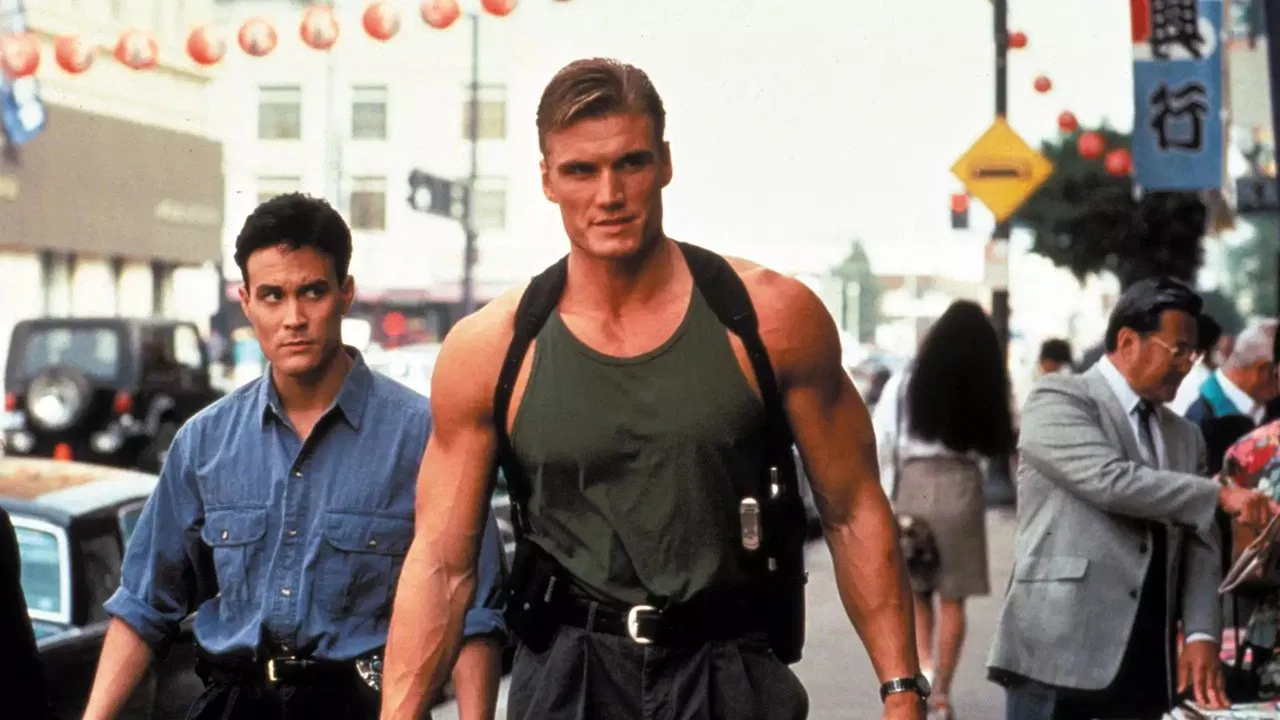
Meanwhile, whatever people thought of the movie or even Lee’s performance in it, there’s no doubt that this guy has the quality of a movie star just bursting to break out. Sadly, following this film, he only has Rapid Fire and his ill-fated turn in The Crow. Still, it doesn’t take away from how magnetic he is here, let alone how well he works off Lundgren. The two of them shout one-liners at each other, with Johnny being the bigger joker of the two. Director Mark L. Lester (Commando), who was on hand for a post-screening Q&A, explained how the studio so wanted to make Brandon Lee the star, that the film’s 79-minute runtime was mainly due to efforts made to force more of Lundgren’s part to be cut down, helping to add more emphasis to Lee in the process.
Fortunately, the film could lose all of Lundgren, who does a lot to epitomize the ridiculousness of these kinds of movies at this point in time. Lester rightfully notes how much Showdown in Little Tokyo is designed to feel like a comic book action movie, as the logic goes out the door, and the focus becomes a look at all the ways tough men can go after neverending levels of bad guys, saving beautiful damsels in the process (Tia Carrere in this case), and letting the homoerotisism just sit in the atmosphere, as all macho 80s/90s action movies tend to do. As stated, this was an excellent watch for a large audience, but the film has the sort of attitude that makes it fun no matter what, granted you’re willing to go along for the silly ride it has in store.
Additional note – this screening was preceded by the short film Dragon Jacket Kung-Fu, from director Atsuhiro Yamada. It concerns a shy movie-loving guy who is gifted a magic jacket that enhances his martial arts skills. This comes in handy when the ticket-taker girl he has a crush on gets into some trouble and he’s able to use his newfound skills to save the day. The short is a little long, but the action choreography is terrific, and there’s enough knowing self-awareness to keep the flick from ever getting too bogged down in any one area.
Captain America: Albert Pyun Cut
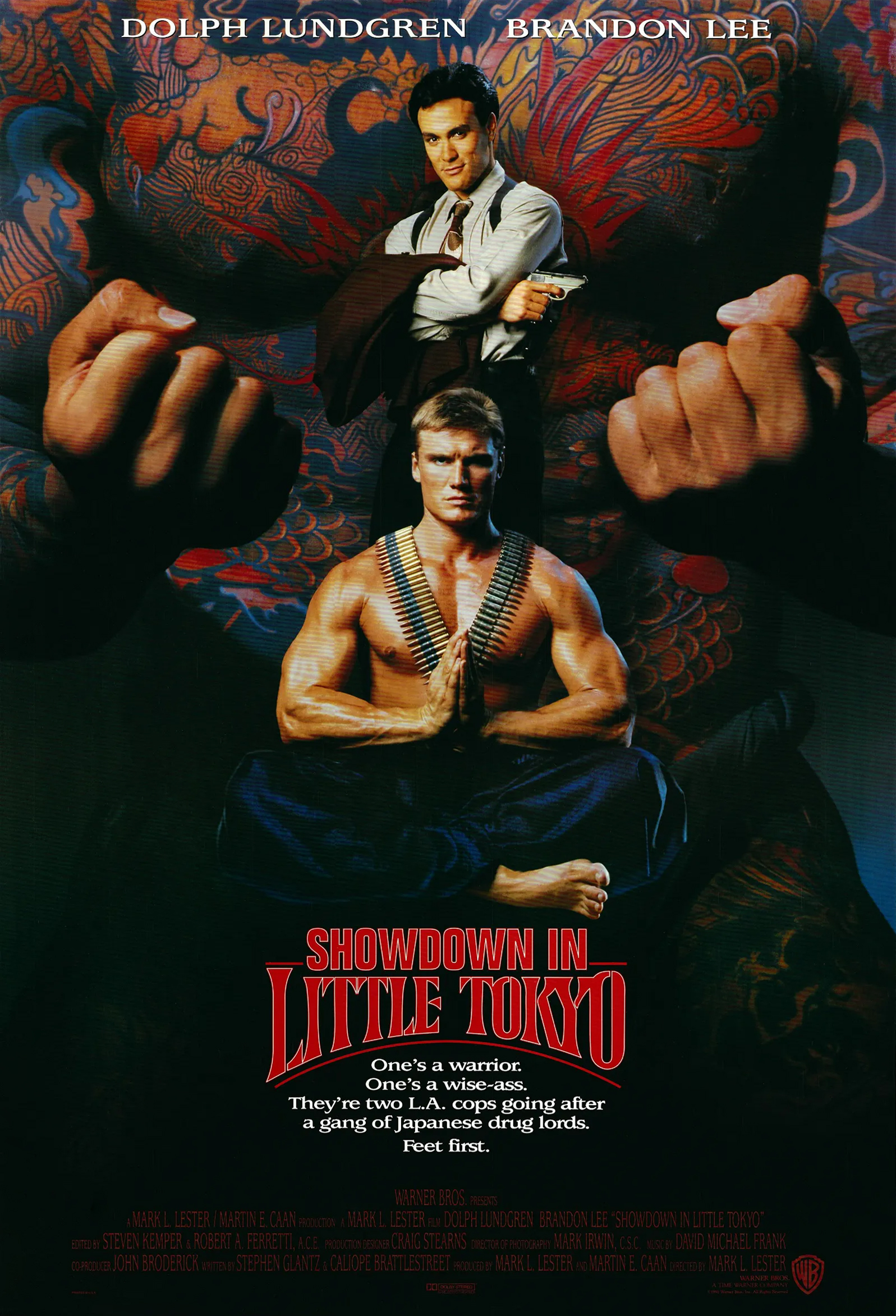
While technically the “After Dark” screening for the festival, watching this film really felt like this is where the heart of this year’s Big Bad Film Fest lay. Festival organizers Patrick R. Young and Powell Robinson, both devotees to all this craziness, gave a fine introduction to provide some context as to why Albert Pyun (Cyborg, Nemesis) was a director who mattered to many people, and what it is that had to offer in a cut of this particular film that he never had a chance to see materialize on the big screen. It was important, as the crowd was certainly into the fun that exists in this version of Captain America, but it also has other things to offer.
In this take on Marvel’s superhero boy scout, Steve Rogers (Matt Salinger), has done what he can to stop Red Skull (Scott Paulin) from destroying Washington D.C., before crash-landing a missile into the ice with him onboard, somewhere in Alaska. Decades later, Steve’s body is found, and after being pulled out of the ice, he decides to take off for himself and head back home to make sense of things. Many are after the truth of this scenario, including the President (Ronny Cox) and his best friend, a reporter (Ned Beatty), along with the Red Skull, who has survived and remains hidden in the shadows, plotting away.
To be upfront about it, I’ve never seen the theatrical version of Captain America. I’ve been aware of what it’s like, what it offered as a low-budget film, basically on par with Roger Corman’s efforts to deliver a Fantastic Four in the ’90s. Still, I had nothing else to work with, outside of cultural osmosis. I say all of this to note that I found this film fascinating. Given that modern superhero cinema of the time only amounted to the Donner-era Superman films, Batman, and Dick Tracy, it’s not as though there was a straightforward method about what to do with these Marvel characters, many of whom are grounded in one way or another. It’s because of this that I can see a lot of what Pyun was going for, even if his version is also flawed.
See Also: ‘Captain America: Brave New World’ Review: The Sum of All Shields
The best thing Captain America does is really lean into the “man out of time” nature of the plotting, which is not really played for laughs here. I’m away the theatrical cut is cut down to 90ish minutes and features a broader score to lean into the “gee whiz” of it all. This Cap movie that Pyun aimed for doesn’t forget fun, but is still rooted in character. We are seeing a man who is contending with an America he doesn’t recognize and deciding whether that’s a good or bad thing. As a result, given the budget, we watch a film that allows Steve Rogers to work at a Gold’s Gym and try to figure out his place in life, before tragedy strikes in a manner that pushes him to get back into action.
Now, sure, the plotting is not airtight in any way. Pyun and company did what they could with what they had to work with, including the choice to change Red Skull into a weirdly sympathetic story about a small Italian child forced into a terrible situation. Does that come from the James Bond logic of doing all they could with an exotic location to make the film appeal abroad and bring the cost down in the process? Very likely. But blending that with everything going on with Steve means piecing a work like this together the best they could, despite issues at hand.
For all his efforts, Sallinger is also only so-so as the iconic character. He has the look down, especially when not forced to wear the “helmet.” Still, one can see shortcomings in a significant area. That said, he reacts well from a physical standpoint, and given how much more tender this film is, let alone the level of melancholy on display, there’s plenty to appreciate about what’s really being given to this performance when looking at what’s possible.
I wish the pacing were stronger, as the action is concentrated mainly in the second half, and one can feel that in the moment, but that doesn’t detract from what feels like a genuine effort to do something interesting with a character not the easiest to capture beyond his broad qualities. Yes, the MCU actually did manage to do a lot with Chris Evans’ take on Cap. Still, in a world where multiverses are an accepted form of storytelling, I’m glad this Pyun Cut of Captain America can sit alongside them.
***
Big Bad Film Fest takes place from August 22-24, 2025,
at the LOOK Dine-In Cinemas in Glendale, California.
For more information and tickets, check out the WEBSITE.