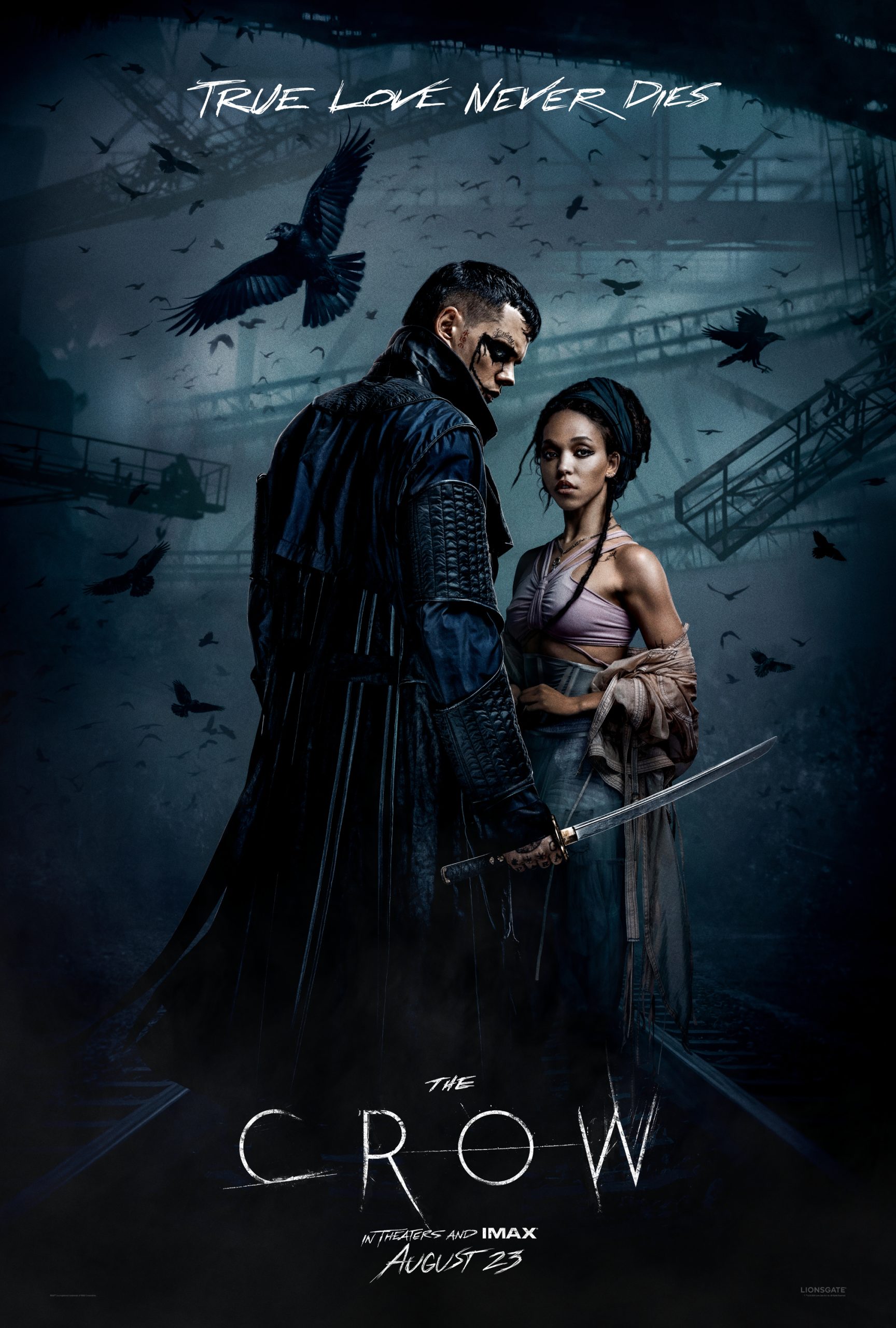
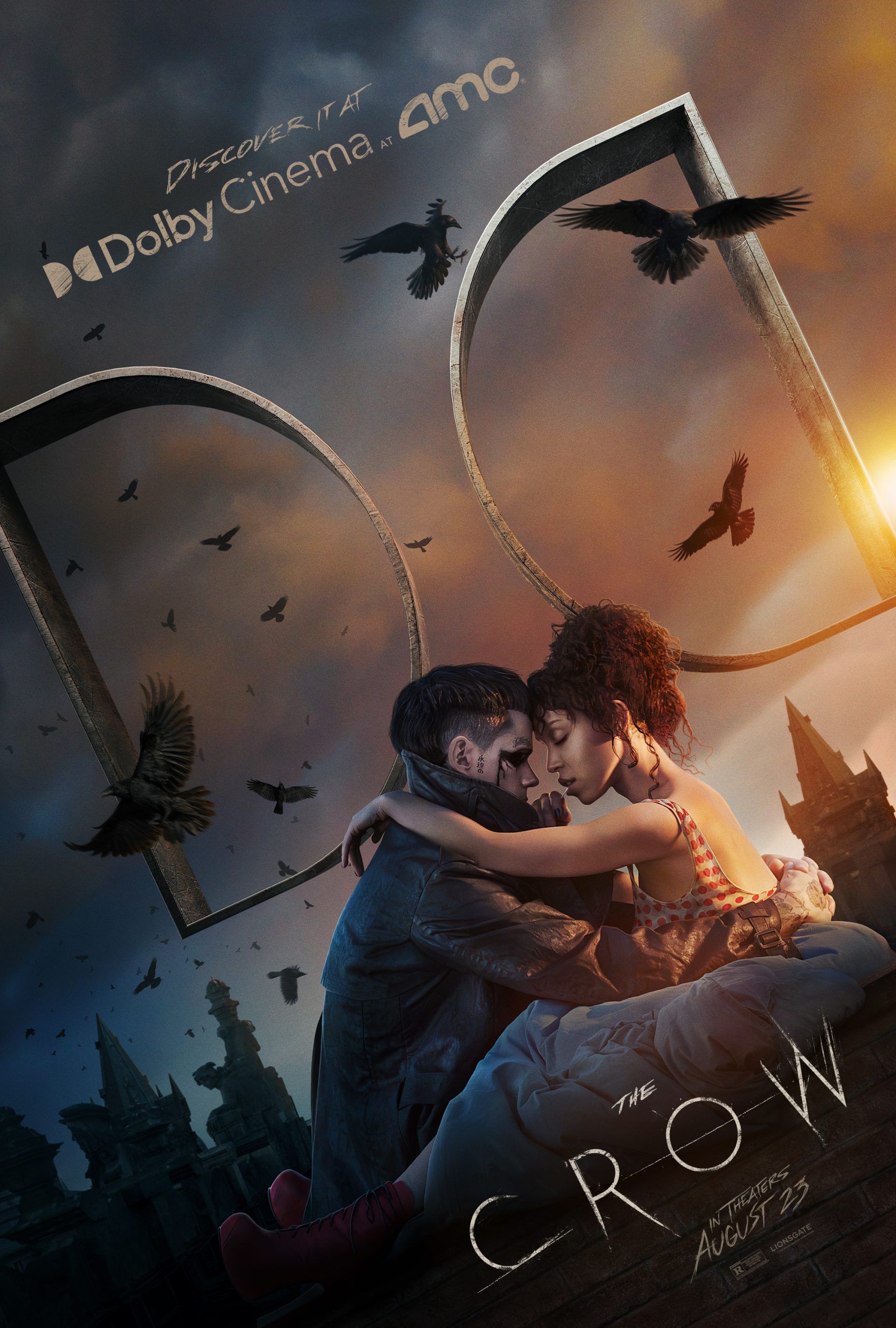
At long last, Lionsgate has finally delivered The Crow reboot, which they’ve been threatening to deliver for the better part of two decades. Was it all worth it? Well, frankly, no. It’s not as though this film is a mess, as it’s shot clearly and doesn’t feel edited within an inch of its life. With that said, true to the spirit of lead character Eric Draven, the movie is lifeless. Yes, work was done to have something with a meaningful idea in mind, but with very little stylization taking place, a generic plotline that removes much of what made the original comics at least standout, and the clearest feeling of “why watch this when I can watch that,” this is less of a bird that got away, and more like a bad egg altogether.
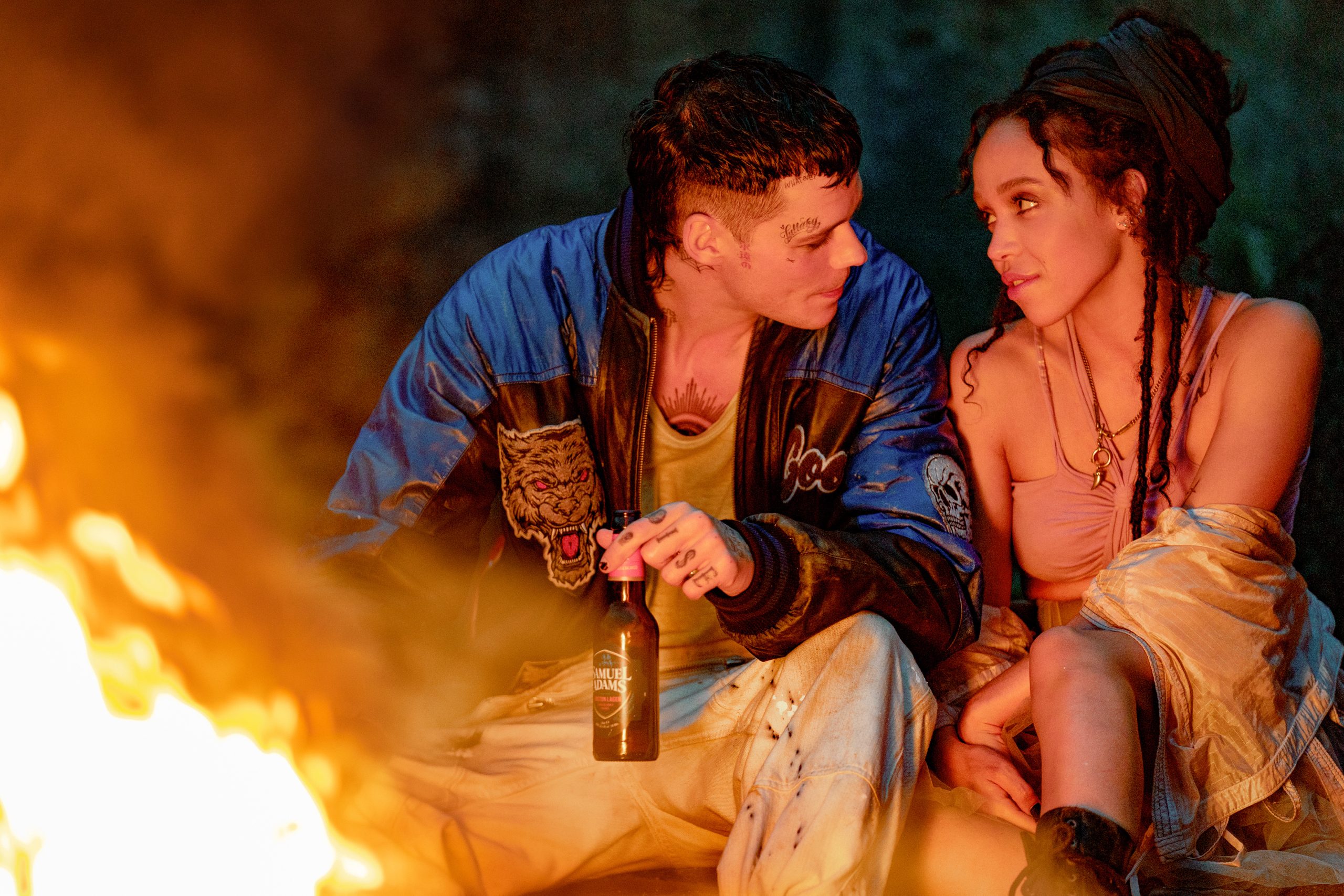
Bill Skarsgård stars as Eric, a heavily tattooed and downtrodden man introduced in a rehab facility, where he meets Shelly (FKA Twigs). She’s purposely placed herself inside to avoid some nefarious characters led by Danny Huston’s Vincent Roeg. However, when Shelly’s past catches up, the two of them (having fallen instantly in love) make a break for it. While everything is lovely for a time, the bad guys eventually locate Shelly, and the lovers are brutally murdered. This does not sit right with the powers at be, however, and Eric is revived to seek out vengeance on those who killed his beloved. Now invincible, guided by a crow, he will set out to stop those deserving, racking up plenty of instantly healing bullet holes in his body along the way.
See Also: ‘The Northman’ Review: Though This Be Madness, There Is Method In It
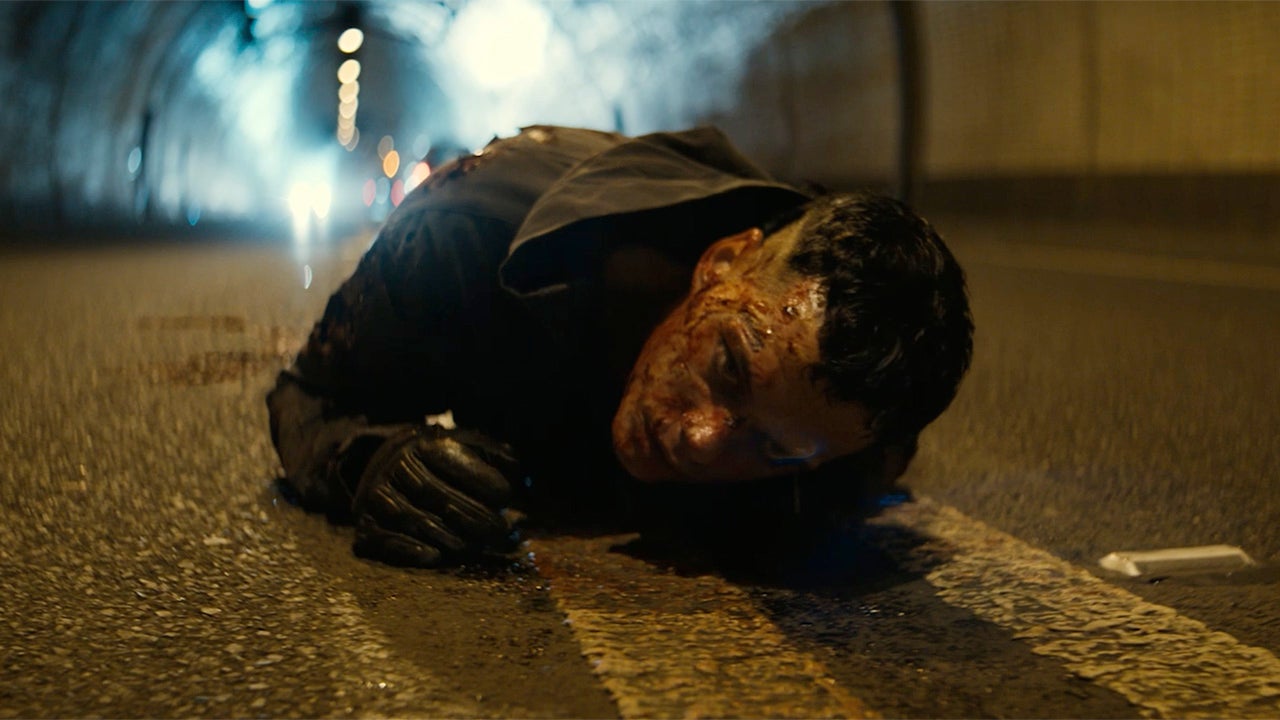
Following a requisite flashback prologue to get the audience in the right mindset of what they’re in store for (a little boy cuts his hands on barbed wire trying to free an injured horse), the film puts on display an elaborate title reveal. It’s all colored goop with a body emerging from it, but it’s evocative and hints at something inspired for the film that follows. This reminded me of the wild opening title sequence for David Fincher’s The Girl with the Dragon Tattoo, which was like a hard rock Bond title sequence. However, while Fincher’s film has the director delivering his typical style and precision, The Crow follows up this opening bit with an uncharacteristically bland feature for director Rupert Sanders. I may not be a big fan of his previous features, Snow White and the Huntsman and the live-action Ghost in the Shell, but those films are at least visually distinctive. This new take on The Crow, however, seems to reject the notion of doing more.
In some sense, I get it. Alex Proyas’ celebrated 1994 film was incredibly stylish, working with elaborate miniatures, utilizing darkness in exciting ways, all while holding onto the spirit of a comic book film back when Batman was the baseline other similar films would aspire to. On a modest budget, that feature still managed to resonate with many and serve as a clear precursor to Proyas’ follow-up, the cult classic that is Dark City. With this reboot wanting to have no intention of stepping on the toes of a much-celebrated original (primarily due to the film’s legacy regarding deceased star Brandon Lee), any attempt to “go gothic” may stir the audience in ways that could backfire.
Of course, if that is the case, why make the film? That’s the $50 million question I have continued to wonder about in this film’s long journey to the big screen. Between 2008 and now, several directors, along with actors Bradley Cooper, Luke Evans, and Jason Momoa, were all tied into a version of this film at one point or another. Ending up with Bill Skarsgård in the lead role is not a downgrade, as I like seeing this actor exploring more territory (particularly as a non-villain). Still, when all is said and done, I’m just unsure what goal was being chased here. One decent hit of a film (for some pretty specific reasons), followed by three mostly direct-to-video sequels, doesn’t exactly suggest more of this is needed. Then again, the timeless nature of the story and Lionsgate’s penchant for going more extreme with their releases could have made for something interesting.
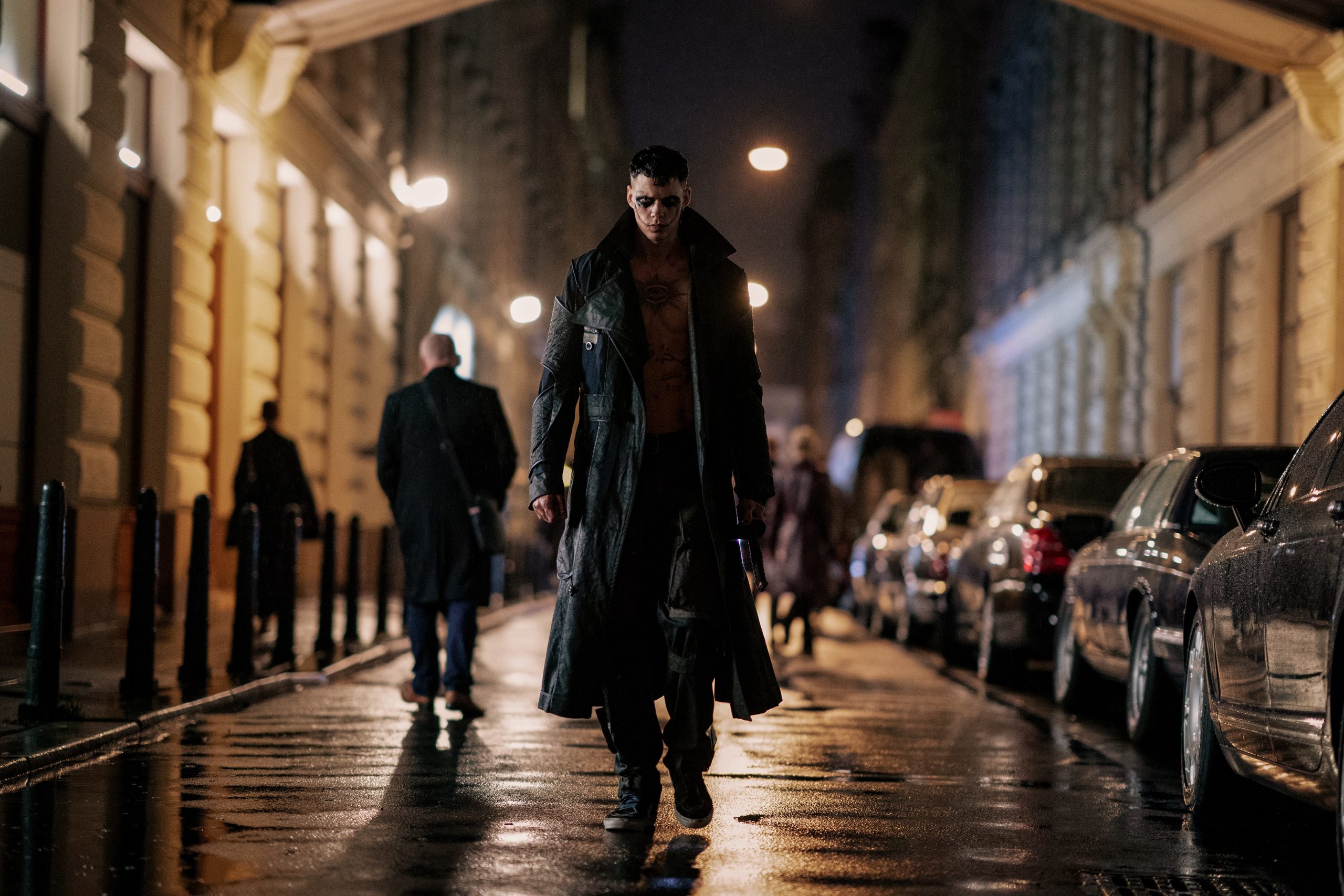
Alas, while retaining an R-rating and featuring enough graphic violence to raise one of Jigsaw’s eyebrows, many odd choices are being made to justify the necessity of this film. As noted, this is a far less stylized approach to the material. While it’s at least assembled coherently, I wasn’t all that taken with barren train yards and abandoned shipping districts with CG-enhanced backgrounds to make up for more of an identity regarding its supernatural element. Meanwhile, the world of the living Eric is walking through seems more inspired by the John Wick films than anything, but at least director Chad Stahelski (who worked on The Crow) notably makes all the scenes in those films look interesting through camera choices and uses of color.
For The Crow, its big sell is seeing Eric go full-powered and take on armies of bad guys connected to the film’s major crime lord/servant of Satan. That’s all well and good, and it makes for at least two wicked action sequences focused on the amount of hits a dead man walking can take before completely destroying everyone in his path. That said, it only goes so far in playing with the film’s stakes. Sure, there’s a learning curve for Eric, and how he deals with the pain that he is still feeling despite being invincible, but if the joy I’m getting is largely supposed to come from seeing how badly people die in his wake, that’s only getting this movie so far.
Not really helping is the why of it all, as the story goes pretty far to set up an elaborate (rarely exciting) plot detailing what’s taking place. While there are some loose connections to ideas found in James O’Barr’s comics, let alone the many other authors since, to say this take on The Crow is a reimagining of the original material is a stretch. This film goes far off the deep end in terms of how Eric and Shelly got together, what Eric’s role in all this is, who the villains involved are, and how personal the vengeances is when all is said and done. Source fidelity can be a crutch that I don’t always need to see filmmakers lean on, but once again, if the idea is to move so completely away from certain aspects of the core story, what’s the point of all this?
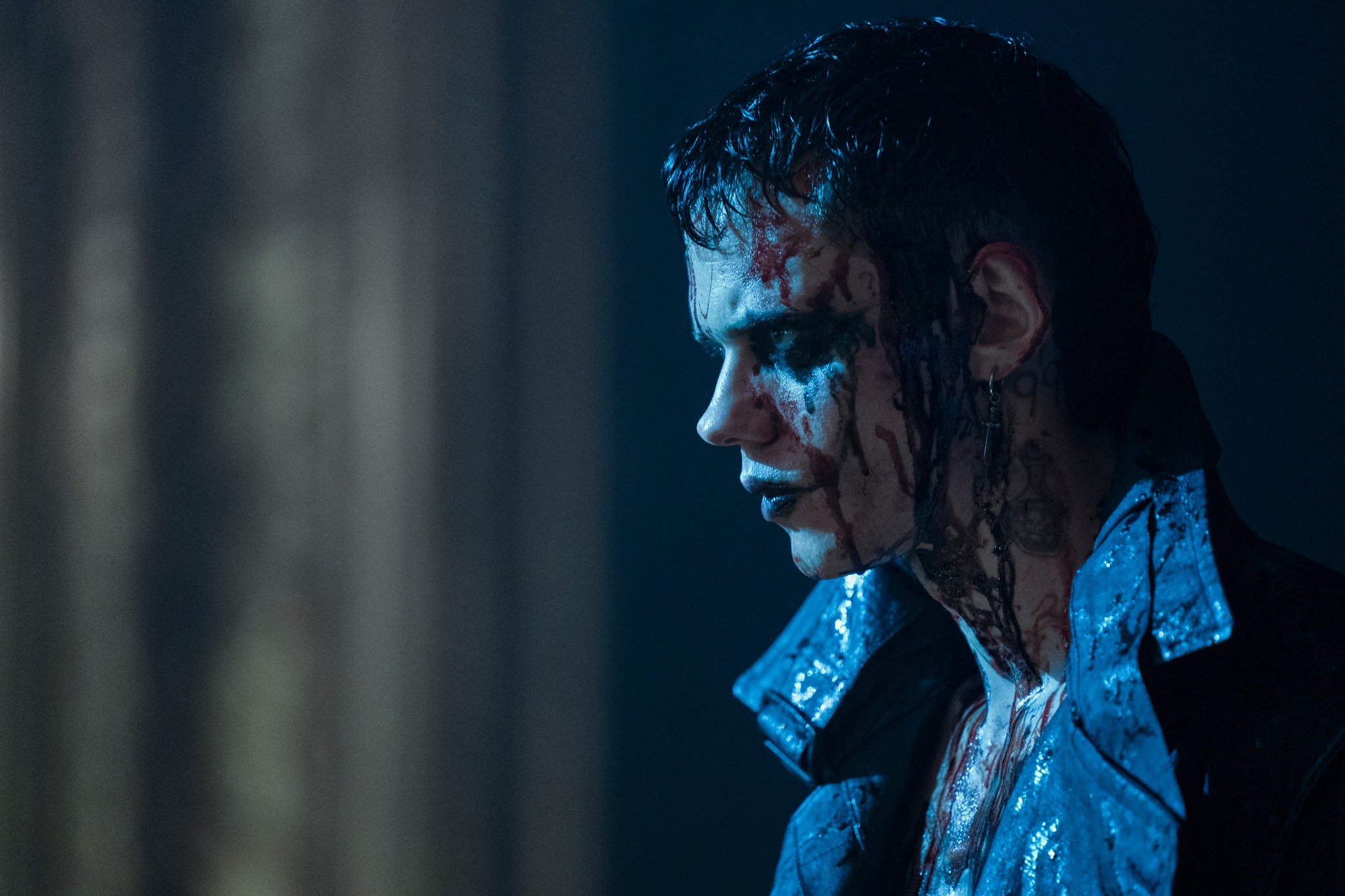
For their efforts, both Skarsgård and FKA Twigs put plenty of heart into their performances. It’s a much-needed element for a film like this, and they come out innocent in this whole affair, despite the poor choice to push so much screentime on Eric, before he became the Crow. Huston could do this villain role in his sleep, but at least he can add another nice suit to his collection. The rest of the cast hardly registers. Still, it is the Skarsgård show, and his physicality has already been utilized in interesting ways for previous features. Here, while the script does him no favors (they couldn’t even make him a musician?), I believed in his quest.
It’s not as though this film needed to be placed on a stand and pulled apart in every which way to make the case against it. Still, there’s only so much I can say when there looks to be such an apparent lack of urge to do anything innovative. Sure, I have little doubt Sanders and the rest involved were passionate about making a movie and hoping for the best, but looking at what’s come out of this, after decades of time spent by a studio assuring people it would deliver a new version of this thing they didn’t want a new version of, it’s hard not to wonder, “What was it all for?” Resurrecting The Crow may not have been filled with pain, but it was certainly a somber experience.
The Crow opens in theaters and IMAX on August 23, 2008.